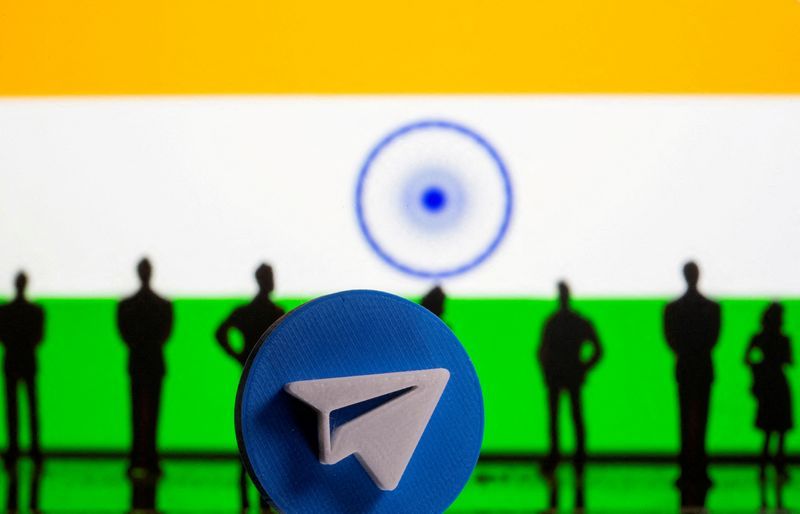
India's sudden decision to block the Telegram messaging application on June 16 has triggered one of the country's most contentious technology disputes in recent years, revealing fundamental disagreements between the government and a major platform over how to address exam fraud and moderating illicit content. The unprecedented ban, issued under emergency powers by Prime Minister Narendra Modi's administration, came after weeks of escalating tensions between India's IT ministry and Telegram officials over the platform's alleged inability or unwillingness to remove accounts peddling purported leaked papers from NEET, the prestigious national medical entrance examination. With 150 million Indian users making the country Telegram's single largest market, the blockade represents a dramatic escalation in the government's efforts to regulate digital platforms accused of facilitating fraud.
The immediate catalyst for the ban stemmed from widespread controversy surrounding the NEET examination system itself. In May, authorities cancelled the results of the medical entrance test on suspicion that question papers had been leaked, triggering political upheaval that included calls for the education minister's resignation. The examination, which attracts more than 2 million candidates annually seeking admission to medical colleges across India, carries enormous weight in the country's competitive higher education landscape. The government subsequently rescheduled the test for June 21, but intelligence assessments indicated that criminal networks had already begun exploiting Telegram to sell purportedly leaked exam materials to desperate candidates willing to pay for what they believed was unauthorized access to the actual papers.
Telegram's response to the ban has been forceful and uncompromising. The company filed a challenge in the Delhi High Court arguing that the blockade violates constitutional protections and fundamental free speech rights guaranteed to Indian citizens. In its legal submissions, Telegram contended that the government's emergency powers invoked to impose the ban until June 22 were excessive and disproportionate responses to what amounts to a content moderation dispute that could have been resolved through dialogue and incremental policy adjustments. The company's founder Pavel Durov characterized the ban as fundamentally mistaken, noting that preventing fraud through blocking an entire platform merely displaces the activity to other messaging services while punishing hundreds of millions of legitimate users who rely on Telegram for lawful communication.
Documents reviewed by Reuters reveal that the conflict did not emerge suddenly but rather crystallized during two weeks of increasingly acrimonious exchanges between India's technology ministry and Telegram leadership. New Delhi specifically complained about Telegram's passivity regarding channels bearing names such as "NEET PAPER LEAKED" and "Paper Leaked NEET," arguing that these channel identities themselves signaled suspicious intent and should have triggered immediate investigative action by the platform. Government officials pointed to evidence that administrators of these channels were explicitly soliciting payments from prospective candidates by claiming access to complete examination papers, a direct commercial fraud operation conducted entirely within Telegram's infrastructure. The ministry demanded that Telegram adopt more aggressive, proactive measures to identify and eliminate such suspicious content before it could generate harm.
Telegram's counterargument, articulated through subsequent email exchanges with Indian officials, emphasized that the company had not been inactive in combating unlawful content but rather had responded systematically to government notices. The company disputed the characterization of passivity, insisting that it actively enforces policies prohibiting use of its services for fraud, extortion, or examination-related crimes. However, tensions intensified when Telegram objected to the government's official minutes of a June 3 meeting, claiming the recorded account fundamentally misrepresented the company's stated position regarding content moderation capabilities. According to government records, Telegram had indicated limitations in proactively detecting content related to exam fraud, distinguishing between such "subjective" material and "objective" categories like child sexual abuse material or pornography that Telegram acknowledged it could identify more readily.
Telegram subsequently disputed this characterization in a June 5 email, arguing that it possessed proactive detection mechanisms for exam-related fraud content but that implementing such measures effectively required substantial moderation resources. This apparent semantic disagreement over whether limitations existed in Telegram's technical capabilities or merely in its resource allocation became a crucial fault line in the dispute. In its formal court petition challenging the ban, Telegram escalated its criticism of the government's meeting minutes, describing them as a deliberately distorted and one-sided account that omitted critical details about the company's existing proactive processes. The company characterized the government's documentation as an inaccurate foundation upon which the ban was justified, essentially arguing that authorities had constructed their legal rationale on a false premise about Telegram's actual moderation architecture.
The structural advantages that have made Telegram attractive to Indian users simultaneously explain why the platform has become problematic from the government's enforcement perspective. Unlike WhatsApp, which dominates India's messaging market with over 500 million users but limits group memberships to 1,024 participants, Telegram permits groups containing up to 200,000 members. Additionally, Telegram allows users to communicate and participate in channels without exposing their phone numbers, a design feature that enhances privacy but also reduces accountability and traceability for law enforcement. These architectural choices, while appealing to privacy-conscious users and journalists, have inadvertently created infrastructure ideally suited for coordinating fraud schemes involving large numbers of transaction participants who wish to remain anonymous and difficult to identify through traditional investigative methods.
Telegram has consistently denied allegations that its platform serves as a preferred venue for fraud and illicit commerce, maintaining instead that the company acts promptly upon receiving credible reports of violations. The company's public position emphasizes that the vast majority of Telegram's user base employs the service for legitimate purposes, and that any bad actors represent a minuscule fraction of the broader community. However, the Indian government has publicly stated that exam fraud issues are "most pronounced on Telegram" relative to other digital platforms operating within the country, suggesting that the problem extends beyond isolated incidents to constitute a systemic pattern requiring regulatory intervention. This assessment reflects broader concerns within India's education and law enforcement apparatus about the vulnerability of high-stakes examinations to coordinated fraud schemes enabled by digital platforms.
The dispute between India and Telegram reflects broader international tensions between democratic governments and technology companies regarding content moderation standards and platform accountability. India's conflict with Telegram echoes a similar confrontation the Modi government pursued against Elon Musk's X platform during the previous year, when authorities fought the company in court over X's strict policies limiting content removal, particularly regarding posts critical of the government. These recurring clashes suggest that India's regulatory approach to technology platforms has become increasingly assertive, with government officials prepared to invoke emergency powers and legal mechanisms to compel compliance with content moderation demands that platform companies may view as technically infeasible, economically inefficient, or philosophically inconsistent with their operational models.
The timing of the Telegram ban, announced just days before the rescheduled NEET examination on June 21, appeared calibrated to prevent last-minute fraud operations using the platform. However, the decision to block the entire application rather than targeting specific channels or accounts raises fundamental questions about proportionality in platform regulation. Indian civil liberties advocates have noted that the ban affects millions of citizens using Telegram for legitimate purposes, from business communications to social organization, effectively imposing collective punishment on the broader user base to prevent activity by a subset of bad actors. The government has not yet formally responded in court to Telegram's allegations that officials mischaracterized the company's moderation capabilities, leaving unresolved the factual question of what exactly was communicated during the June 3 meeting and whether the subsequent ban rested on accurate representations of Telegram's technical and resource limitations.
For Malaysian readers and other Southeast Asian technology stakeholders, the India-Telegram clash offers important lessons about regulatory escalation and the risks of unilateral government action against global platforms. Malaysia and other regional countries maintain their own concerns about digital platforms facilitating fraud, extremism, and other illegal activities. However, the Indian experience demonstrates the potential consequences of regulatory approaches that emphasize coercive blocking mechanisms over sustained dialogue aimed at engineering technical solutions. The outcome of Telegram's Delhi High Court challenge could establish precedents affecting how technology companies respond to government demands across Asia, potentially influencing whether platforms invest in jurisdiction-specific content moderation infrastructure or instead withdraw services from markets perceived as excessively demanding or unpredictable in their regulatory expectations.
The unresolved nature of the dispute leaves multiple questions pending resolution. The Delhi High Court must ultimately determine whether the government's invocation of emergency powers was legally justified and proportionate, whether Telegram's account of the June 3 meeting is accurate, and what obligations platforms bear to proactively identify and eliminate fraud-related content. The June 22 end date for the temporary ban suggests that either the court will issue a definitive ruling before that date or the government will extend the emergency order pending further litigation. Telegram's willingness to fight the ban in Indian courts rather than simply comply signals the company's commitment to contesting government content moderation demands that it views as unreasonable or technically unfeasible. The ultimate resolution may shape how other technology platforms respond to similar demands across India and the broader Asian region.

%22%2F%3E%3C%2Fpattern%3E%3C%2Fdefs%3E%3Crect%20width%3D%22100%25%22%20height%3D%22100%25%22%20fill%3D%22url(%23ph40buhg)%22%2F%3E%3Crect%20width%3D%22100%25%22%20height%3D%22100%25%22%20fill%3D%22url(%23ph40buhp)%22%2F%3E%3Ctext%20x%3D%2250%25%22%20y%3D%2250%25%22%20text-anchor%3D%22middle%22%20dominant-baseline%3D%22central%22%20fill%3D%22rgba(255%2C255%2C255%2C0.95)%22%20font-family%3D%22Georgia%2C%20'Times%20New%20Roman'%2C%20serif%22%20font-weight%3D%22700%22%20font-size%3D%22320%22%20letter-spacing%3D%22-0.02em%22%3EGRS%3C%2Ftext%3E%3C%2Fsvg%3E)