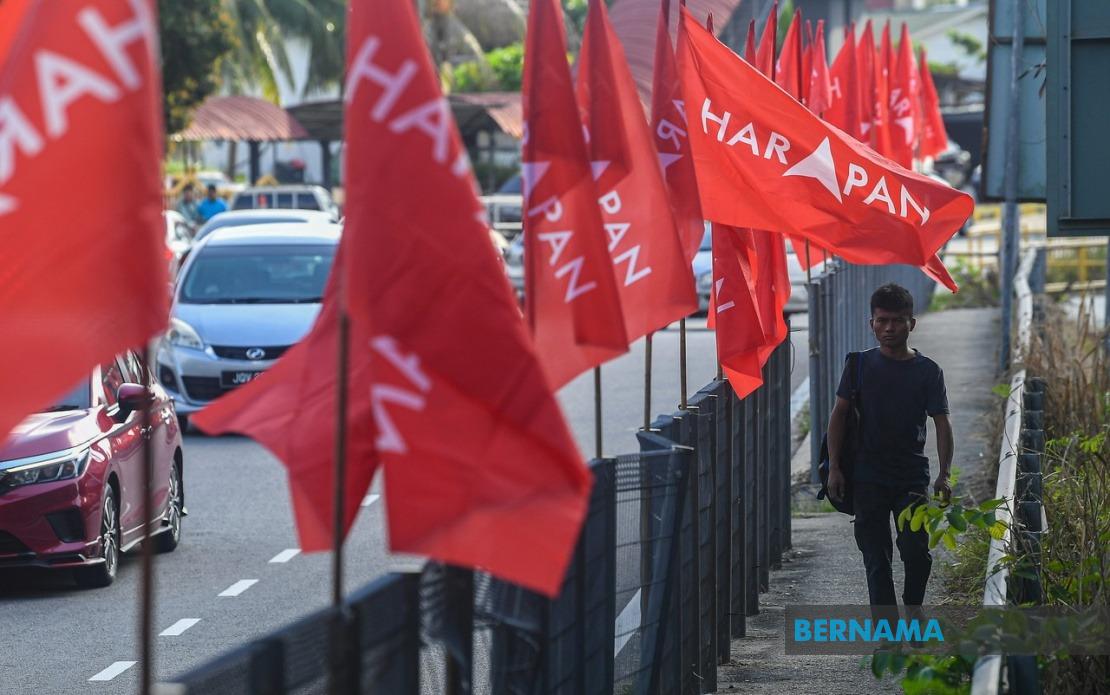
The Indian community in Johor holds disproportionate influence over the outcome of the state election scheduled for July 11, according to Dr Gunaraj George, a Central Leadership Council member of Parti Keadilan Rakyat and Sentosa Assemblyman. Although numerically a minority population, Indian voters are positioned to sway results in approximately 25 mixed and marginal State Legislative Assembly constituencies, making their electoral participation unexpectedly consequential in determining which coalition will govern the state.
Dr Gunaraj's appeal frames the forthcoming contest not merely as a routine exercise in choosing individual representatives, but as a fundamental choice between political trajectories. He emphasises that voters face a decision between maintaining the stability and institutional reforms pursued under the current Pakatan Harapan administration, or reverting to a state of political uncertainty that could destabilise economic activity, deter investment, and undermine long-term national development. This framing attempts to move the debate beyond communal interests toward broader economic and governance concerns.
The global economic environment provides additional context for PH's argument. With international uncertainties, mounting geopolitical tensions, and escalating living costs creating pressure on household budgets across Malaysia and the region, the party contends that investor confidence and sustained economic growth depend entirely on political predictability. A government embroiled in factional struggles or coalition-building challenges would struggle to implement coherent economic policy, potentially triggering capital flight and employment losses affecting all demographic groups.
Pakatan Harapan's track record after three and a half years in federal office forms the centrepiece of the campaign appeal to Indian voters. The party points to the expansion of the Malaysian Indian Transformation Unit allocation from RM100 million to RM150 million, representing the first increase after a decade of stagnation under previous administrations. Prime Minister Datuk Seri Anwar Ibrahim has committed to progressive increases in this allocation going forward, signalling sustained attention to Indian community development priorities.
Beyond headline funding figures, Dr Gunaraj highlights structural improvements in how MITRA resources are managed. The current administration has introduced greater transparency and accountability mechanisms, with programme implementation and expenditure now subject to systematic parliamentary oversight. This represents a departure from previous approaches and signals an attempt to rebuild trust in governance institutions among communities that have historically felt marginalised in resource allocation processes.
The government's investment in Tamil National-Type Schools demonstrates prioritisation of educational pathways for Indian students. Coupled with expanded Technical and Vocational Education and Training opportunities and financial assistance for low-income families, these initiatives aim to create tangible economic mobility prospects. Such initiatives carry significance beyond immediate classroom benefits, as they signal commitment to integrating marginal communities into Malaysia's economic mainstream and building human capital for future competitiveness.
Wider social support measures also feature in the government's outreach narrative. Maintenance aid for religious and cultural facilities including temples addresses heritage preservation concerns, while cash assistance programmes including Sumbangan Tunai Rahmah and Sumbangan Asas Rahmah provide direct income support to vulnerable households. Support for micro, small, and medium enterprises reflects recognition that many Indian Malaysians operate within the informal business sector, requiring targeted policy frameworks.
Dr Gunaraj's invocation of governance reform and anti-corruption efforts speaks to institutional fatigue and governance failures that damaged public confidence during previous administrations. The MADANI agenda encompasses not merely economic redistribution but substantive institutional reform aimed at improving governance quality across public services. For communities that perceive themselves as historically disadvantaged by patronage networks and clientelistic politics, such reform messaging carries particular weight.
The invitation to Indian voters to judge the government on its performance record represents an implicit acknowledgment that the Indian community has developed more discerning expectations of political representatives. Rather than appealing to ethnic solidarity or communal voting blocs, the PH approach emphasises demonstrable outcomes and measurable policy improvements. This reflects broader demographic shifts toward issue-based voting among younger, more educated populations.
Pakatan Harapan contests all 56 state legislative seats in Johor, indicating a comprehensive territorial approach rather than selective engagement in specific constituencies. This all-encompassing campaign posture suggests party confidence and a desire to avoid perceptions of neglect in any particular district. For the Indian community distributed across urban and semi-urban areas of Johor, this inclusive approach creates space for meaningful electoral choice rather than feeling taken for granted.
The appeal to Indian voters ultimately reflects calculations about coalition mathematics and the particular electoral geography of Johor state politics. The density and distribution of Indian population across multiple constituencies creates opportunities for meaningful influence in closely contested races. This recognition itself represents a form of political inclusion, acknowledging that minority communities possess genuine agency in determining electoral outcomes rather than functioning merely as peripheral constituencies.
From a Southeast Asian perspective, this dynamic reflects broader patterns across the region where electoral competition increasingly involves appeals to diverse ethnic and religious communities rather than appeals to monolithic communal blocs. The sophistication of PH's outreach—emphasising institutional quality, economic outcomes, and policy delivery rather than ethnic mobilisation—signals maturation in how Malaysian political parties engage with pluralism.

