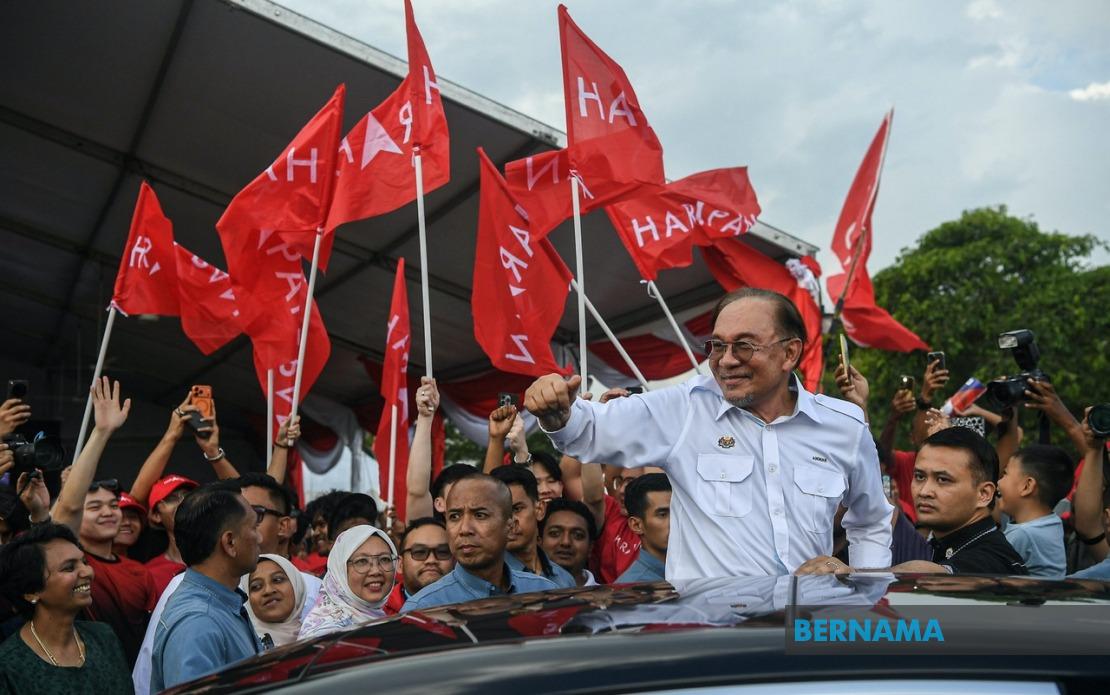
The Indian community in Johor should base their electoral decisions in the upcoming state poll on the concrete performance and documented achievements of Pakatan Harapan under Prime Minister Datuk Seri Anwar Ibrahim, according to PKR Central Leadership Council member Dr Gunaraj George. Speaking ahead of the 16th Johor state election, he emphasised that the Unity Government had restored what he called "Nambikei"—a Tamil term conveying confidence and trust—amongst Malaysians from all backgrounds, particularly through the implementation of the Malaysia MADANI agenda centred on unity, justice and equitable opportunities for all.
Dr Gunaraj's remarks signal a deliberate pivot away from traditional identity-based political messaging towards a performance-driven electoral narrative. He cautioned the Indian community against succumbing to established political tactics that rely on unsubstantiated pledges and emotionally charged rhetoric, urging voters instead to assess the policies and programmes that have genuinely been rolled out and their measurable impact. This approach reflects a broader strategic shift within the ruling coalition, recognising that communities across Malaysia are increasingly sophisticated in their political decision-making and demand accountability backed by results rather than sentiment.
At the core of his argument lies Prime Minister Anwar's purported commitment to dismantling the racial divisions that have historically defined Malaysia's political economy. Since entering politics, Anwar has, according to Dr Gunaraj, consistently articulated a vision anchored in the belief that Malaysia's competitive advantage stems from unity, justice and equal opportunities extended across racial, religious and cultural lines. This framing positions the MADANI agenda not merely as a governmental initiative but as the ideological foundation for reconstructing the nation's political architecture away from race-centric competition towards inclusive, merit-based governance.
The Prime Minister's thesis, as presented through Dr Gunaraj, contends that Malaysia's evolving and multifaceted societal demands cannot be adequately addressed through race-based politics alone. Rather, the country requires a political apparatus structured around tangible policies, measurable performance metrics and pragmatic solutions to everyday challenges confronting ordinary Malaysians. Under this framework, the Malaysia MADANI agenda ostensibly serves as the operational blueprint for establishing a more inclusive, dynamic and cohesive nation.
Tangible government initiatives directed at improving living standards form the centrepiece of the MADANI Government's Indian community outreach. These encompass targeted interventions addressing the persistent cost-of-living pressures, educational system strengthening, labour market expansion, entrepreneurial empowerment and reinforcement of social protection mechanisms. Over the past three years, the administration has enacted several measures specifically benefitting the Indian community, including structural reforms to the Malaysian Indian Community Transformation Unit (MITRA), which now receives an additional RM50 million atop its existing RM100 million budget allocation.
Entrepreneurial support forms another pillar of the government's community-focused strategy. The Tekun Nasional entrepreneur development fund, targeting Indian business owners, has been expanded to RM100 million, whilst RM100 million has simultaneously been channelled to Amanah Ikhtiar Malaysia (AIM) specifically to empower women entrepreneurs across communities. In January, Prime Minister Anwar unveiled a RM50 million allocation dedicated to Tamil school infrastructure development. Collectively, these initiatives represent what Dr Gunaraj characterised as historic governmental interventions, with documentation of numerous Indian entrepreneurs deriving direct benefits from these expanded support mechanisms.
Beyond economic initiatives, the Indian community has accessed an expanding portfolio of socio-economic development programmes, educational support services, skills development training and entrepreneurial pathways that collectively contribute to broader community welfare improvements. These comprehensive programmes attempt to address multiple dimensions of community development simultaneously, from immediate financial relief to longer-term capability building and wealth creation opportunities. The breadth of these interventions suggests a deliberate effort to demonstrate governmental commitment across diverse dimensions of community life.
The forthcoming Johor state election is being framed as a pivotal juncture wherein the electorate can decisively shape the state's developmental trajectory by selecting a government demonstrating proven competence in advancing progress, maintaining stability and elevating societal welfare. Dr Gunaraj contends that the Indian community has matured considerably in their political decision-making processes, increasingly weighing parties against their demonstrated track records and policy implementations rather than relying on historical affiliations or unverified assurances. This maturation, if accurate, potentially reshapes the competitive dynamics of state and federal elections across Malaysia by shifting the primary basis of electoral competition from identity-based appeals to performance-based evaluation.
The PKR leader's core message to the Indian community essentially distils to an exhortation to progress forward with Pakatan Harapan predicated on empirically evaluable achievements rather than aspirational rhetoric or undelivered commitments. He emphasises that contemporary Indian community voters possess the analytical capacity and information access to independently assess governmental performance and render informed electoral judgments accordingly. This implicit recognition of voter sophistication represents a departure from patronising electoral approaches that assume communities can be mobilised through abstract appeals alone.
Packet Harapan's contest across all 56 Johor state seats encompasses 20 PKR candidates, 19 from Amanah and 17 from DAP, demonstrating the coalition's extensive territorial ambitions in this economically significant state. The electoral configuration itself, with the coalition mobilising resources across all constituencies, underscores the perceived significance of Johor's political outcome for the broader national political trajectory and the sustainability of the current Unity Government arrangement. For the Indian community specifically, the election presents an opportunity to evaluate which coalition can credibly deliver on development commitments tailored to community needs.
The broader significance of Dr Gunaraj's intervention extends beyond immediate electoral calculations. It signals an attempt to fundamentally reorient how Malaysian minorities, particularly the Indian community, engage with electoral politics—shifting emphasis from identity-based mobilisation and communal rhetoric towards pragmatic assessment of governmental delivery and policy effectiveness. Whether this strategy successfully resonates with Indian voters in Johor and translates into proportionate electoral support will constitute an important indicator of evolving voter preferences and the continued viability of traditional community-based political messaging within Malaysia's changing democratic landscape.

