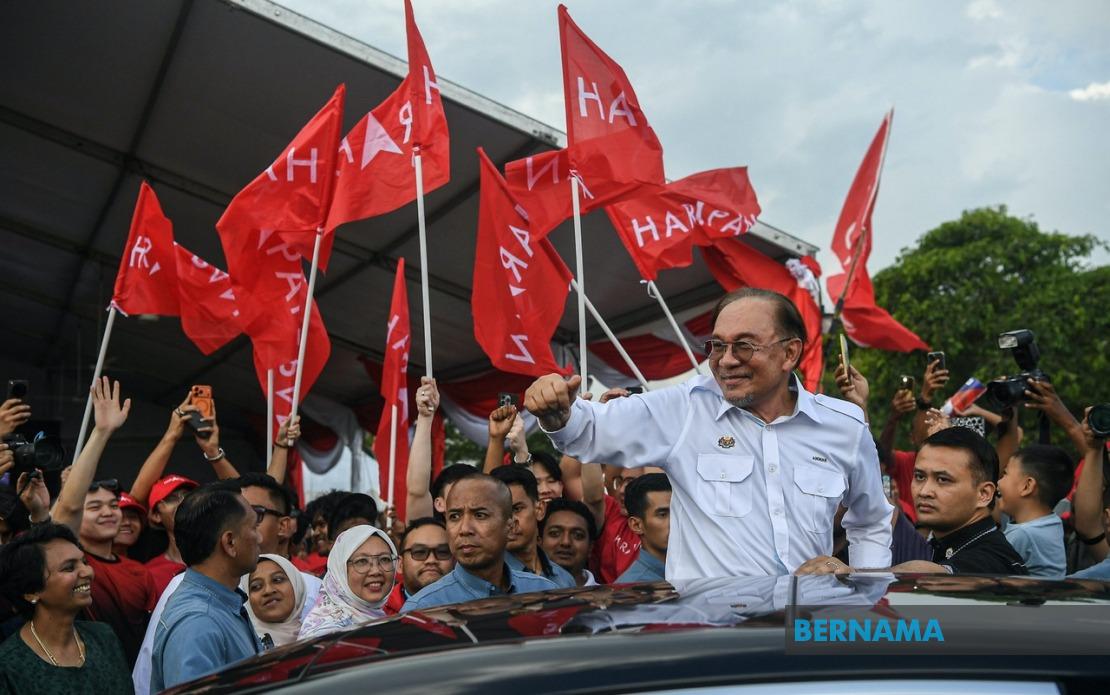
The 16th Johor State Election showcases a striking generational divide in how voters engage with political campaigns. While political parties flood social media platforms with creative content and digital messaging strategies, senior citizens across the state's constituencies remain steadfastly committed to evaluating candidates through direct, in-person interactions. A Bernama survey conducted ahead of the election reveals that elderly voters regard physical campaign events as fundamentally irreplaceable, valuing the chance to assess a politician's demeanour, personality and what they describe as their "aura" before casting their ballots.
This persistence of traditional campaigning methods reflects deeper voter psychology that extends beyond mere generational habit. Many senior voters explicitly link a candidate's willingness to appear in person with their credibility and commitment to constituents. The physical act of showing up—of being present in a community—registers as a meaningful signal of sincerity in ways that carefully edited social media content cannot replicate. For these voters, a candidate who takes the time to attend grassroots events demonstrates a level of investment in the constituency that algorithms and algorithmic targeting simply cannot communicate, no matter how sophisticated the production values.
Yet the survey also captures a more nuanced reality than a simple rejection of digital tools. Maimunah Ismail, a 73-year-old housewife from Sedeli, exemplifies how modern voters, particularly those with more flexible schedules, have woven social media into their information-gathering routines. She attends campaign events in person because she believes face-to-face interaction clarifies a candidate's message more effectively, but simultaneously follows campaign developments on her mobile phone through Facebook and other platforms—often while managing household tasks like laundry. This hybrid approach reflects the practical reality that few voters, regardless of age, can attend every campaign event, making social media a genuine convenience tool rather than merely a substitute.
Physical mobility constraints add another dimension to this debate. M. Sivathramani, a 73-year-old retired civil servant with limited movement due to injury, has found digital campaigns genuinely liberating. Platforms like TikTok allow him to stay politically informed without navigating crowded venues, yet he expresses a desire to meet candidates in person when feasible. His experience underscores that digital campaigning addresses real barriers for voters with health challenges or mobility issues—a demographic that election strategists cannot afford to overlook, particularly given Malaysia's ageing population.
Among working-age voters and those with demanding professional schedules, social media serves an entirely pragmatic function. Lee Lian Chen, a 58-year-old grocery shop owner, strategically uses social media to study candidates' manifestos and policy positions before making her ground assessment. This two-stage evaluation process—initial digital research followed by in-person verification—suggests that sophisticated voters are consciously deploying different media for different purposes. Rather than viewing digital and physical campaigning as competitors, such voters treat them as complementary tools, each suited to different aspects of the decision-making process.
The critical caveat, however, concerns how political parties package their digital messaging. Fairuz Saif, a 59-year-old Kempas voter, articulates a concern that applies across generational lines: digital campaigns often fail to reach broader audiences because they prioritize complexity over clarity. Content designed without consideration for accessibility—whether through jargon, rapid-fire information delivery, or visual designs that strain the eyes—effectively excludes older viewers regardless of their willingness to engage with digital platforms. The effectiveness of online campaigning thus depends not merely on its existence but on the intentionality with which parties adapt their messaging for diverse audiences.
Academics studying Malaysia's evolving political landscape observe that the distinction between "digital natives" and "traditional voters" increasingly obscures reality. Dr Nazreena Mohammed Yasin, a senior lecturer at Universiti Tun Hussein Onn Malaysia's Department of Social Sciences, emphasizes that contemporary election dynamics reflect not competing approaches but integrated ecosystems. Older voters increasingly use Facebook, TikTok and WhatsApp to follow campaigns and access information—contradicting stereotypes about senior citizens' technological incompetence. Simultaneously, the "sentimental value" of physical campaigns persists because elections themselves carry emotional weight beyond policy content. The atmosphere, the energy, the sense of civic participation that characterizes campaign events provides an experiential dimension that screens cannot fully transmit.
Socioeconomic background and generational experience both shape information-seeking behavior. Some older voters continue relying on newspapers and television—traditional media that, notably, still reach substantial audiences in Malaysia. Others have enthusiastically adopted digital platforms, drawn by their convenience and the ability to access information asynchronously, on their own schedules. Rather than constituting a unified "elderly voter" bloc with uniform preferences, this demographic encompasses substantial variation, with digital adoption driven not by age alone but by education, professional background, and individual tech comfort.
The broader insight emerging from Johor's campaign patterns applies throughout Southeast Asia, where aging populations and rapid digital adoption create complex electoral dynamics. Many countries in the region face similar tensions between campaign modernization and the persistence of personal politics rooted in face-to-face connection. In Malaysia's context, where community networks and personal relationships historically carried significant political weight, the rise of digital campaigning does not simply displace older engagement patterns but layers upon them. Politicians who ignore either dimension—who neglect grassroots events in favor of TikTok campaigns, or who dismiss social media as irrelevant to "serious" voters—risk miscalculating their appeal.
The practical outcome evident in Johor suggests that successful campaigns now require what researchers term a "hybrid approach": leveraging digital tools to reach time-constrained voters, accommodate those with mobility limitations, and efficiently disseminate information, while simultaneously investing in physical campaign events that provide the irreplaceable experience of direct candidate interaction. This integration reflects not a transitional phase but potentially the permanent shape of democratic campaigning in middle-income Southeast Asian democracies.
With 2.7 million voters expected to participate in the 16th Johor State Election to select 56 state representatives, political parties' ability to navigate these dual channels will significantly influence electoral outcomes. Candidates who appear only online risk appearing distant or uncommitted to voters who value personal presence. Conversely, those who focus exclusively on physical campaigning may fail to reach substantial segments of the electorate, particularly working adults and those managing health constraints. The election outcome may ultimately reflect not which campaign approach proved superior, but which party most effectively balanced both—delivering consistent messaging through multiple channels while recognizing that different voters process political information through different media.

