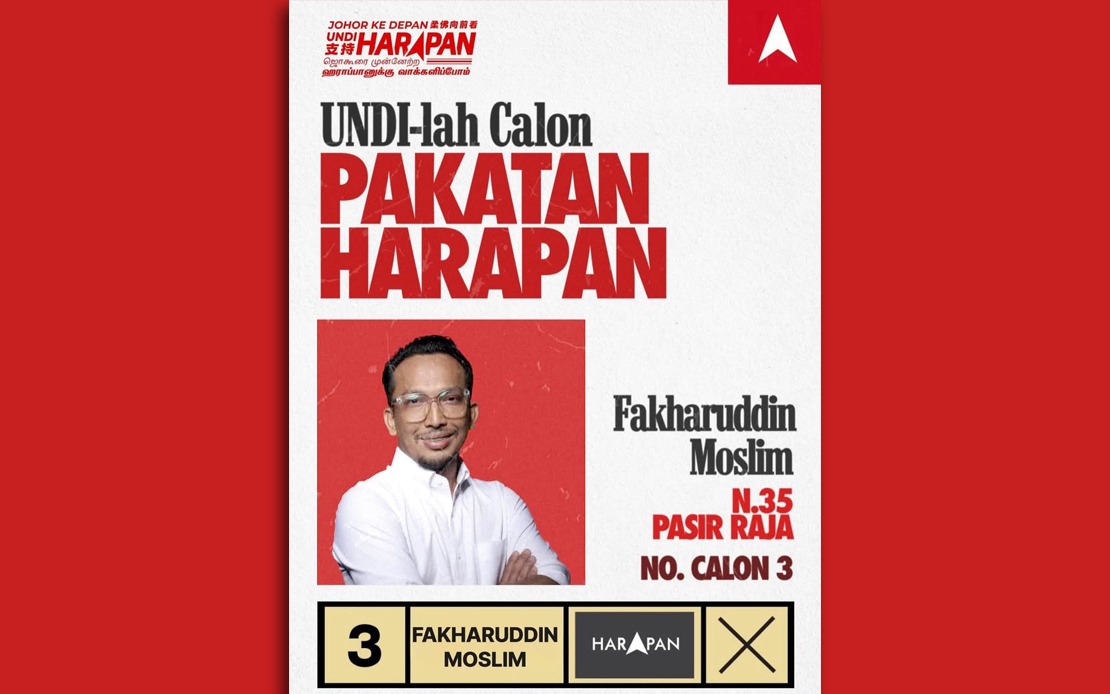
With just four days remaining before voters head to the polls in Johor's 16th state election, Pakatan Harapan's candidate for Pasir Raja has adopted an unconventional approach designed to reach multiple demographic groups simultaneously. Mohd Fakharuddin Moslim is executing what he describes as a hybrid strategy—merging traditional door-to-door campaigning with sophisticated digital engagement—in an effort to overcome the geographical and generational challenges that typically fragment electoral outreach in Malaysian constituencies.
The methodology underpinning this approach reflects a fundamental recognition that modern electoral contests operate across two distinct but interconnected battlegrounds. The physical landscape requires candidates to maintain visible presence in communities, attending gatherings, meeting residents face-to-face, and building personal connections that generate grassroots momentum. Simultaneously, the digital realm has become increasingly decisive in shaping voter sentiment, particularly among younger demographics who consume political messaging primarily through social media feeds rather than traditional town halls. By orchestrating simultaneous operations across both domains, Moslim's campaign apparatus aims to eliminate blind spots that single-channel strategies inevitably create.
The Pasir Raja constituency encompasses 29,818 registered voters distributed across a diverse geographical area that includes both readily accessible urban and suburban zones alongside more remote settlements such as Sungai Redan. Moslim's team claims to have completed a comprehensive tour of every locality within the constituency, addressing this dispersion challenge through sustained fieldwork. This intensive ground operation provides crucial intelligence about voter concerns, local grievances, and community priorities—information that becomes invaluable for crafting messaging that resonates authentically rather than through generic national talking points. The completion of full geographical coverage represents a significant operational achievement in constituencies where logistical complexity often leaves portions of the electorate effectively unreached.
The social media dimension of this strategy targets a constituency segment that conventional campaigns frequently struggle to engage: young voters and those who have relocated away from their home districts. In Malaysia's contemporary political context, youth mobility—whether for tertiary education, employment, or other opportunities—often translates into reduced voter turnout among this demographic group. By leveraging digital platforms to maintain connection with diaspora voters and systematically encourage their return home for polling day, Moslim's campaign attempts to recover electoral participation from a cohort that might otherwise abstain. The messaging specifically emphasizes how individual votes in Pasir Raja determine the constituency's future trajectory, attempting to counter the fatalism or indifference that sometimes afflicts voters geographically separated from their home areas.
Moslim's personal background as both a Felda settler's son and a long-term local resident provides strategic advantage in this context. Felda settlements remain significant population centers throughout Johor and other rural regions, and residents in these communities often respond positively to candidates who demonstrate genuine familiarity with settlement life rather than treating these areas as peripheral electoral territories. By leveraging authentic connection to the Felda experience, Moslim can communicate with settlers in their own register, understanding specific grievances—agricultural commodity prices, infrastructure development, intergenerational land ownership issues—that candidates from outside these communities might overlook entirely. This positioning also counters perceptions of urban-centric political movements disconnected from rural realities.
The reported reception from Felda communities, where residents allegedly welcomed Moslim warmly and engaged him in informal social settings, suggests his ground presence is generating tangible political goodwill. These informal interactions—sitting at stalls, sharing refreshments, conversing without structured protocols—often carry more political weight than formal campaign events. They communicate accessibility and genuine interest in community perspectives rather than transactional vote-seeking, potentially building the reservoir of personal trust that sustains electoral support even when voters disagree on specific policy positions. The spontaneous chemistry Moslim describes reflects the reality that electoral politics ultimately remains deeply personal, particularly in constituencies where communities are cohesive enough to harbor detailed knowledge of candidates' character and commitment.
Pasir Raja presents a three-way contest that complicates traditional opposition versus government dynamics. Moslim competes against BN's Datuk Seri Dr Adham Baba and Perikatan Nasional's Yuhanita Yunan, meaning the opposition vote potentially fragments across two distinct candidates. This configuration requires PH to achieve not merely relative advantage but decisive plurality to secure the seat. In constituencies with three competitive candidates, the party capable of mobilizing its core support base most efficiently often prevails, as vote splitting among competing opposition or coalition candidates can occur. Moslim's strategy of intensive coverage combined with targeted digital mobilization represents an attempt to consolidate PH support while preventing leakage toward competing candidates.
The timing of this campaign phase—the final sprint before polling—reflects strategic prioritization of voter confidence reinforcement over initial persuasion efforts. Having completed comprehensive geographical coverage, Moslim's subsequent focus on second-round visits to previously engaged communities concentrates resources on strengthening commitment among voters already leaning toward PH rather than pursuing new conversions. This approach assumes that the hybrid strategy's initial phase successfully identified and contacted persuadable voters, and that current efforts should deepen their resolve rather than chase marginal gains among the deeply committed to other candidates. It reflects pragmatic acknowledgment that in the final campaign days, consolidation typically generates greater electoral return than continued expansion efforts.
The broader context underlying Pasir Raja's contest involves Johor's political realignment following the 2022 national elections. Johor remains strategically important within Malaysian politics as a substantial state with significant economic output and consistent electoral participation. The state's performance often signals broader national trends, and contests like Pasir Raja offer microcosms of how different coalitions are performing in rural-suburban constituencies that combine agricultural heritage with gradual economic diversification. Moslim's strategy essentially tests whether younger Malaysians and mobile voters can be effectively re-engaged through digital means, while established community members respond to authentic local connection and demonstrated understanding of settlement-specific concerns. The outcome will provide instructive lessons for how opposition parties in particular can overcome structural disadvantages in reaching dispersed constituencies.

