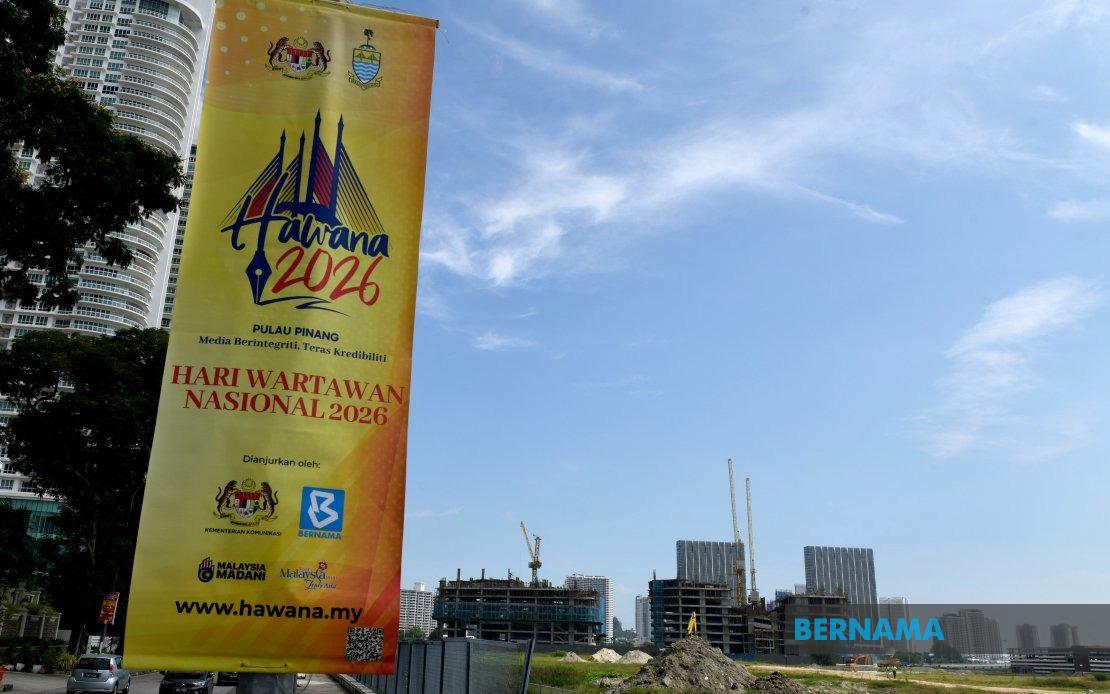
Penang is poised to leverage its inaugural hosting of HAWANA 2026, the nation's premier National Journalists' Day celebration, as a catalyst for tourism expansion and creative economy development. The three-day event, centred on June 19-21, represents a strategic opportunity to amplify the state's visibility across Malaysian and Southeast Asian media networks while simultaneously stimulating direct spending across hospitality, retail, and entertainment sectors. Wong Hon Wai, chairman of Penang's State Tourism and Creative Economy Committee, characterises the selection as validation of the state's capacity to orchestrate large-scale international gatherings alongside its established reputation as a premier tourism hub.
The designation carries substantial symbolic weight for Penang's positioning within regional tourism hierarchies. By securing the main HAWANA 2026 celebration, the state demonstrates competitive capability against other Malaysian destinations vying for high-profile events capable of generating sustained international attention. This inaugural hosting acknowledgement underscores Penang's infrastructure maturity, professional services capacity, and appeal to diverse visitor demographics. The event functions as a confidence signal to international media networks regarding the state's readiness to accommodate complex, multi-stakeholder operations involving significant logistical coordination. For Malaysian tourism stakeholders, this validates Penang's evolution beyond traditional heritage tourism toward becoming a sophisticated event management destination.
The gathering of approximately 1,000 media practitioners from Malaysia and neighbouring ASEAN nations creates an unprecedented concentration of journalistic influence in a single location. This concentration transforms Penang into a temporary media epicentre, generating extensive documentary coverage across print, broadcast, and digital platforms. The resulting multimedia narrative about Penang extends far beyond conventional tourism promotion, embedding the state within regional journalism discourse and professional networks that influence editorial decisions across Southeast Asia. Such exposure cultivates sustained media interest extending well beyond the event itself, as participating journalists return to their home organisations with heightened familiarity and potentially renewed interest in Penang-related story opportunities.
Accommodation providers across Seberang Perai, designated as the primary venue area, are already experiencing robust booking momentum preceding the June dates. Tourism operators report strong advance reservations, suggesting market confidence in visitor demand generation. The concentration of hotel availability in Seberang Perai provides adequate capacity to absorb the anticipated influx without creating supply constraints or price volatility that might discourage attendance. This logistical readiness distinguishes HAWANA 2026 from events constrained by accommodation limitations, enabling smoother operational execution and enhanced attendee experience quality. For Malaysian hospitality operators, the event represents revenue concentration opportunity during a strategically valuable calendar period.
Beyond accommodation, the anticipated attendance generates ripple effects throughout Penang's service economy. Food and beverage establishments benefit from supplementary customer volume, transport providers experience elevated demand for both regional and intra-state mobility services, and retail establishments attract spending from both media personnel and accompanying visitors. Shopping facilities, entertainment venues, and tourist attractions positioned to accommodate day-trippers and extended-stay visitors capture discretionary spending otherwise directed toward alternative destinations. The cumulative multiplier effect of 1,000 journalists plus accompanying support staff and families creates meaningful economic stimulus distributed across multiple economic sectors rather than concentrated within single industries.
The HAWANA 2026 theme, 'Media Integrity Strengthens Credibility', establishes intellectual framing positioning journalism as foundational infrastructure for democratic institutions and public trust formation. This thematic architecture elevates the event beyond celebratory recognition toward substantive professional discourse examining journalism's contemporary challenges and future trajectory. Prime Minister Datuk Seri Anwar Ibrahim's scheduled June 20 officiation at the PICCA Convention Centre @ Butterworth Arena signals government-level commitment to journalism professionalism and media sector advancement. The prime ministerial presence amplifies event prestige while generating governmental legitimacy messaging regarding media-government relations.
Paralleling the main journalists' gathering, the RIUH Pi HAWANA Carnival represents distinct strategic dimensioning targeting public participation and creative sector visibility. Projections of 30,000 carnival attendees over three days establish substantial community engagement architecture, transforming HAWANA from elite professional conference into accessible public cultural event. This broadened participation model democratises exposure to creative sector practitioners and innovations, potentially cultivating audience appreciation for local creative content and artists. The free-admission structure removes economic barriers facilitating participation across income demographics.
The carnival programming, featuring 24 local creative brands and 20 food vendors alongside 16 live stage performances, curates comprehensive cultural experience encompassing visual arts, music, culinary innovation, and interactive creative workshops. Performance lineups including established acts such as Exists, Bunkface, and Masdo alongside emerging artists like Chelsea Ng and Budak Nakal Hujung Simpang create intergenerational artistic representation, positioning Penang's creative community as vibrant, diverse, and continuously evolving. This artistic programming generates entertainment value independently while simultaneously functioning as creative sector marketing apparatus, exposing audiences to local talent and fostering community cultural engagement.
Wong's articulation of media's strategic importance to tourism and creative economy development reflects evolving understanding of information sector functionality within economic ecosystems. Media's documentary and narrative functions extend beyond traditional journalism toward creative storytelling capable of influencing travel decision-making, investment perception, and cultural consumption patterns. By positioning media as essential partner rather than external observer, Penang's government framework integrates promotional objectives with journalistic independence, acknowledging that credible media coverage generates more persuasive tourism marketing than paid advertising. This partnership conception recognises that authentic journalist-generated narratives regarding destinations, cultural experiences, and creative innovations carry greater audience persuasiveness than institutional marketing communications.
For Malaysia's broader creative economy positioning, HAWANA 2026 functions as visibility infrastructure elevating creative sector prominence within national and regional discourse. The carnival's dedicated creative brand programming, interactive workshops, and performance showcase positions creative practitioners as legitimate economy contributors rather than cultural periphery. This status elevation may influence government resource allocation, investment community interest, and audience demand for creative content. Penang's hosting of this integrated journalism-creativity celebration potentially catalyses policy attention toward creative sector infrastructure investment across Malaysian states, establishing competitive benchmarking regarding creative economy facilitation.
The event's anticipated economic stimulus extends beyond immediate June revenue injection toward sustained tourism demand augmentation. Media coverage documenting HAWANA 2026 proceedings, Penang's infrastructure quality, hospitality services, and cultural attractions generates information resources influencing future travel decisions among target demographics. Journalists returning to their home organisations with positive Penang experience carry enhanced familiarity and credibility regarding the destination's tourism offering, potentially translating into more frequent and substantive editorial coverage in subsequent months. This reputation effect compounds immediate economic benefit with sustained medium-term tourism demand elevation.
Penang's selection as HAWANA 2026 host represents culmination of strategic positioning as sophisticated event destination capable of executing complex international gatherings. The state's tourism and creative economy sectors converge through this single platform, amplifying visibility and creating integrated economic stimulus. Success execution of HAWANA 2026 establishes competitive positioning for future premium events while simultaneously demonstrating state government capability for large-scale professional conferences. This capstone event reinforces Penang's transformation from heritage tourism destination toward comprehensive tourism and creative economy hub serving diverse visitor segments and professional networking requirements.

%22%2F%3E%3C%2Fpattern%3E%3C%2Fdefs%3E%3Crect%20width%3D%22100%25%22%20height%3D%22100%25%22%20fill%3D%22url(%23ph40buhg)%22%2F%3E%3Crect%20width%3D%22100%25%22%20height%3D%22100%25%22%20fill%3D%22url(%23ph40buhp)%22%2F%3E%3Ctext%20x%3D%2250%25%22%20y%3D%2250%25%22%20text-anchor%3D%22middle%22%20dominant-baseline%3D%22central%22%20fill%3D%22rgba(255%2C255%2C255%2C0.95)%22%20font-family%3D%22Georgia%2C%20'Times%20New%20Roman'%2C%20serif%22%20font-weight%3D%22700%22%20font-size%3D%22320%22%20letter-spacing%3D%22-0.02em%22%3EGRS%3C%2Ftext%3E%3C%2Fsvg%3E)