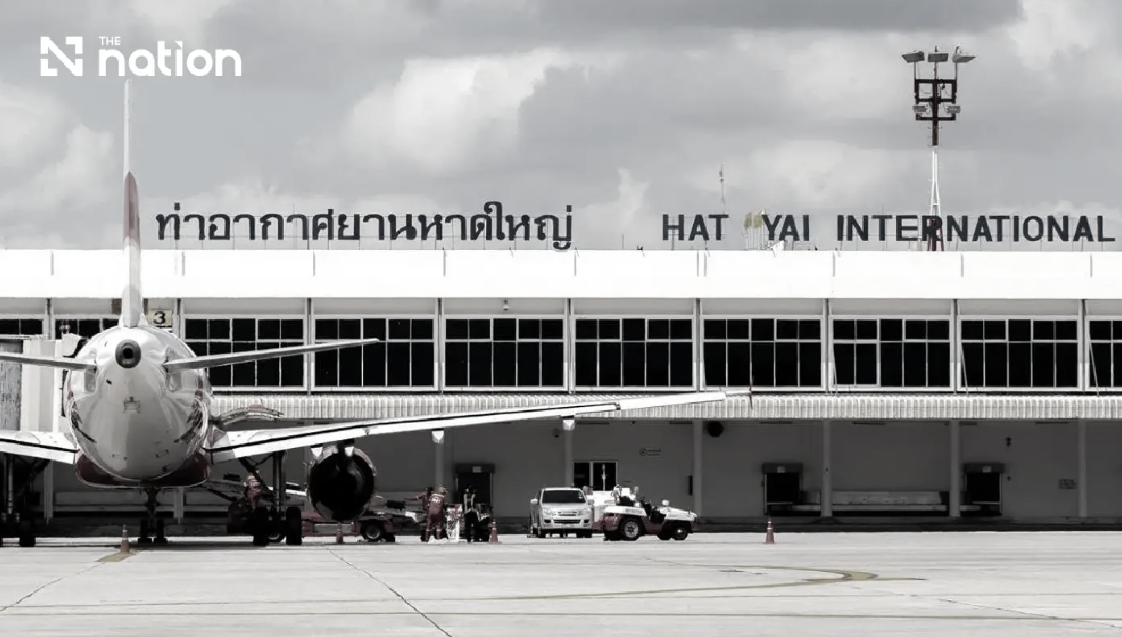
Hat Yai International Airport in southern Thailand's Songkhla Province experienced significant disruption on Wednesday afternoon when one of its operational runways was forced to close following an accident involving airport emergency equipment. The closure of Runway 26, which occurred after 1.55pm on June 17, stemmed from an incident involving a fire engine vehicle on the tarmac itself, prompting aviation authorities to immediately suspend landing operations on that airstrip for safety assessment and incident management.
The disruption created immediate challenges for the airport's operations, as Hat Yai serves as a major hub for international and domestic travellers connecting to Malaysia, Singapore, and other Southeast Asian destinations. With one of the airport's primary runways rendered unusable, incoming aircraft faced limited capacity to land, forcing flight operations staff to coordinate alternative arrangements. The airport authority issued an official NOTAM—a Notice to Airmen used throughout civil aviation to alert pilots and operators to potential hazards—announcing the runway would remain closed until 4.30pm, providing a window of approximately two and a half hours for the incident to be cleared and safety inspections to be completed.
At least two commercial flights carrying passengers to Hat Yai were among those affected by the runway closure. Thai Airways International flight TG263 and Thai Lion Air flight SL712 were diverted to Krabi Airport, located approximately 100 kilometres away along the western coast of the Andaman region. The diversion meant passengers expecting to arrive at Hat Yai faced an unexpected change to their itineraries, with some requiring ground transportation or alternative arrangements to reach their final destinations. Neither airline immediately disclosed whether the diversions would result in additional charges or compensation beyond standard rebooking provisions.
Flight-tracking data from the aviation monitoring service Flightradar24 captured the realtime impact of the closure, documenting the actual diversion of inbound traffic away from Hat Yai's airspace. For passengers unfamiliar with the situation, the sudden announcement of flight route changes can trigger confusion and concern. One passenger's relative travelling aboard TG263 prompted contact with airport authorities seeking clarification about the unexplained landing delay. Airport staff initially cited an unspecified emergency situation without elaborating on the precise nature of the incident, leaving some travellers with incomplete information during a period of operational uncertainty.
The incident highlights operational vulnerabilities that can arise within airport ground services when emergency vehicles—essential infrastructure designed to respond to aircraft-related incidents—themselves become involved in accidents. Fire engines and rescue equipment represent critical safety assets that must navigate complex airport environments, including active runways and taxiways. When such vehicles are involved in accidents, airport operations can be severely compromised, as the very equipment intended to support aviation safety becomes temporarily unavailable while simultaneously occupying operational space that aircraft require for landing and takeoff.
Safety protocols at international airports mandate that any obstruction on an active runway, regardless of size or nature, triggers immediate closure procedures until the obstruction is removed and the runway surface is inspected for damage. This precautionary approach, while occasionally inconvenient for passengers and airlines, reflects the critical importance of runway integrity in preventing aviation accidents. The two-and-a-half-hour window allocated for resolution represented a reasonable timeframe for removing the fire engine, conducting visual and potentially instrumental inspections of the runway surface, and restoring the facility to operational status.
Though the incident description lacks specific details about the fire engine accident's precise nature or cause, the requirement for extended runway closure suggests either significant wreckage that required careful removal or suspected damage to the runway itself necessitating thorough inspection. Airport emergency response teams would have prioritised containing the incident area, documenting the accident scene for investigation purposes, and ensuring no secondary hazards remained that could compromise aircraft operations once the runway reopened.
Flights at regional hubs like Hat Yai typically operate with assumptions of dual-runway capacity or, in circumstances where one runway is unavailable, acceptance of reduced frequency and longer spacing between aircraft movements. The airport's ability to accommodate Thai Airways and Thai Lion Air flights on alternative runways, coupled with the measured closure window, suggests the facility retained operational capacity despite the disruption. However, passengers facing diversion to Krabi encountered significant inconvenience, as onward connections and ground arrangements required renegotiation.
For Malaysian travellers using Hat Yai as a transit point—particularly those connecting from Perlis, Kedah, or Penang—such disruptions underscore the vulnerability of air transport networks when critical ground infrastructure becomes temporarily unavailable. The incident serves as a reminder that airport safety depends not only on aircraft performance and pilot expertise but also on the reliable functioning of all ground-based systems and emergency services. Malaysian aviation authorities monitoring Hat Yai operations would consider such incidents when assessing the broader reliability of air corridors serving the Malaysia-Thailand cross-border region.
The successful landing of TG263 at Krabi Airport confirmed that the diversion operation itself proceeded without incident, and that passengers ultimately reached alternative terminals despite the disruption. Airlines typically absorb costs associated with such operational diversions, though individual passenger compensation policies vary depending on cause classification and contractual terms. The broader implications for Hat Yai's operations centre on ensuring that ground equipment maintenance and operating protocols receive sufficient attention to prevent recurrence of similar incidents that compromise runway availability.


%22%2F%3E%3C%2Fpattern%3E%3C%2Fdefs%3E%3Crect%20width%3D%22100%25%22%20height%3D%22100%25%22%20fill%3D%22url(%23ph40buhg)%22%2F%3E%3Crect%20width%3D%22100%25%22%20height%3D%22100%25%22%20fill%3D%22url(%23ph40buhp)%22%2F%3E%3Ctext%20x%3D%2250%25%22%20y%3D%2250%25%22%20text-anchor%3D%22middle%22%20dominant-baseline%3D%22central%22%20fill%3D%22rgba(255%2C255%2C255%2C0.95)%22%20font-family%3D%22Georgia%2C%20'Times%20New%20Roman'%2C%20serif%22%20font-weight%3D%22700%22%20font-size%3D%22320%22%20letter-spacing%3D%22-0.02em%22%3EGRS%3C%2Ftext%3E%3C%2Fsvg%3E)