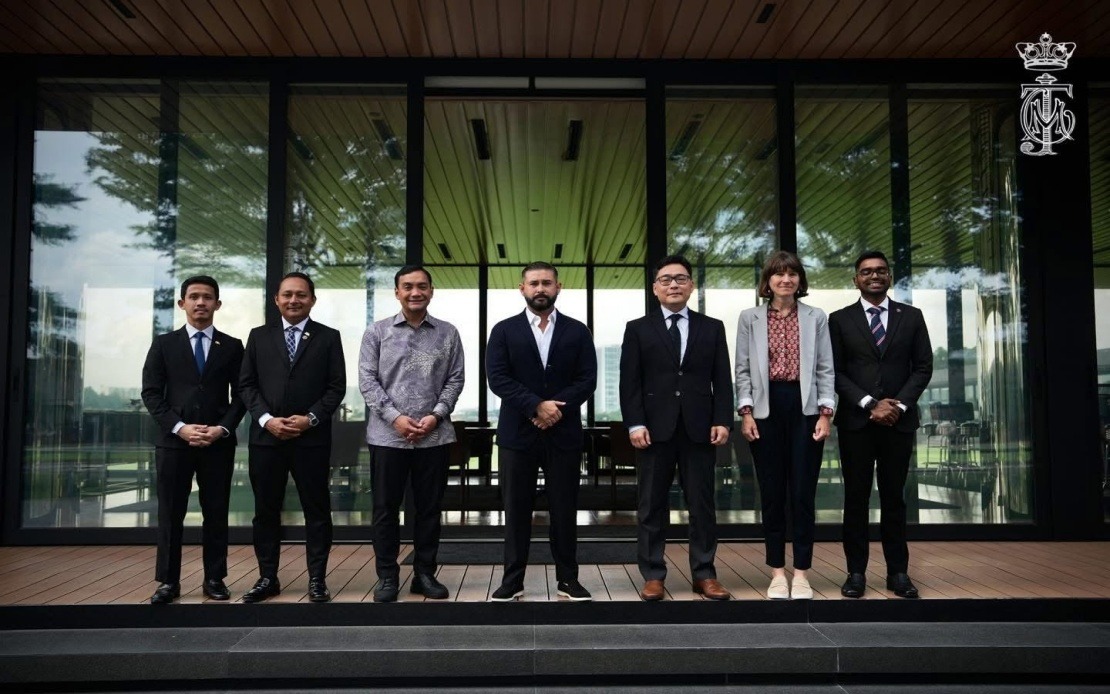
A collaborative education initiative between the Johor State Government and Harvard University is set to transform learning experiences for approximately 100 secondary school students beginning in January 2027. The Programme for Scientifically-Inspired Leadership (PSIL), developed by the prestigious American institution in 2019, represents a significant step forward in bringing international-standard educational frameworks to Malaysian classrooms. The scheme specifically targets students from SMK Tasek Utara and SMK Seri Kota Puteri 2, two government secondary schools in the state capital region, with implementation overseen through Sekolah Rintis Bangsa Johor (SRBJ), an experimental school hub designed to pilot innovative educational approaches.
According to Aznan Tamin, chairman of the Johor State Education and Information Committee, the PSIL framework prioritises four fundamental pillars that extend beyond traditional academic achievement. The programme emphasises active learning methodologies that encourage students to engage directly with material rather than passively absorbing information, alongside cultivating critical thinking capacities essential for navigating complex modern challenges. Effective communication skills—both written and oral—feature prominently, recognising that success in university and professional environments depends heavily on articulation abilities. Leadership development forms the final cornerstone, designed to nurture the next generation of decision-makers who can contribute meaningfully to their communities and workplaces.
What distinguishes this partnership is its comprehensive scope, extending benefits beyond the student cohort to encompass professional development for educators. Forty teachers from SRBJ will participate in active learning pedagogy workshops conducted as part of the collaboration. This investment in teaching methodology reflects an understanding that programme success depends fundamentally on instructor capability and willingness to adopt innovative classroom practices. The workshops aim to equip educators with practical tools for designing more interactive, creative and effective lessons that foster the conducive learning environments necessary for students to develop the competencies outlined in the PSIL framework.
The diplomatic groundwork for this partnership was strengthened during a recent visit by Harvard representatives to Johor Bahru. The Regent of Johor, Tunku Mahkota Ismail, received a delegation led by Dr Dominic Mao, assistant director of Undergraduate Studies and Lecturer in Molecular and Cellular Biology, alongside Dr Andrea Wright, assistant dean of Harvard College. Such high-level engagement from both the royal administration and Harvard's academic leadership underscores the significance each institution places on this educational collaboration, signalling commitment beyond ceremonial announcement.
This partnership aligns strategically with Johor's broader educational positioning, particularly through SRBJ's distinct approach to curriculum delivery. The experimental school framework emphasises English language mastery while maintaining Malay language literacy, recognising Malaysia's bilingual identity and the practical advantages of dual-language competency in an increasingly interconnected world. Simultaneously, the school strengthens STEM capabilities—science, technology, engineering and mathematics—areas where Malaysia seeks to build competitive advantage within regional and global knowledge economies. Personality development and student marketability receive explicit attention, framing education not merely as knowledge transmission but as preparation for meaningful economic participation.
Malaysian educators and policymakers have increasingly recognised that international partnerships can introduce methodologies and perspectives that complement rather than replace existing curricula. PSIL's emphasis on active learning and critical thinking contrasts with examination-focused approaches that have historically dominated Southeast Asian classrooms. The programme's design enables assessment methods aligned with international standards while remaining compatible with Malaysia's Ministry of Education policies, suggesting a careful calibration designed to introduce innovation without creating institutional friction or disrupting national examination frameworks.
For Johor students, exposure to Harvard's academic philosophy and teaching approaches offers distinctive advantages in an increasingly competitive educational landscape. The state government has positioned itself as a hub for educational innovation, and this partnership reinforces that positioning while providing tangible opportunities for young Malaysians to access world-class instructional methods without requiring overseas travel or enrollment. The 100 students selected for the initial cohort gain not only exposure to improved pedagogical approaches but also potential pathways toward international scholarship opportunities and global educational networks that could shape their university and career trajectories.
The January 2027 implementation date allows sufficient time for comprehensive planning, curriculum adaptation, and teacher preparation. This timeline suggests organisational maturity in the partnership structure, avoiding rushed implementation that might compromise programme quality. It also permits evaluation frameworks to be established, enabling stakeholders to measure outcomes rigorously and make evidence-based adjustments throughout the programme's delivery.
For broader Malaysian educational policy, this Johor-Harvard collaboration demonstrates viable mechanisms for upgrading classroom practice through strategic international partnerships. Rather than wholesale curriculum replacement or external imposition of foreign systems, the model allows for measured integration of proven pedagogical innovations into existing institutional structures. Other states and school systems observing this initiative's outcomes may be inspired to pursue comparable partnerships, potentially creating competitive dynamics that elevate educational standards across the federation. The emphasis on teacher professional development particularly merits attention, as sustainable improvement depends fundamentally on educator capacity rather than one-off student interventions.


%22%2F%3E%3C%2Fpattern%3E%3C%2Fdefs%3E%3Crect%20width%3D%22100%25%22%20height%3D%22100%25%22%20fill%3D%22url(%23ph40buhg)%22%2F%3E%3Crect%20width%3D%22100%25%22%20height%3D%22100%25%22%20fill%3D%22url(%23ph40buhp)%22%2F%3E%3Ctext%20x%3D%2250%25%22%20y%3D%2250%25%22%20text-anchor%3D%22middle%22%20dominant-baseline%3D%22central%22%20fill%3D%22rgba(255%2C255%2C255%2C0.95)%22%20font-family%3D%22Georgia%2C%20'Times%20New%20Roman'%2C%20serif%22%20font-weight%3D%22700%22%20font-size%3D%22320%22%20letter-spacing%3D%22-0.02em%22%3EGRS%3C%2Ftext%3E%3C%2Fsvg%3E)