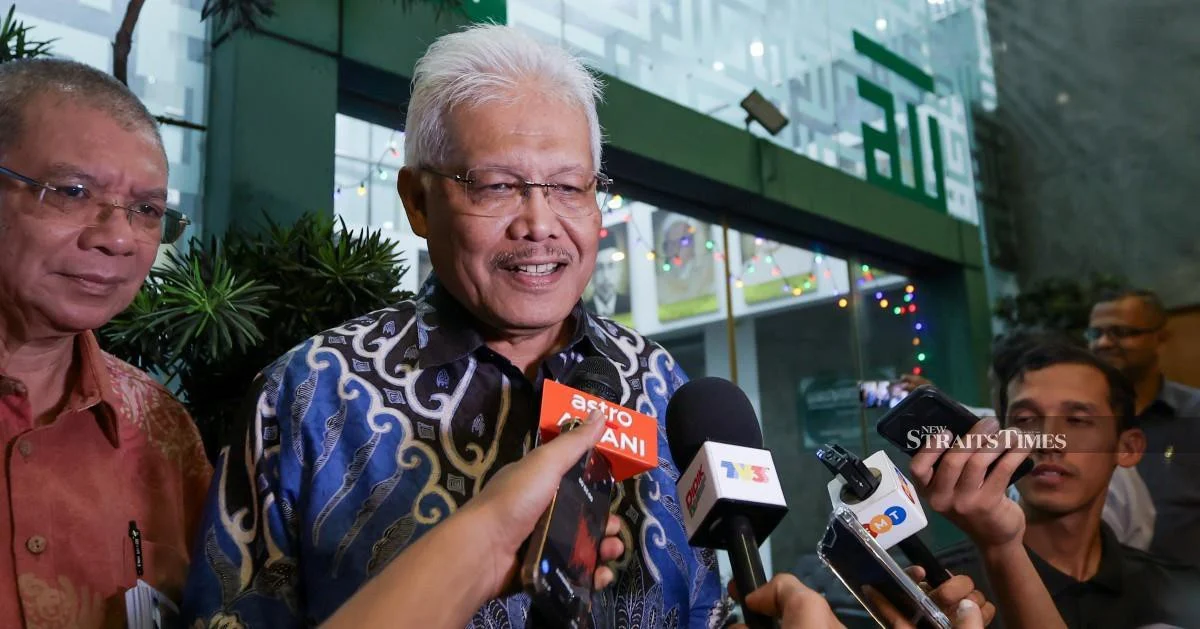
Datuk Seri Hamzah Zainudin is set to reclaim the opposition leader's seat in the Dewan Rakyat this Monday, according to the official parliamentary seating chart released by the lower house. The arrangement marks a significant repositioning within Malaysia's opposition bloc, with Bersatu president Tan Sri Muhyiddin Yassin moving to a less prominent seating position further along the opposition benches. This change underscores the fluid nature of opposition leadership dynamics in the current Parliament and reflects recent developments in the political landscape.
The seating chart carries symbolic importance beyond mere physical arrangement. In the Westminster-style parliamentary system adopted in Malaysia, the opposition leader's seat directly opposite the Prime Minister holds considerable procedural and political weight. The frontbench position grants the occupant priority in questioning government ministers, the ability to lead parliamentary debates, and enhanced visibility during televised proceedings. Hamzah's repositioning to this location represents a formal acknowledgement of his leadership standing within the opposition alliance, a status that carries implications for how opposition concerns are raised and scrutinised in the chamber.
Muhyiddin's movement down the row reflects broader shifts in opposition coalition structures. As Bersatu president, Muhyiddin maintains considerable influence and authority within his party, yet the parliamentary seating adjustment suggests that the opposition bloc has determined alternative leadership arrangements for its frontbench presence. This kind of reconfiguration often occurs when coalition partners negotiate positions within opposition structures or when party dynamics necessitate different parliamentary strategies. The specifics of negotiations leading to this arrangement remain within the confidential discussions of opposition leadership, but the outcome signals a consensus on opposition representation in Parliament.
For Malaysian observers and political analysts, such changes merit close attention because they frequently precede shifts in opposition messaging and parliamentary tactics. The opposition leader's role in the Dewan Rakyat involves more than symbolic positioning; it requires coordinating responses to government policy announcements, orchestrating parliamentary questions, and presenting a unified opposition perspective during debates. Hamzah's assumption of this frontbench role suggests the opposition intends to pursue particular strategic directions in its engagement with the government during the current parliamentary session.
The timing of this transition, occurring on a Monday, indicates that parliamentary proceedings will resume with the new arrangement in place. Opposition MPs and observers will witness the repositioning firsthand as Parliament reconvenes, marking the formal commencement of revised opposition leadership dynamics within the chamber. Media coverage and parliamentary staff would have coordinated extensively to ensure the new seating accommodates all opposition members appropriately while maintaining the established protocols of parliamentary conduct.
Historically, opposition leader positions in Malaysian Parliament have been held by the leaders of the largest or most dominant opposition party, though the Dewan Rakyat has occasionally seen arrangements where multiple opposition figures share prominence on the frontbench. The current configuration appears to designate Hamzah as the principal opposition voice in parliamentary proceedings, a responsibility that encompasses substantive policy critique and procedural challenges to government measures. This designation carries expectations regarding parliamentary conduct, speaking time allocation, and the nature of questions directed toward the government.
For Southeast Asian parliamentary scholars, Malaysia's opposition leadership structures offer interesting comparative insights. The region's diverse parliamentary traditions produce different mechanisms for opposition visibility and influence. Malaysia's Westminster inheritance creates particular procedural advantages for designated opposition leaders, advantages that become more pronounced during periods of legislative scrutiny or political controversy. Hamzah's new position places him at the centre of government accountability mechanisms within Parliament.
The implications of this seating arrangement extend beyond ceremonial aspects into substantive parliamentary work. Opposition leader designation typically involves enhanced access to parliamentary procedures, including priority for raising adjournment matters, greater flexibility in framing questions to ministers, and increased latitude in parliamentary debate. These procedural advantages translate into amplified capacity to publicise opposition concerns and maintain pressure on government policies. The opposition bloc has essentially consolidated its frontbench representation around Hamzah's leadership, a choice that signals confidence in his ability to execute these expanded responsibilities.
For Malaysian businesses and policy stakeholders monitoring government accountability, the opposition leader's role carries practical significance. Parliamentary scrutiny conducted through the opposition leader's position often generates public discourse on economic policy, regulatory changes, and government spending. Companies and industry associations frequently track opposition leader positions and parliamentary tactics to anticipate how particular policies might be challenged or debated. Hamzah's elevation to this frontbench role means his parliamentary interventions will receive heightened media attention and public interest.
The seating chart confirmation also reflects administrative coordination between parliamentary administration and political party leaderships. Preparation of physical arrangements, notification of affected MPs, and coordination of parliamentary procedures all require advance planning and inter-party communication. The fact that a seating chart formally confirms these arrangements indicates that relevant parliamentary authorities have received official notification from opposition leadership regarding the new configuration.
Looking forward, Hamzah's tenure as opposition leader in Parliament will be measured not merely by seating proximity to the government benches but by the substantive quality of parliamentary engagement his leadership generates. The opposition leader's effectiveness depends on legislative expertise, coalition management capabilities, and political credibility with both opposition MPs and the broader public. These factors will ultimately determine whether the seating arrangement translates into meaningful parliamentary influence.
As Parliament returns for its session with the new opposition leadership configuration, observers will be watching how Hamzah utilises the enhanced platform the opposition leader's position provides. The arrangement formalises a leadership transition within Malaysia's opposition bloc, a development that may well influence the tempo and character of parliamentary proceedings in the weeks ahead.