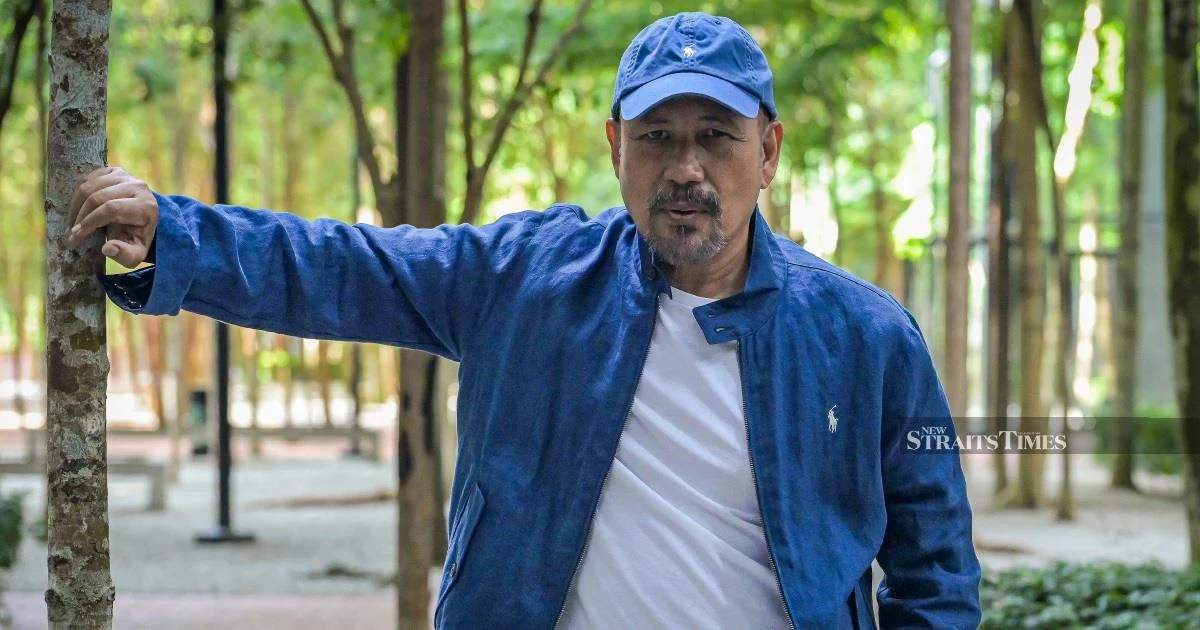
Legendary Malaysian music composer Datuk M. Nasir has taken decisive legal action by filing a RM5 million lawsuit against MyTeksi Sdn Bhd, the company operating Grab's services in Malaysia, over allegations that the ride-hailing giant unlawfully employed his name in a beverage marketing initiative. The celebrated musician, known for his enduring contributions to the Malaysian music industry spanning decades, has chosen to pursue the matter through the courts, signalling the seriousness with which he views the alleged infringement.
When approached for comment about the ongoing legal dispute, the iconic artist maintained considerable discretion, declining to elaborate extensively on the details surrounding the case. This measured response reflects a common legal strategy wherein individuals involved in active litigation avoid public commentary that could potentially complicate their position before the courts. Nevertheless, M. Nasir's decision to pursue the matter publicly through filing indicates his commitment to protecting what he considers his legitimate intellectual property interests and personal brand equity.
The core of the dispute centres on the question of personality rights and unauthorised commercial exploitation. In the Malaysian context, artists and public figures possess inherent rights over the use of their names, images, and associated brand value. When commercial entities attempt to leverage such celebrity association for marketing purposes without explicit permission, they potentially infringe upon these protectable interests. The RM5 million quantum of the claim suggests that M. Nasir and his legal team believe the unauthorised use caused substantial reputational and commercial damage.
MyTeksi's decision to link the musician's name to a beverage product appears particularly problematic given M. Nasir's carefully cultivated public image throughout his illustrious career. As a figure whose identity is intrinsically linked to artistic excellence and cultural authenticity, any association with commercial products requires his prior informed consent. The alleged unauthorised connection could be perceived as diluting his brand or creating false associations, which constitutes legitimate grounds for legal recourse under Malaysian intellectual property and personality rights frameworks.
This matter carries broader implications for how Malaysian corporations engage with celebrity endorsements and brand partnerships. The entertainment and advertising industries increasingly blur the lines between overt endorsements and subtle brand associations, sometimes assuming that public figures are fair game for commercial purposes. However, Malaysian courts have generally upheld the principle that celebrities maintain exclusive rights to commercialise their personas. This lawsuit serves as an important reminder that even large corporations operating in Malaysia must obtain proper authorisation before utilising famous individuals' names and identities.
The alleged incident also raises questions about internal compliance procedures within large corporate entities. Grab, as a multinational platform operating across Southeast Asia, presumably maintains marketing and legal departments responsible for vetting campaigns before launch. If MyTeksi indeed proceeded with beverage marketing bearing M. Nasir's name without conducting adequate due diligence regarding personality rights, this represents a significant oversight in corporate governance. Such lapses suggest either inadequate legal review processes or a miscalculation regarding the enforceability of such rights.
From M. Nasir's perspective, characterising this action as a matter of moral rights underscores his principled stance. Beyond purely commercial considerations, he appears to be asserting a fundamental principle: that individuals retain control over how their identities are presented to the public. This philosophical dimension distinguishes the case from ordinary contractual disputes, positioning it within the realm of personal dignity and agency. His willingness to pursue litigation despite the associated costs, time investment, and media scrutiny demonstrates conviction that the principle at stake transcends mere financial compensation.
The Malaysian entertainment industry will likely monitor this case closely, as the outcome could establish important precedent regarding the enforcement of personality rights against corporate entities. If M. Nasir succeeds in his legal challenge, it would reinforce that even well-resourced corporations cannot assume they may appropriate celebrity identities without consent or compensation. Conversely, a negative outcome could embolden other companies to proceed with similar strategies, calculating that the reputational and legal risks remain manageable.
The broader Southeast Asian context adds another layer of significance. As the region's creative industries expand and digital platforms proliferate, questions about intellectual property protection and personality rights become increasingly urgent. Malaysia's handling of high-profile cases like this one influences regional norms regarding how celebrity identity receives protection across ASEAN nations. Stronger enforcement of such rights benefits Malaysian creative professionals seeking to protect their interests in cross-border commercial contexts.
For consumers and the general public, this dispute illuminates the mechanisms through which marketing claims gain credibility and authority. When companies associate products with celebrated figures, consumers often interpret such connections as implicit endorsements. If MyTeksi proceeded without M. Nasir's authorisation, it engaged in a form of consumer deception alongside the intellectual property violation. This dimension makes the case relevant not only to entertainment industry participants but also to regulatory bodies concerned with fair advertising practices and consumer protection.
The coming months will prove crucial as the legal proceedings advance. M. Nasir's decision to maintain public restraint while pursuing vigorous litigation in court reflects mature handling of a sensitive matter. His assertion that defending his moral rights in this instance represents a principled stand rather than merely a commercial transaction suggests his commitment extends beyond financial settlement to establishing important legal principles about artist autonomy and corporate accountability. The resolution of this case will reverberate throughout Malaysia's entertainment sector and potentially influence how similar disputes are handled across the region.
%22%2F%3E%3C%2Fpattern%3E%3C%2Fdefs%3E%3Crect%20width%3D%22100%25%22%20height%3D%22100%25%22%20fill%3D%22url(%23ph54ndmg)%22%2F%3E%3Crect%20width%3D%22100%25%22%20height%3D%22100%25%22%20fill%3D%22url(%23ph54ndmp)%22%2F%3E%3Ctext%20x%3D%2250%25%22%20y%3D%2250%25%22%20text-anchor%3D%22middle%22%20dominant-baseline%3D%22central%22%20fill%3D%22rgba(255%2C255%2C255%2C0.95)%22%20font-family%3D%22Georgia%2C%20'Times%20New%20Roman'%2C%20serif%22%20font-weight%3D%22700%22%20font-size%3D%22226%22%20letter-spacing%3D%22-0.02em%22%3ERussia%3C%2Ftext%3E%3C%2Fsvg%3E)
%22%2F%3E%3C%2Fpattern%3E%3C%2Fdefs%3E%3Crect%20width%3D%22100%25%22%20height%3D%22100%25%22%20fill%3D%22url(%23ph59wg7g)%22%2F%3E%3Crect%20width%3D%22100%25%22%20height%3D%22100%25%22%20fill%3D%22url(%23ph59wg7p)%22%2F%3E%3Ctext%20x%3D%2250%25%22%20y%3D%2250%25%22%20text-anchor%3D%22middle%22%20dominant-baseline%3D%22central%22%20fill%3D%22rgba(255%2C255%2C255%2C0.95)%22%20font-family%3D%22Georgia%2C%20'Times%20New%20Roman'%2C%20serif%22%20font-weight%3D%22700%22%20font-size%3D%22226%22%20letter-spacing%3D%22-0.02em%22%3EPolice%3C%2Ftext%3E%3C%2Fsvg%3E)
%22%2F%3E%3C%2Fpattern%3E%3C%2Fdefs%3E%3Crect%20width%3D%22100%25%22%20height%3D%22100%25%22%20fill%3D%22url(%23ph454chg)%22%2F%3E%3Crect%20width%3D%22100%25%22%20height%3D%22100%25%22%20fill%3D%22url(%23ph454chp)%22%2F%3E%3Ctext%20x%3D%2250%25%22%20y%3D%2250%25%22%20text-anchor%3D%22middle%22%20dominant-baseline%3D%22central%22%20fill%3D%22rgba(255%2C255%2C255%2C0.95)%22%20font-family%3D%22Georgia%2C%20'Times%20New%20Roman'%2C%20serif%22%20font-weight%3D%22700%22%20font-size%3D%22170%22%20letter-spacing%3D%22-0.02em%22%3EMalaysia%3C%2Ftext%3E%3C%2Fsvg%3E)