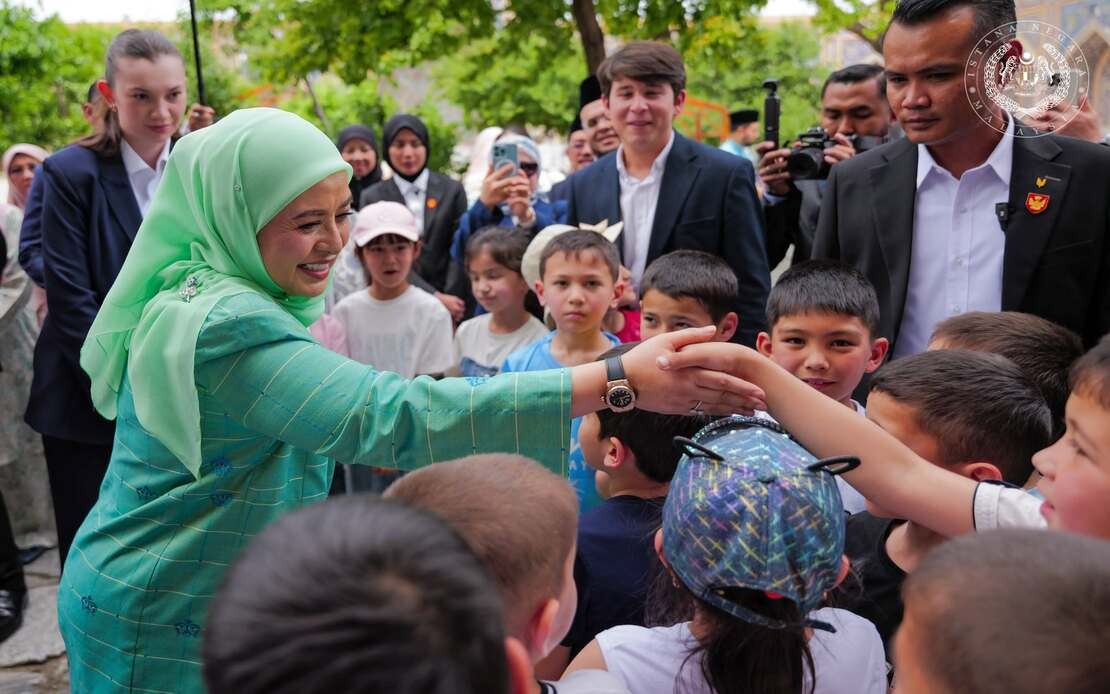
Malaysia's commitment to social cohesion rests fundamentally on mutual respect among its diverse population, according to Her Majesty Raja Zarith Sofiah, Queen of Malaysia. In remarks shared through the official Facebook page of Sultan Ibrahim Sultan Iskandar, the Queen stressed that this principle has long anchored the nation's ability to maintain stability and communal well-being across its multicultural landscape. Her emphasis comes at a time when societies across Southeast Asia grapple with deepening polarization and sectarian tensions, making the Malaysian monarch's reaffirmation of shared values particularly significant for regional observers.
The Queen's message placed particular focus on the Islamic basis for cultivating courtesy and consideration toward others. She drew attention to a hadith from the Sahih al-Bukhari collection, one of Islam's most respected authoritative sources, which conveys Prophet Muhammad's teaching on neighborly conduct and social responsibility. The hadith, transmitted through Abu Hurairah, contains three interconnected principles: believers should refrain from causing harm to their neighbors, they must show hospitality and honor to guests, and they ought to maintain virtuous speech or silence. By invoking this classical Islamic guidance, the Queen positioned religious scholarship as a living framework for contemporary Malaysian society rather than a purely historical reference.
The specific hadith chosen carries weight beyond its literal meaning. In Islamic jurisprudence, the rights of neighbors—regardless of their religious background—constitute a central ethical obligation. The principle of "harm" encompasses not merely physical injury but also emotional distress, property damage, and social disruption caused through careless or malicious behavior. By amplifying this teaching, the Queen was reinforcing that Islamic values as understood and practiced in Malaysia inherently demand respect for the dignity and well-being of all persons in one's community. This interpretation aligns with Malaysia's constitutional framework, which guarantees freedom of worship and equal protection under law while recognizing Islam's special position.
Rather than remaining abstract, the Queen illustrated her message through concrete personal conduct. In February of this year, Her Majesty engaged warmly and directly with more than one hundred international tourists gathered at the main entrance of Istana Negara, Malaysia's royal palace. This unscripted interaction demonstrated the gracious hospitality that the Queen advocates as a national characteristic. The palace statement characterized this encounter as exemplifying the monarch's personal concern for both citizens and foreign visitors, suggesting that courtesy toward outsiders reflects the depth of a nation's confidence in its own values and identity.
For Malaysian audiences, the Queen's intervention carries particular relevance given ongoing conversations about national identity and social division. Since the nation's independence, leaders have periodically needed to reinforce the original social contract that established Malaysia as a plural society where different communities would coexist through mutual accommodation rather than majoritarian imposition. The Queen's invocation of this principle through Islamic teaching—rather than through secular nationalism or constitutional law alone—demonstrates how religious and civic frameworks can reinforce rather than contradict one another when properly understood.
The timing of the Queen's message also reflects awareness of contemporary challenges facing multiethnic societies throughout Southeast Asia and beyond. Religious and ethnic tensions have intensified in several regional nations, occasionally spilling into violence and mass displacement. Malaysia's relative stability, despite periodic incidents and inflammatory rhetoric, owes substantially to institutional mechanisms and cultural expectations that privilege restraint and negotiation. By publicly modeling and endorsing mutual respect, the Queen signals that such conduct carries royal and religious sanction, lending weight to community leaders and civic organizations working toward similar ends.
The Queen's emphasis on the guest-host dynamic deserves particular attention in the Malaysian context. Tourism constitutes a significant economic sector for the country, and international visitors represent both economic opportunity and cultural ambassadors. Her Majesty's personal engagement with foreign tourists sends a message that hospitality toward outsiders is not merely commercial transaction but a reflection of Malaysian values and character. This framing elevates courtesy from a matter of etiquette to an expression of national identity and self-respect.
Moreover, the Queen's reminder that believers should "either speak good or remain silent" addresses a growing concern across digital societies about the toxicity of online discourse. In Malaysia, social media platforms have occasionally become venues for inflammatory rhetoric targeting religious minorities, political opponents, and vulnerable groups. By invoking the Islamic teaching on restraint in speech, the Queen was gently but clearly suggesting that freedom of expression carries corresponding responsibility to consider the impact of one's words on others. This message holds particular resonance for younger Malaysians increasingly active in online spaces where anonymity can diminish social inhibitions.
The Queen's intervention also carries implications for Malaysia's international standing and soft power. As a country that markets itself as a moderate, progressive Muslim-majority nation, Malaysia benefits considerably when its leadership visibly embodies and advocate for tolerance and respect across religious and cultural lines. Other Muslim-majority nations facing questions about their commitment to pluralism can point to Malaysia's example, while Western nations sometimes skeptical of Islam's compatibility with democratic values find reassurance in such leadership statements.
Finally, the Queen's message underscores that maintaining social harmony requires sustained, deliberate effort rather than passive reliance on constitutional safeguards alone. Laws and institutional structures provide necessary frameworks, but they succeed only when undergirded by cultural values that most citizens genuinely embrace. By speaking directly to Malaysians about mutual respect, the Queen was enlisting the monarchy's moral authority in favor of behaviors that sustain the nation's delicate social equilibrium. In doing so, she offered a reminder that Malaysia's greatest achievement is not its economic development or infrastructure, but rather its sustained commitment to the principle that different communities can flourish together.
%22%2F%3E%3C%2Fpattern%3E%3C%2Fdefs%3E%3Crect%20width%3D%22100%25%22%20height%3D%22100%25%22%20fill%3D%22url(%23ph54ndmg)%22%2F%3E%3Crect%20width%3D%22100%25%22%20height%3D%22100%25%22%20fill%3D%22url(%23ph54ndmp)%22%2F%3E%3Ctext%20x%3D%2250%25%22%20y%3D%2250%25%22%20text-anchor%3D%22middle%22%20dominant-baseline%3D%22central%22%20fill%3D%22rgba(255%2C255%2C255%2C0.95)%22%20font-family%3D%22Georgia%2C%20'Times%20New%20Roman'%2C%20serif%22%20font-weight%3D%22700%22%20font-size%3D%22226%22%20letter-spacing%3D%22-0.02em%22%3ERussia%3C%2Ftext%3E%3C%2Fsvg%3E)
%22%2F%3E%3C%2Fpattern%3E%3C%2Fdefs%3E%3Crect%20width%3D%22100%25%22%20height%3D%22100%25%22%20fill%3D%22url(%23ph59wg7g)%22%2F%3E%3Crect%20width%3D%22100%25%22%20height%3D%22100%25%22%20fill%3D%22url(%23ph59wg7p)%22%2F%3E%3Ctext%20x%3D%2250%25%22%20y%3D%2250%25%22%20text-anchor%3D%22middle%22%20dominant-baseline%3D%22central%22%20fill%3D%22rgba(255%2C255%2C255%2C0.95)%22%20font-family%3D%22Georgia%2C%20'Times%20New%20Roman'%2C%20serif%22%20font-weight%3D%22700%22%20font-size%3D%22226%22%20letter-spacing%3D%22-0.02em%22%3EPolice%3C%2Ftext%3E%3C%2Fsvg%3E)
%22%2F%3E%3C%2Fpattern%3E%3C%2Fdefs%3E%3Crect%20width%3D%22100%25%22%20height%3D%22100%25%22%20fill%3D%22url(%23ph454chg)%22%2F%3E%3Crect%20width%3D%22100%25%22%20height%3D%22100%25%22%20fill%3D%22url(%23ph454chp)%22%2F%3E%3Ctext%20x%3D%2250%25%22%20y%3D%2250%25%22%20text-anchor%3D%22middle%22%20dominant-baseline%3D%22central%22%20fill%3D%22rgba(255%2C255%2C255%2C0.95)%22%20font-family%3D%22Georgia%2C%20'Times%20New%20Roman'%2C%20serif%22%20font-weight%3D%22700%22%20font-size%3D%22170%22%20letter-spacing%3D%22-0.02em%22%3EMalaysia%3C%2Ftext%3E%3C%2Fsvg%3E)