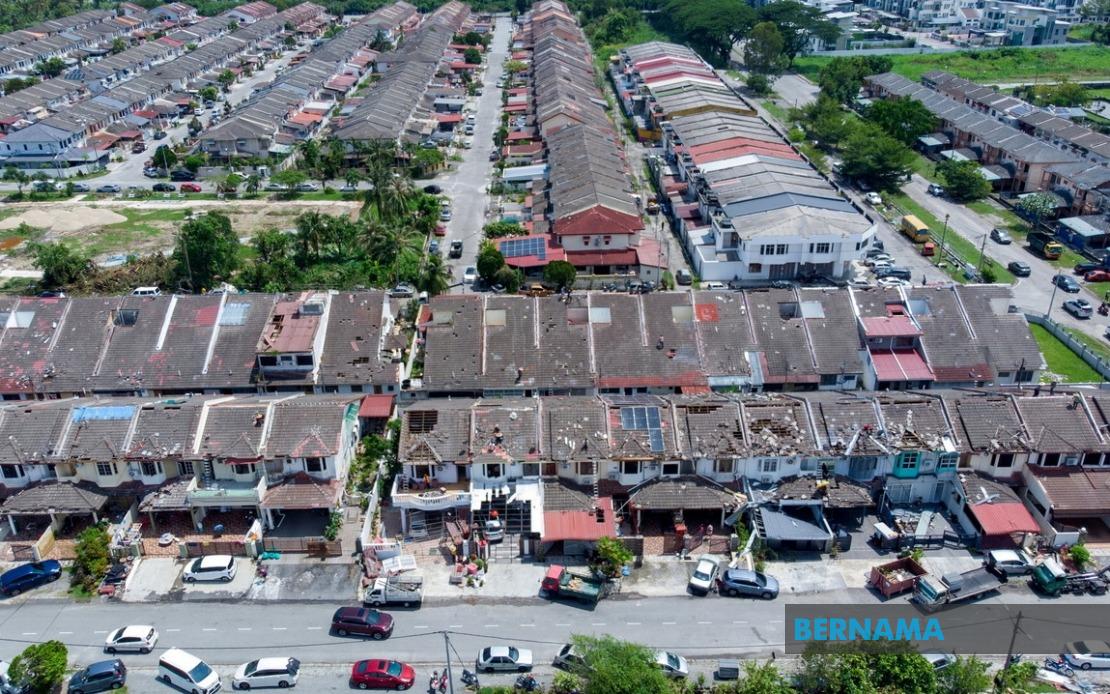
In the aftermath of a severe weather event that struck Bercham on Friday, Ipoh police have established restricted access points across five designated zones within the disaster-affected localities. The security measures are designed to maintain order during the critical recovery phase, with authorities carefully balancing the need for residents to access their damaged properties against the heightened risk of criminal activity in areas rendered vulnerable by the natural disaster.
According to Ipoh district police chief ACP Muhammad Najib Hamzah, the cordons encompass multiple residential areas and will be maintained with measured enforcement. While the police will exercise discretion for residents who need to enter their homes for cleaning and salvage operations, particularly during daylight hours, night-time access will face significantly stricter scrutiny. This graduated approach reflects the unique challenges posed by disaster zones, where legitimate recovery activities can inadvertently provide cover for theft and property crimes.
The areas placed under police supervision include Anjung Bercham Utara, Taman Mujur, Kampung Bercham, Kampung Tersusun Tasek, Taman Pusat Bercham and Taman Indah Sakti. The diversity of these neighbourhoods—ranging from established residential enclaves to planned developments—underscores the widespread impact of the storm across Bercham's urban landscape. The decision to seal off multiple zones rather than restrict individual properties indicates the severity and extent of structural damage across the district.
A particular concern for authorities involves electricity outages that continue to plague sections of the affected area. Anjung Bercham remains without power, creating conditions where darkness could facilitate criminal activity masked as cleanup work. The police have explicitly flagged this vulnerability, noting that residents seeking to clear debris or retrieve belongings after dark will face verification procedures to confirm their legitimate connection to the properties. This precaution, while potentially inconvenient for those eager to restore their homes, represents a pragmatic response to the security vacuum created by the storm.
By 8 a.m. on the day of the police briefing, authorities had processed 492 storm-related reports through Op Bencana, the disaster response operation framework. Significantly, the police have indicated that victims face no time limit for lodging damage claims or incident reports, an important reassurance for residents who may still be overwhelmed or displaced. This open-ended reporting window reflects the acknowledgement that disaster response often unfolds over weeks and months rather than days.
Quantifying the total financial impact of the disaster remains premature at this stage. While preliminary assessments will likely emerge as the damage survey progresses, officials have refrained from releasing aggregate loss figures. This cautious approach avoids inflating or understating the scale of destruction before comprehensive evaluations are completed by insurance assessors and government agencies. Such precision matters considerably for disaster relief allocations and insurance claim processing that will follow.
Ipoh Barat Member of Parliament M. Kulasegaran, who also serves as Deputy Minister in the Prime Minister's Department (Law and Institutional Reform), characterized the event as extraordinary and unprecedented. His assertion carries particular weight given that it distinguishes this incident from typical seasonal storms and flooding that occasionally affect Perak. The storm reportedly damaged more than 200 residential units, a significant concentration of destruction within a defined geographic area that suggests a localized but violent weather phenomenon.
Investigations into the meteorological cause of the storm have pointed toward a landspout phenomenon, a relatively rare occurrence in Malaysia. A landspout differs from a traditional tornado, forming from the base of a thunderstorm and typically displaying less organized rotation and lower wind speeds, though still capable of inflicting considerable localized damage. The identification of this specific meteorological mechanism is valuable for understanding how such concentrated damage occurred and may inform future building codes or weather preparedness strategies for Perak's urban areas.
The implications of this disaster extend beyond immediate property damage and security concerns. The event highlights vulnerabilities in urban areas that may lack adequate infrastructure resilience or disaster preparedness protocols. For Malaysian authorities and urban planners monitoring regional weather patterns and climate resilience, the Bercham incident provides real-world evidence of how rapidly developing weather systems can overwhelm local systems and displace hundreds of residents. The police response, while focused on security, also signals broader questions about coordinating multiple government agencies in disaster zones—from electricity restoration to debris clearance to housing support.
As recovery operations continue, the police security measures will likely remain in place until basic services are restored and residents can safely access their properties without elevated crime risk. The cooperation required between residents and authorities during this period will test community relationships and the effectiveness of disaster governance frameworks. For residents across Southeast Asia facing similar climate-related risks, the Bercham response offers both reassuring evidence of coordinated government action and sobering reminders of how vulnerable even established urban neighbourhoods can become when severe weather strikes.