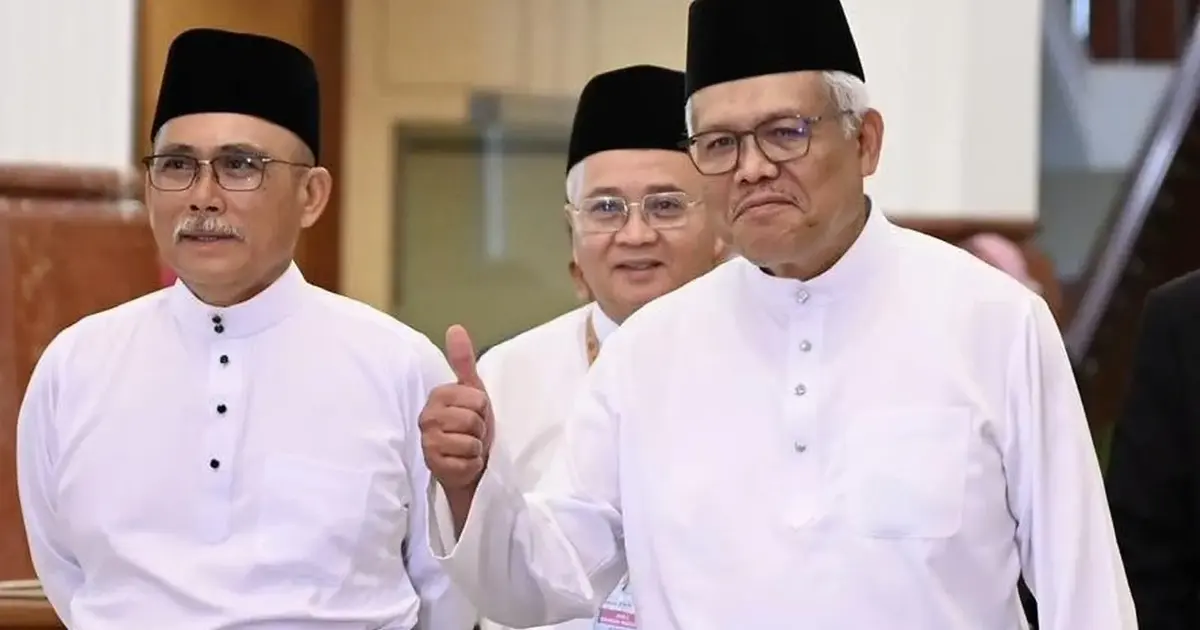
Kiandee, the suspended Bersatu vice-president, has defended the appointment of Hamzah, the Larut MP, to the opposition leader position, asserting that the appointment reflects genuine consensus among key coalition partners rather than arbitrary decision-making. According to Kiandee's account, Hamzah's elevation to this prominent role was justified by tangible evidence of majority backing, a claim designed to counter any suggestions that the selection lacked legitimate parliamentary foundation.
The assertion that Hamzah commanded the unified support of PAS representatives carries particular weight within Malaysia's fractious opposition landscape, where securing bloc voting among coalition members remains persistently challenging. PAS's decision to back Hamzah in its entirety demonstrates a level of coordinated commitment that reflects how opposition politics often hinges upon strategic alliances and negotiated consensuses rather than pure democratic mechanics. For observers tracking opposition cohesion, this unified stance signals either successful coalition management or alternatively, a concerning concentration of decision-making power among senior figures.
Kiandee's emphasis on Bersatu's majority support for the appointment adds another layer of legitimacy to the selection process. Within Bersatu's parliamentary contingent, securing backing from a majority of members would typically constitute sufficient internal justification for any major organisational decision. This framing suggests that dissenting voices, if they existed, remained in the minority, though Kiandee's status as a suspended party official potentially colours his interpretation of internal party sentiment.
The timing of these comments occurs against a broader backdrop of opposition reorganisation in Malaysia, where the anti-government bloc has experienced repeated ruptures and recalibrations. The opposition's capacity to unite behind a single leader figure remains symbolically significant, even if such positions carry limited formal power within Malaysia's Westminster-style parliamentary system where the government holds executive authority. Nevertheless, the opposition leader role carries considerable weight as a symbol of collective resistance and a focal point for alternative policy platforms.
Hamzah's appointment as opposition leader represents an evolution in Malaysian opposition politics, particularly given ongoing tensions within the Pakatan Harapan coalition and the separate positioning of PAS and Bersatu. The Larut MP's background and political trajectory presumably positioned him favourably among coalition stakeholders, though Kiandee's need to publicly defend the selection raises questions about whether consensus was universally accepted or merely formally achieved among parliamentary numbers.
The invocation of "majority support" as the legitimating principle underscores how Malaysian opposition politics often mirrors the government side in relying upon parliamentary arithmetic rather than grassroots mandate or internal democratic procedures. When a suspended party official must publicly justify an appointment through reference to vote counts and bloc positioning, it suggests broader questions about transparency and legitimacy within opposition structures themselves. Malaysian voters and political observers frequently criticise opposition formations for lacking internal democratic accountability even as they advocate for stronger democratic institutions at the national level.
For PAS, the unanimous backing of Hamzah reflected broader strategic calculations about opposition positioning and the party's role within anti-government coalitions. PAS has navigated complex political terrain in recent years, sometimes aligned with government formations and sometimes with opposition groupings, making any unified stance on opposition leadership a notable commitment. The bloc support suggests either principled agreement or alternatively, disciplined party management that leaves little room for individual MP discretion.
Bersatu's involvement in opposition politics represents a significant reversal from its earlier positioning as part of government coalitions. The party's transition to opposition status involved considerable internal recalibration, and the appointment of Hamzah likely emerged from negotiations reflecting both Bersatu's status as a relative newcomer to anti-government positioning and the need to balance influence among coalition partners. A majority among Bersatu's MPs backing Hamzah would represent sufficient consensus to justify the appointment internally, even if external observers remained unconvinced about the broader strategic implications.
The specificity of Kiandee's claims regarding numerical support carries significance for understanding how Malaysian parliamentary politics operate behind closed doors. Opposition formations must continually demonstrate cohesion to maintain credibility as alternative governments, and public statements confirming majority backing serve to preempt accusations of unilateral decision-making or power concentration among senior figures. Yet such statements simultaneously reveal the fragility of opposition unity, where majority support apparently requires public affirmation rather than being assumed as self-evident.
For Malaysian political observers, Hamzah's appointment and the justifications offered by Kiandee illustrate continuing patterns within opposition politics where formal procedures and numerical majorities receive emphasis over broader democratic participation or grassroots legitimacy. The opposition leader position, while symbolically important, operates in Malaysia's political context as an office with limited statutory power, making its significance primarily communicative and representative. How effectively Hamzah can marshal opposition parliamentarians behind coordinated policy positions and parliamentary strategies will ultimately matter more than the parliamentary arithmetic that initially secured his appointment.
The broader implications for Malaysian politics centre on whether opposition coherence can be sustained when premised primarily upon parliamentary alliance-building rather than shared ideological foundations or policy convergence. Kiandee's statements attempting to justify Hamzah's appointment through reference to institutional backing reflect the opposition's ongoing struggle to present itself as a unified alternative to government, a struggle that remains central to Malaysian electoral politics and parliamentary dynamics.

%22%2F%3E%3C%2Fpattern%3E%3C%2Fdefs%3E%3Crect%20width%3D%22100%25%22%20height%3D%22100%25%22%20fill%3D%22url(%23ph40buhg)%22%2F%3E%3Crect%20width%3D%22100%25%22%20height%3D%22100%25%22%20fill%3D%22url(%23ph40buhp)%22%2F%3E%3Ctext%20x%3D%2250%25%22%20y%3D%2250%25%22%20text-anchor%3D%22middle%22%20dominant-baseline%3D%22central%22%20fill%3D%22rgba(255%2C255%2C255%2C0.95)%22%20font-family%3D%22Georgia%2C%20'Times%20New%20Roman'%2C%20serif%22%20font-weight%3D%22700%22%20font-size%3D%22320%22%20letter-spacing%3D%22-0.02em%22%3EGRS%3C%2Ftext%3E%3C%2Fsvg%3E)