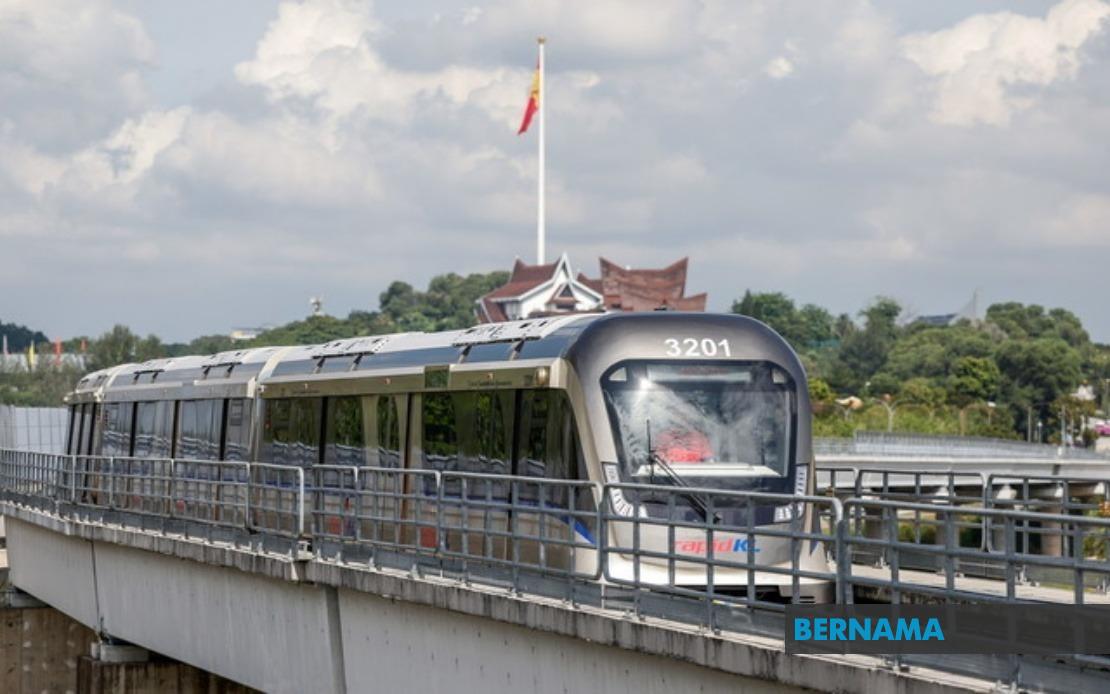
The MADANI Government will formally request a meeting with Sultan Sharafuddin Idris Shah, the Sultan of Selangor, to address mounting concerns over the troubled LRT3 Shah Alam Line project. Transport Minister Anthony Loke made the commitment on July 2 following pointed remarks from the Ruler about the project's trajectory, signalling that the administration takes royal feedback seriously and recognises the need for transparent dialogue on major infrastructure initiatives affecting the state's development.
Loke's decision to seek the audience reflects the delicate balance Malaysia's federal government must maintain with state rulers on development matters. In a country where the constitutional monarchy plays an active role in state affairs, the Sultan of Selangor's public commentary on a major transport project carries significant weight and cannot be dismissed by transport authorities. The minister's willingness to personally brief the Ruler demonstrates the priority this administration places on restoring confidence in the LRT3 implementation, a project that has become emblematic of infrastructure planning challenges in Malaysia.
The Sultan's concerns, articulated during his previous remarks, centred on a pattern of descoping and delays that have fundamentally altered the project's original vision. When the federal government changed in 2018, the LRT3 Shah Alam Line faced an 18-month suspension, followed by a further 19-month postponement triggered by COVID-19 disruptions. During these interruptions, the project scope contracted significantly: each station's footprint was reduced, the number of train cars per service was decreased, and five proposed stations along the alignment were eliminated entirely. These modifications have raised legitimate questions about whether the final delivered project will adequately serve the Shah Alam corridor and surrounding communities as initially intended.
The Sultan's framing of LRT3 as a service project rather than a vanity initiative carries particular resonance for Malaysian governance discourse. By characterising the line as essential infrastructure for public welfare rather than a prestige undertaking, the Ruler has implicitly challenged the government to demonstrate genuine public benefit amid mounting costs and shrinking scope. This distinction matters because it shifts the accountability lens from administrative efficiency to actual impact on residents' daily lives and mobility options. For Selangor residents, the question is not merely whether the project will eventually open, but whether its reduced configuration will meaningfully address transportation needs in one of Malaysia's most congested urban corridors.
For Malaysian and Southeast Asian observers tracking infrastructure policy, the LRT3 experience illustrates broader challenges afflicting the region's development agenda. Government transitions, external shocks, and budget constraints consistently collide with transport planning ambitions, creating a common pattern of scope reductions and timeline slippage. Malaysia's handling of this particular project—through direct ministerial engagement with the monarchy and acknowledgment of legitimate concerns—offers a model of responsive governance, though it simultaneously exposes how frequently major infrastructure falters despite elevated planning profiles.
Beyond the LRT3 question, Loke's wider transport portfolio demonstrates efforts to respond to immediate public concerns through service expansion. Recognising that the July 11 Johor state election would prompt voter movement across state boundaries, the Transport Ministry coordinated with Keretapi Tanah Melayu Berhad (KTMB) to augment Electric Train Service (ETS) frequency on the Kuala Lumpur–Johor Bahru corridor. This initiative transcends routine election logistics; it reflects strategic thinking about leveraging existing transport infrastructure to support democratic participation. The additional ETS trips also benefit commuters and travellers using the corridor to reach Singapore, simultaneously serving electoral and economic functions.
The expanded service architecture extends beyond the main trunk route. By increasing ETS availability to intermediate stations including Segamat and Labis, the ministry created pathways for voters from northern regions to return home efficiently, reducing barriers to electoral participation. This multi-node approach to transport coordination suggests evolving sophistication in how Malaysian authorities deploy public transit systems for national priorities, though efficiency gains remain constrained by infrastructure limits. For Malaysian voters residing outside their state constituencies, improved public transport access directly influences turnout and electoral outcomes, making transport policy and electoral timing intimately connected.
The 16th Johor State Election itself represents the electoral context animating these policy moves, with 172 candidates contesting 56 state seats across scheduled polling on July 11 and advanced voting on July 7. Transport accessibility during election cycles affects participation rates differentially across demographic and geographic categories, potentially influencing outcome distributions. By proactively expanding service capacity, the government attempted to minimise logistical friction for voters, a preventative approach to electoral administration that contrasts with reactive crisis management in infrastructure development.
The divergence between the LRT3 situation and the electoral transport initiatives reveals tensions within Malaysia's governance approach to public services. While transport authorities scrambled to expand capacity and improve service frequency for a discrete, time-bound electoral event, the same ministry confronted a multi-year infrastructure project characterised by delays, descoping, and eroding public confidence. This contrast highlights how short-term political imperatives sometimes command resources and attention more readily than long-term development planning, a dynamic relevant across Southeast Asian governance contexts where election cycles frequently override infrastructure continuities.
Moving forward, the scheduled audience between Loke and Sultan Sharafuddin offers an opportunity for the government to address not merely technical project details, but broader concerns about infrastructure accountability and public value. The Sultan's public commentary suggests the monarchy will maintain an active oversight role in major state-level projects, a constitutional prerogative with practical implications for project proponents. For Selangor residents awaiting LRT3 completion, the royal engagement may ultimately prove more consequential than standard bureaucratic oversight mechanisms, leveraging institutional status to enforce transparency and results-oriented delivery.
The confluence of LRT3 reckoning and election-cycle transport optimisation illustrates Malaysia's paradoxical infrastructure landscape: capable of rapid coordination when political necessity demands, yet struggling with sustained implementation discipline on longer-term projects. Resolving this contradiction will require embedding accountability mechanisms and resource commitments that transcend electoral cycles, ensuring projects like LRT3 receive consistent priority and protection from scope creep and political disruption. The government's forthcoming briefing to the Sultan represents a step toward restoring that confidence, though sustained delivery on revised timelines and scopes will ultimately determine whether the episode becomes a turning point or simply another chapter in Malaysia's infrastructure implementation struggles.

