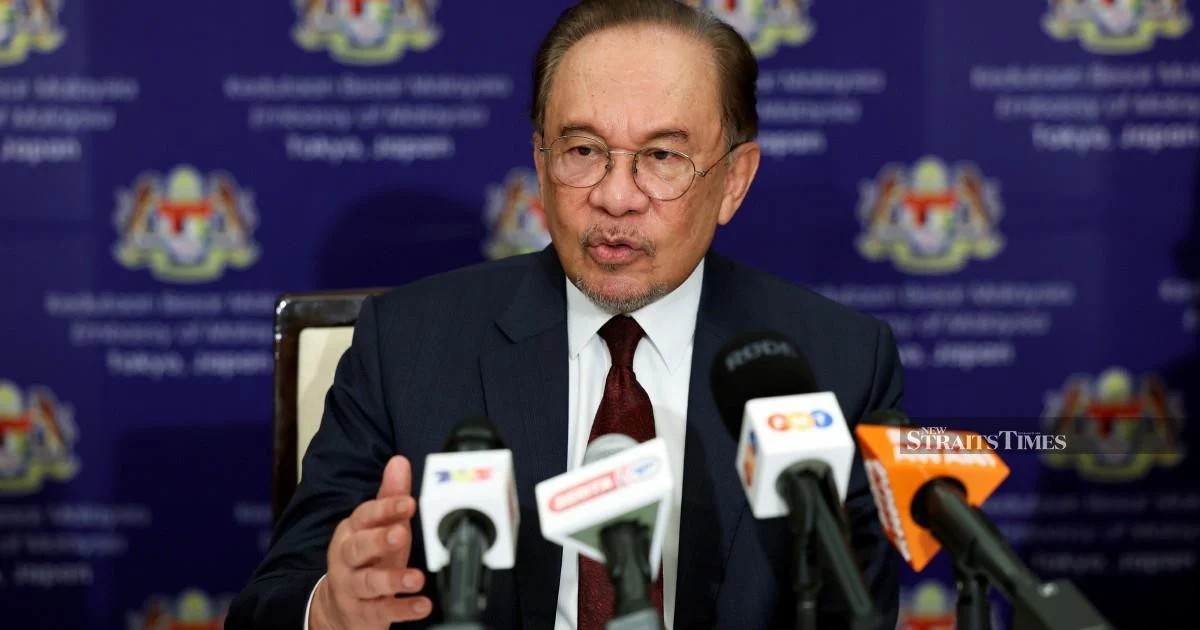
Prime Minister Datuk Seri Anwar Ibrahim has announced a significant escalation in financial support directed towards Bumiputera-controlled enterprises through Malaysia's network of government-linked investment companies. The fresh capital commitment of RM2 billion earmarked for 2026 represents a substantial 54 percent increase from the RM1.3 billion deployed in the previous fiscal year, signalling strengthened governmental resolve to nurture indigenous business ownership across the economy.
The expansion of GLIC funding mechanisms reflects a deliberate policy recalibration aimed at channelling greater resources into companies owned and managed by Bumiputera individuals and entities. This strategic reallocation comes amid broader national efforts to ensure that Malaysia's economic growth benefits indigenous communities and creates pathways for Bumiputera entrepreneurs to scale operations and compete more effectively in both domestic and regional markets.
Government-linked investment companies serve as critical financial intermediaries within Malaysia's development apparatus, wielding considerable influence over capital allocation across key sectors of the economy. By directing increased commitments toward Bumiputera enterprises, these institutions effectively function as engines of inclusive economic participation, enabling smaller and emerging indigenous-owned businesses to access funding that might otherwise remain unavailable through conventional banking channels.
The RM700 million year-on-year increase demonstrates tangible commitment from the federal government to address long-standing concerns about unequal access to capital among different business communities. Bumiputera entrepreneurs have historically encountered structural barriers when seeking venture financing, making targeted GLIC support particularly valuable for businesses seeking to transition from small and medium-sized enterprises into larger, more resilient operations capable of withstanding market volatility.
This funding elevation occurs within a broader economic context marked by moderating growth and regional competitive pressures. Southeast Asia's investment landscape has become increasingly dynamic, with foreign capital actively pursuing opportunities across the region. Malaysia's decision to boost domestic investment in indigenous enterprises partly reflects recognition that sustaining competitive advantage requires strengthening local entrepreneurial capacity and ensuring that capital deployment serves national development objectives alongside profit maximisation.
The timing of this announcement carries particular significance for Bumiputera businesses navigating inflationary pressures and elevated borrowing costs. Enhanced GLIC support effectively provides a counterbalance to tighter lending conditions that have characterised the broader credit market in recent quarters. Many Bumiputera firms, particularly those in infrastructure, technology, and services sectors, have struggled with refinancing challenges during periods of monetary tightening, making government-backed capital flows especially consequential.
Analysts view the funding increase as reflecting policy continuity from Anwar Ibrahim's administration regarding economic inclusivity and communal economic advancement. The announcement suggests that GLICs will deploy resources across diverse sectors rather than concentrating investment in traditional industries, potentially supporting Bumiputera participation in higher-value manufacturing, renewable energy, digital commerce, and knowledge-intensive services.
For Malaysian investors and business stakeholders, this development signals sustained governmental commitment to leveraging state-controlled investment vehicles as tools for addressing economic disparity and promoting broad-based entrepreneurship. The RM2 billion commitment represents not merely budgetary allocation but a statement of political priority regarding how national capital should circulate through the economy.
The increase also carries implications for Malaysia's position within the ASEAN economic framework. As regional nations compete to attract foreign investment while simultaneously building indigenous industrial capabilities, Malaysia's decision to strengthen domestic investment in Bumiputera enterprises demonstrates confidence in local entrepreneurial potential and commitment to inclusive economic models that distinguish its development approach from purely market-driven alternatives.
GLICs themselves will face heightened expectations regarding investment quality and returns on these expanded commitments. Deploying RM2 billion effectively across Bumiputera enterprises requires sophisticated evaluation of business fundamentals, market conditions, and scalability potential. The success of this initiative ultimately depends on matching funding with enterprises demonstrating genuine growth capacity rather than providing capital to structurally unviable operations.
For Bumiputera entrepreneurs, the enhanced funding environment presents concrete opportunities to pursue expansion plans previously constrained by capital scarcity. Businesses in manufacturing, distribution, professional services, and emerging technology sectors may particularly benefit from accessing GLIC capital at terms potentially more favourable than commercial lending alternatives.
The announcement reflects recognition that Malaysia's long-term competitiveness depends on developing a broad base of capable indigenous enterprises capable of competing internationally. Supporting Bumiputera business development through enhanced GLIC investment represents a deliberate policy choice to distribute economic opportunity more equitably while strengthening Malaysia's overall entrepreneurial ecosystem and economic resilience.


%22%2F%3E%3C%2Fpattern%3E%3C%2Fdefs%3E%3Crect%20width%3D%22100%25%22%20height%3D%22100%25%22%20fill%3D%22url(%23ph40buhg)%22%2F%3E%3Crect%20width%3D%22100%25%22%20height%3D%22100%25%22%20fill%3D%22url(%23ph40buhp)%22%2F%3E%3Ctext%20x%3D%2250%25%22%20y%3D%2250%25%22%20text-anchor%3D%22middle%22%20dominant-baseline%3D%22central%22%20fill%3D%22rgba(255%2C255%2C255%2C0.95)%22%20font-family%3D%22Georgia%2C%20'Times%20New%20Roman'%2C%20serif%22%20font-weight%3D%22700%22%20font-size%3D%22320%22%20letter-spacing%3D%22-0.02em%22%3EGRS%3C%2Ftext%3E%3C%2Fsvg%3E)