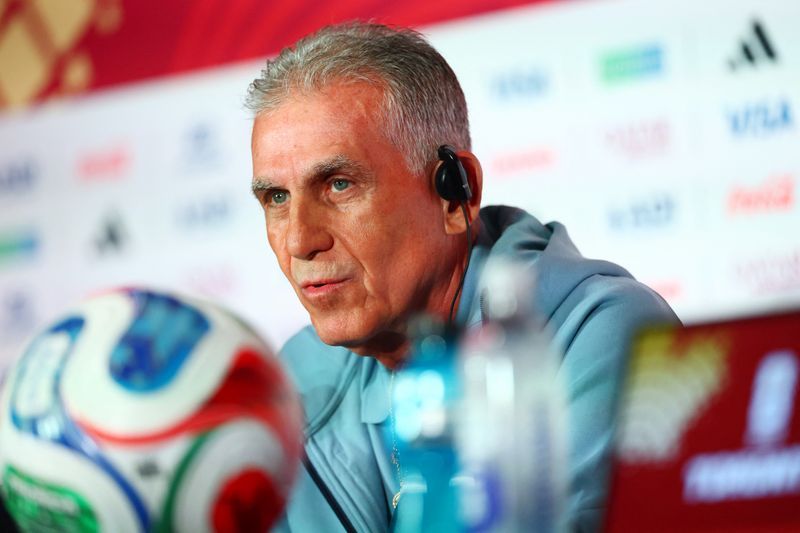
Ghana's coaching staff have signalled they are equipped to take on Panama in their World Cup Group L encounter at Toronto Stadium, irrespective of whether midfield anchor Thomas Partey is ultimately allowed into Canada. Coach Carlos Queiroz made this declaration on Tuesday as a Canadian federal court simultaneously heard arguments about the midfielder's eligibility, with the match scheduled for the following day.
Partey's situation has become a significant subplot to Ghana's tournament campaign. The Villarreal midfielder is facing allegations of rape and sexual assault in Britain, charges which he has consistently denied. His ability to represent his country in the competition hinges on the federal court's decision regarding Canadian immigration authorities' refusal to grant him entry, a ruling that could come down to the wire before kickoff.
Queiroz, in his characteristically philosophical manner, deflected questions about Partey's legal troubles, suggesting that dwelling on the matter served no constructive purpose for his preparation. The veteran coach indicated that he had already devised tactical contingencies and was prepared to deploy whichever players were available to him on match day. His measured approach reflected an attempt to insulate his squad from the distraction of off-field controversy.
The Ghana tactician adopted a respectful but measured assessment of Panama, acknowledging the Central American side's organisation and tournament experience while suggesting that his team possessed sufficient quality to exploit any vulnerabilities in their opponents' setup. Queiroz highlighted Ghana's capabilities in pace, technical skill, and direct confrontation, areas where he believes his squad can gain advantage against a disciplined but potentially vulnerable Panama defence.
Queiroz's 73 years of football experience shaped his analysis of the broader World Cup regulatory environment. Questioned about FIFA's newly implemented mandatory hydration breaks, a provision that has generated considerable debate among coaches and players worldwide, Queiroz articulated frustration with what he perceives as ambiguity in the rule's true purpose. He called for an independent integrity review once the tournament concludes to determine whether the breaks genuinely prioritise player welfare or whether commercial interests drove their introduction.
The hydration break controversy reflects deeper tensions within professional football regarding player protection versus competitive fairness. In the heat of World Cup matches, particularly in warm climates, such breaks theoretically provide medical relief. However, coaches argue that orchestrated stoppages also disrupt tactical momentum and momentum-building sequences, potentially altering game dynamics in ways that favour certain team styles. Queiroz's demand for post-tournament analysis suggests growing scepticism among elite coaches about FIFA's stated rationale.
For Malaysian and Southeast Asian football followers, the Partey situation underscores how legal and immigration procedures can intersect with major sporting events, creating unpredictable circumstances for teams and players. The appeal hearing demonstrates that even at football's highest level, administrative and judicial processes operate independently of tournament schedules, occasionally forcing teams to adapt their plans at short notice. This serves as a reminder that international sports competition exists within complex frameworks of national law and regulation.
Ghana's preparation strategy, emphasising readiness with available personnel rather than fixating on unavailable options, reflects mature tournament football thinking. Many teams, when facing key player absences, fall into the psychological trap of dwelling on what they lack rather than maximising what they possess. Queiroz's pragmatic framing—playing with the cards in front of him—represents a coaching philosophy that has sustained his long career across multiple continents and competitive environments.
The Panama match carries significance beyond the immediate Group L dynamics. Ghana, as multiple World Cup competitors with pedigree in African football, face pressure to progress from their group. Panama, despite being considered outsiders in global competition, have earned their place and demonstrated resilience in qualifying. The encounter represents a clash between established tournament tradition and emerging competitive ambition.
Queiroz's emphasis on identifying Panama's weaknesses and developing counter-strategies indicates Ghana's analytical approach to the fixture. Modern tournament football increasingly depends on detailed video analysis, set-piece preparation, and identifying specific opponent vulnerabilities rather than relying purely on general attacking prowess. Ghana's coaching staff have evidently invested resources in understanding Panama's patterns and tendencies.
The timing of events—the court hearing occurring one day before the match—creates an unusual pressure environment. Whether Partey receives clearance or not, Ghana must deliver a competitive performance without extended opportunity for final tactical adjustments based on the appeal outcome. This compressed timeline rewards teams with flexible systems and adaptable player rosters, qualities that Queiroz has sought to instil throughout his preparation.

%22%2F%3E%3C%2Fpattern%3E%3C%2Fdefs%3E%3Crect%20width%3D%22100%25%22%20height%3D%22100%25%22%20fill%3D%22url(%23ph40buhg)%22%2F%3E%3Crect%20width%3D%22100%25%22%20height%3D%22100%25%22%20fill%3D%22url(%23ph40buhp)%22%2F%3E%3Ctext%20x%3D%2250%25%22%20y%3D%2250%25%22%20text-anchor%3D%22middle%22%20dominant-baseline%3D%22central%22%20fill%3D%22rgba(255%2C255%2C255%2C0.95)%22%20font-family%3D%22Georgia%2C%20'Times%20New%20Roman'%2C%20serif%22%20font-weight%3D%22700%22%20font-size%3D%22320%22%20letter-spacing%3D%22-0.02em%22%3EGRS%3C%2Ftext%3E%3C%2Fsvg%3E)