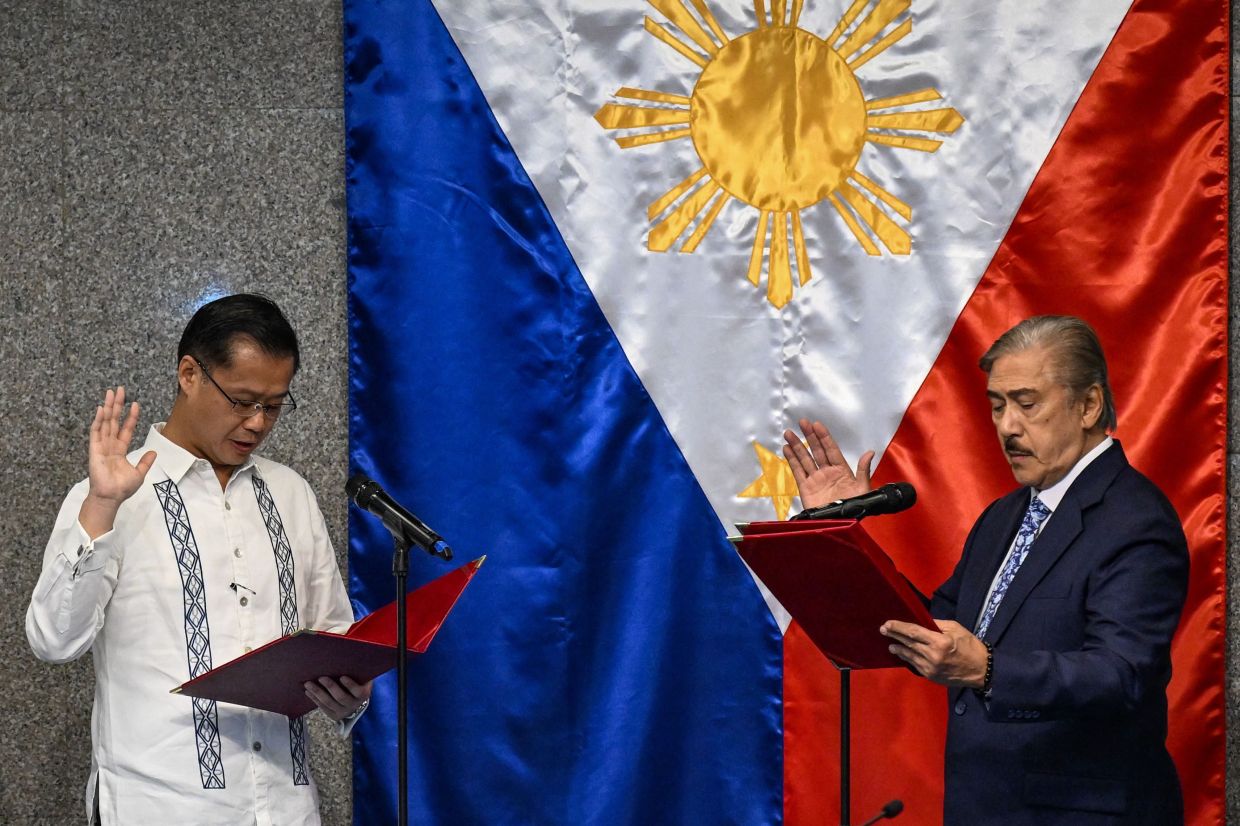
Senator Sherwin Gatchalian has been elected as the new president of the Philippine Senate following a special session held on Wednesday, clinching the position with the backing of thirteen senators—the bare minimum needed to effect such a leadership change. The vote marks the culmination of an intense week of political manoeuvring within the chamber, which has been characterized by shifting alliances and strategic declarations of support that ultimately tilted the balance in Gatchalian's favour.
Gatchalian brings to the role a substantial political background, having previously served as Mayor of Valenzuela City in the Metro Manila region and as a member of the House of Representatives. His elevation to the Senate presidency represents a significant moment in his career trajectory and signals a reshuffling of power dynamics within the upper chamber, which typically consists of twenty-four members but currently operates with only twenty-two active senators due to recent circumstances affecting two colleagues.
The events leading to Gatchalian's election unfolded with considerable drama over the preceding week. On June 3, a bloc of twelve senators had already made a preliminary move by electing Gatchalian as Senate president pro tempore while simultaneously declaring that Alan Peter Cayetano, who had assumed the presidency on May 11, had vacated his position. This declaration set the stage for what would become a contested process involving competing claims about the legitimacy of Senate proceedings and the numerical threshold required for such actions.
Cayetano contested the June 3 proceedings, insisting that he retained his position and arguing that conducting business to elect or remove Senate officers required a quorum of thirteen members—a threshold that had not been met during that earlier session. This legal argument placed the onus on his opponents to achieve the higher number, effectively establishing a procedural barrier that would need to be overcome during any formal removal or replacement process. His stance reflected the complexities inherent in Senate rules and the competing interpretations of procedural requirements during periods of fractured leadership.
The critical turning point came when Senator Joel Villanueva, who had previously aligned himself with Cayetano's position, made a dramatic shift in allegiance. Villanueva's decision to throw his support behind Gatchalian's bloc proved decisive in reaching the required thirteen-senator threshold. This defection appeared to signal a recognition that the political arithmetic had fundamentally shifted against Cayetano's position, undermining his prospects for retaining control of the chamber.
Cayetano himself acknowledged this mathematical reality on Tuesday, publicly recognizing that the configuration of support within the Senate had changed materially. Following his conversation with Villanueva, Cayetano indicated that he was prepared to relinquish the presidency, effectively conceding the inevitable outcome before the formal vote took place. His graceful exit from the position, while politically significant, also reflected the pragmatism often required in legislative bodies where numbers ultimately determine outcomes.
The Senate's current composition has been disrupted by developments affecting two of its members, complications that have squeezed the chamber's working roster. Senator Jinggoy Estrada surrendered to police authorities earlier in June and subsequently faced suspension from office for ninety days following a Sandiganbayan order, with the anti-graft court acting on charges of graft allegations against him. This suspension temporarily removes him from participation in Senate proceedings, reducing the available votes for legislative business.
Compounding the Senate's numerical challenges is the absence of Senator Ronald Dela Rosa, whose current status as a fugitive sought by the International Criminal Court has made his participation in Senate activities impossible. With his whereabouts unknown and the existence of an outstanding warrant, Dela Rosa's seat remains effectively vacant for practical purposes, further constraining the chamber's operational capacity during a period of contested leadership transitions.
The leadership succession in the Philippine Senate occurs against a backdrop of broader political dynamics in the country and reflects deeper currents within the legislative branch. The closely contested nature of the vote, requiring exactly the minimum number of senators to achieve the necessary threshold, underscores how fragile coalitions can be in parliamentary bodies and how individual senators' decisions can fundamentally alter the balance of power. Gatchalian's narrow path to the presidency through attrition and last-minute defections rather than overwhelming consensus suggests that his tenure may require skilful management of competing interests and factional concerns within the chamber.
For Malaysian observers of Philippine politics, this episode illustrates the intricate interplay of personalities, procedural rules, and strategic positioning that characterizes legislative leadership races even in established democracies. The Philippines, as a regional neighbour and fellow major Southeast Asian economy, frequently experiences such leadership contests, reflecting both the vitality of democratic competition and the challenges of maintaining stable institutional governance. Gatchalian's presidency will be closely watched to determine whether he can consolidate support or whether further shifts in Senate alignments might emerge in the coming months.

%22%2F%3E%3C%2Fpattern%3E%3C%2Fdefs%3E%3Crect%20width%3D%22100%25%22%20height%3D%22100%25%22%20fill%3D%22url(%23ph40buhg)%22%2F%3E%3Crect%20width%3D%22100%25%22%20height%3D%22100%25%22%20fill%3D%22url(%23ph40buhp)%22%2F%3E%3Ctext%20x%3D%2250%25%22%20y%3D%2250%25%22%20text-anchor%3D%22middle%22%20dominant-baseline%3D%22central%22%20fill%3D%22rgba(255%2C255%2C255%2C0.95)%22%20font-family%3D%22Georgia%2C%20'Times%20New%20Roman'%2C%20serif%22%20font-weight%3D%22700%22%20font-size%3D%22320%22%20letter-spacing%3D%22-0.02em%22%3EGRS%3C%2Ftext%3E%3C%2Fsvg%3E)