The Paris Vivatech festival has become a proving ground for technological breakthroughs that promise to reshape how we approach medicine, defence, security and athletic performance. Across the event's sprawling exhibition spaces, a diverse array of startups and established firms are demonstrating innovations that address longstanding challenges in their respective fields, offering Malaysian and Southeast Asian audiences a glimpse into the future of healthcare technology, autonomous systems and digital security.
Among the most promising developments is the work of Blueprint Biomed, a Berlin-based biomedical company tackling a problem that affects millions annually: the need for bone grafts to support healing after injury or surgery. The company's artificial replacement eliminates the complications associated with traditional autologous grafts—bone taken from patients' own bodies—which frequently fail and necessitate additional surgery. Chief executive Aaron Herrera explained to AFP that Blueprint's engineered structures offer a superior alternative, constructed using three-dimensional printing technology on biodegradable scaffolds made from polycaprolactone, a polyester that gradually breaks down inside the body. The scaffolds support a collagen matrix that further aids bone regeneration. Both materials naturally dissolve over time, with collagen disappearing within three months and polycaprolactone taking up to two years, leaving behind healed bone tissue. Blueprint is seeking US$2.5 million in funding as it prepares to advance toward human clinical trials, with the ambitious target of implanting devices into patients by 2028. For Southeast Asia, where orthopaedic procedures remain expensive and complications from traditional grafting often extend treatment timelines and costs, such breakthroughs could significantly improve patient outcomes and reduce healthcare burden.
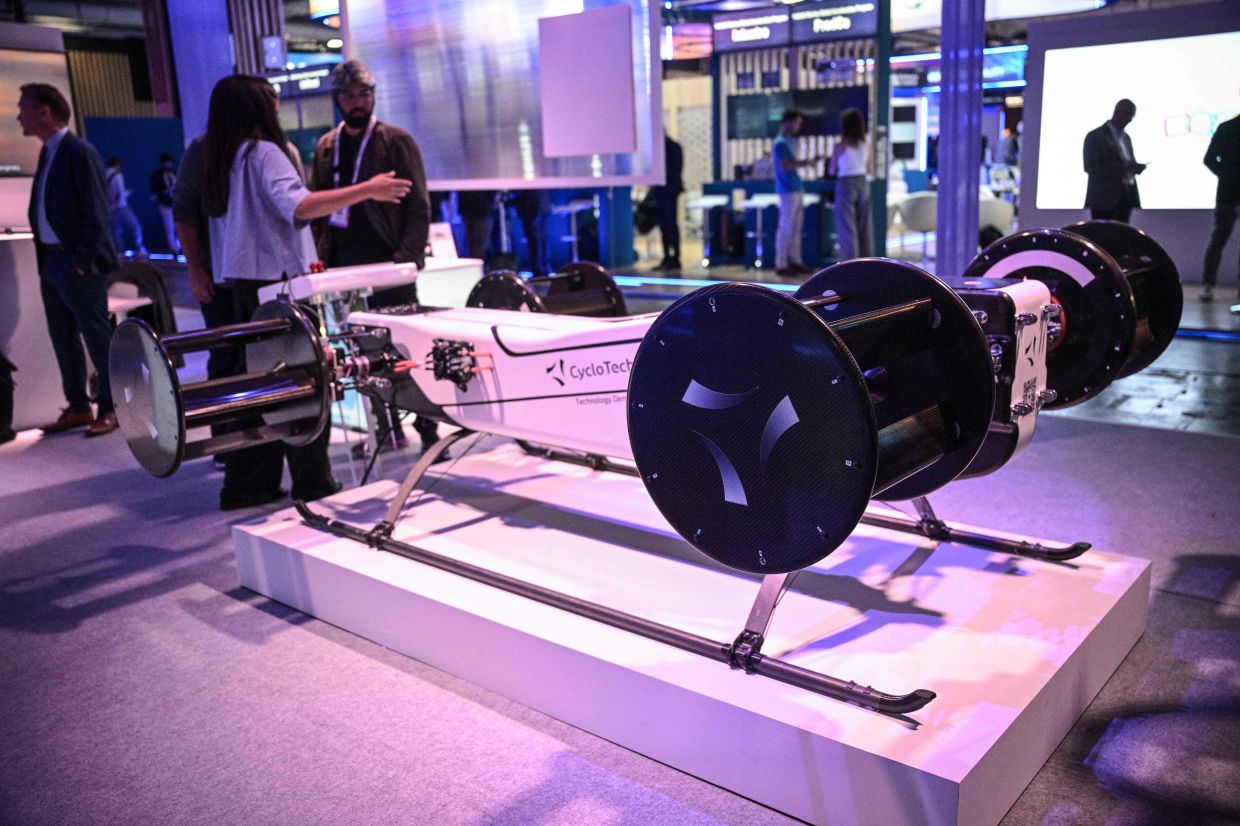
In the field of autonomous systems, Austrian startup CycloTech is revolutionising drone mobility with an unconventional motor design that challenges the limitations of current quadcopter technology. Their cylindrical motors, composed of multiple wing-shaped blade elements arranged around an open core, enable aircraft to perform manoeuvres previously thought impossible for this class of vehicle. Marketing chief Andrea Marchsteiner described how machines equipped with CycloTech's propulsion can maintain a stable hover reminiscent of traditional helicopters, accelerate forward with aeroplane-like efficiency, and execute precision landings in constrained spaces. The flexibility extends to mid-air braking and reverse flight—capabilities that could prove transformative across numerous applications. The company envisions deployment in urban delivery networks, where such agility would navigate congested cityscapes more efficiently, as well as in passenger transport and military operations. Having already accumulated €40 million in funding, CycloTech continues to pursue additional capital and strategic partnerships with aerospace and technology firms interested in integrating its motors into their platforms. For a region like Southeast Asia, where rapid urbanisation creates both challenges and opportunities for last-mile logistics, such drone innovations could reshape how goods and potentially people move through metropolitan areas in the coming decade.
The rise of generative artificial intelligence has created an alarming new threat: audio deepfakes that can convincingly mimic the voices of trusted contacts, family members or authorised service users. French technology firm Whispeak has positioned itself at the forefront of detecting and neutralising this emerging menace. The company, which originally developed voice-recognition systems for banking and financial services authentication, has pivoted its expertise toward identifying synthetic audio created by malicious actors. Chief executive Florent Van Calster highlighted the stark reality underlying this pivot: modern deepfake creation tools can now replicate someone's voice with remarkable accuracy in less than ten seconds, and many are freely available online. Whispeak's own artificial intelligence detection system, refined through three years of intensive development, has achieved recognition as a leading deepfake identifier, winning numerous international competitions. The firm reports an error rate averaging below one percent on available training datasets, though Van Calster candidly acknowledged that this space mirrors a perpetual arms race between defenders and attackers, with fraudsters continuously refining their techniques. Currently, Whispeak is collaborating with major French telecommunications operator Bouygues to screen incoming calls for deepfake signatures and alert users when potentially fraudulent audio is detected. As cybercriminals increasingly target financial institutions, government agencies and individuals across Southeast Asia—a region experiencing rapid digital expansion and adoption—such protective technologies become increasingly essential.
The final innovation capturing attention at Vivatech involves athletic performance monitoring, where Hong Kong-based startup PointFit is disrupting a space traditionally dominated by bulky, expensive sensor systems. The company has developed a simple adhesive patch containing miniaturised sensors that continuously monitor biomarkers including glucose and cortisol directly from the wearer's perspiration. Chief executive Kenny Oktavius, who began developing this technology as a university student in 2019, explained how PointFit's artificial intelligence engine constructs a personalised sweat index for each user, accounting for variables such as demographic profile and environmental temperature that influence biomarker readings. This approach offers a less invasive alternative to traditional blood testing while providing information that Oktavius argues is more meaningful than metrics like heart rate alone. He illustrated the limitation of conventional monitoring by pointing to elite marathon runners who use sophisticated equipment yet still suffer sudden collapses, demonstrating that heart rate data alone provides an incomplete picture of physiological stress. PointFit has already established partnerships with Red Bull's Athlete Performance Centre and Puma's Nitro Labs innovation division, validating the technology's potential for elite sports applications. Looking ahead, Oktavius envisions mainstream consumer availability through retail partners such as Decathlon and optical giant EssilorLuxottica, potentially bringing professional-grade biometric monitoring within reach of amateur athletes and fitness enthusiasts across Southeast Asia and beyond.