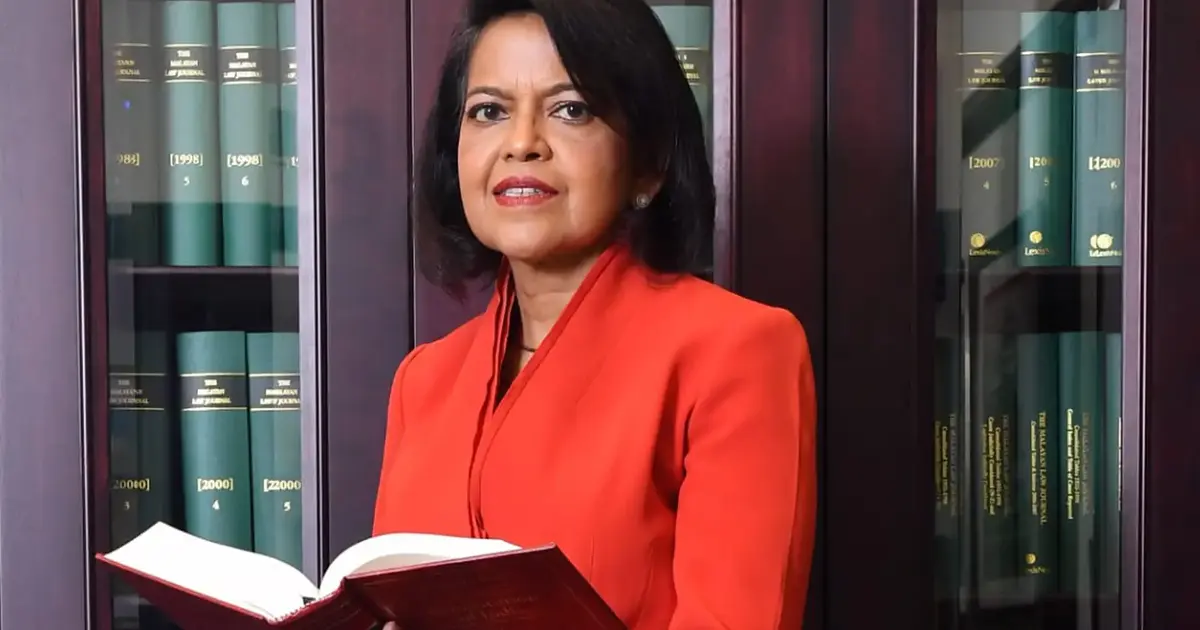
Nallini Pathmanathan, a retired judge from Malaysia's highest court, has taken the helm of the Malaysian Media Council at a pivotal moment for the nation's news industry. Her appointment to the chairmanship represents a significant shift in leadership for the regulatory body, bringing judicial experience to an organisation tasked with upholding media standards and accountability during an era of rapid technological change and evolving information landscapes.
The move signals the council's determination to strengthen governance and institutional credibility as newsrooms across the country confront multiple headwinds. Pathmanathan's background on the Federal Court bench suggests the council intends to leverage her judicial acumen and understanding of constitutional matters to navigate complex issues surrounding press freedom, media ownership regulations, and the balance between editorial independence and public responsibility.
Malaysia's media sector has encountered unprecedented disruption in recent years. Traditional outlets have seen advertising revenues migrate to digital platforms, forcing difficult decisions about resource allocation and editorial priorities. Simultaneously, the proliferation of online content and social media has blurred the boundaries between professional journalism and user-generated material, creating new questions about verification, source credibility, and the spread of misinformation. These structural challenges require not merely administrative oversight but strategic vision informed by deep understanding of constitutional frameworks and legal precedent.
Pathmanathan's judicial credentials position her to address regulatory gaps that have emerged as media ownership structures have become increasingly complex. Her experience interpreting constitutional provisions—particularly those governing freedom of expression under Article 10 of the Malaysian Constitution—brings intellectual firepower to discussions about the appropriate scope of media regulation. The Federal Court, as Malaysia's apex judicial body, regularly grapples with fundamental questions about rights, remedies, and the proper boundaries of state action. These competencies translate directly to the council's work in adjudicating disputes and establishing standards that protect both public interest and journalistic autonomy.
The timing of this appointment underscores industry anxiety about its future trajectory. News outlets in Malaysia, like their counterparts across Southeast Asia and globally, face existential questions about business models and sustainability. Advertising-dependent publications have watched their revenue bases erode as marketers shift spending toward targeted digital campaigns. Simultaneously, newsrooms have struggled to invest in investigative journalism and specialised reporting—the very activities that distinguish professional outlets from information aggregators. The council's role in ensuring media accountability becomes more rather than less important as resources for editorial oversight contract.
Pathmanathan's leadership may also prove consequential for how the council engages with questions of media pluralism and ownership concentration. Malaysia's media landscape, like many developing democracies, exhibits significant ownership consolidation in both print and broadcast sectors. The extent to which ownership structures should be regulated, and what limits might apply to cross-media ownership, represents a longstanding tension between commercial freedom and democratic health. A chairman with deep knowledge of constitutional jurisprudence and judicial reasoning can contribute sophisticated analysis to these debates, potentially elevating the council's voice in public discourse.
The Malaysian Media Council itself operates within a contested institutional space. As a self-regulatory body rather than a statutory authority, it derives influence largely from the industry's voluntary subscription and from broader stakeholder respect for its judgments. This structural position—neither fully autonomous government agency nor purely market-driven entity—requires leadership capable of building consensus among competing interests while maintaining principled commitment to editorial standards. Pathmanathan's experience navigating institutional hierarchies and pronouncing on contested matters of law suggests capability for this diplomatic dimension of the role.
Regional context matters here as well. Across Southeast Asia, media regulatory bodies grapple with balancing commercial viability, editorial freedom, and public trust. Singapore's Media Development Authority, Indonesia's independent press council, and Thailand's regulatory frameworks each reflect different attempts to square this circle. Malaysia's approach, relying substantially on industry self-regulation, places considerable weight on the credibility and judgment of the council's leadership. An appointment drawing from the judicial rather than purely journalistic realm represents a distinct institutional choice with implications for how the council articulates standards and adjudicates complaints.
The challenges confronting Malaysia's media industry will not resolve through leadership appointments alone. Structural economic pressures, technological disruption, and evolving audience consumption patterns present obstacles that no regulatory body can fully address. However, the council can meaningfully influence the environment within which outlets operate by maintaining rigorous standards, adjudicating complaints fairly, and articulating clear principles about the relationship between editorial independence and accountability. Pathmanathan's judicial background suggests the council is banking on these governance functions as its primary lever for impact.
Looking forward, Pathmanathan's tenure will likely be measured against her ability to maintain the council's credibility with both industry participants and the broader public. This requires earning trust from newsrooms that may perceive regulation as constraints on editorial judgment, whilst simultaneously demonstrating to audiences and policymakers that self-regulation can effectively address legitimate concerns about accuracy, fairness, and responsible journalism. The former judge's mandate, whether explicitly stated or implicit in her appointment, appears to centre on demonstrating that principled institutional leadership from the legal profession can bridge this divide and strengthen rather than undermine Malaysian journalism.

%22%2F%3E%3C%2Fpattern%3E%3C%2Fdefs%3E%3Crect%20width%3D%22100%25%22%20height%3D%22100%25%22%20fill%3D%22url(%23ph40buhg)%22%2F%3E%3Crect%20width%3D%22100%25%22%20height%3D%22100%25%22%20fill%3D%22url(%23ph40buhp)%22%2F%3E%3Ctext%20x%3D%2250%25%22%20y%3D%2250%25%22%20text-anchor%3D%22middle%22%20dominant-baseline%3D%22central%22%20fill%3D%22rgba(255%2C255%2C255%2C0.95)%22%20font-family%3D%22Georgia%2C%20'Times%20New%20Roman'%2C%20serif%22%20font-weight%3D%22700%22%20font-size%3D%22320%22%20letter-spacing%3D%22-0.02em%22%3EGRS%3C%2Ftext%3E%3C%2Fsvg%3E)