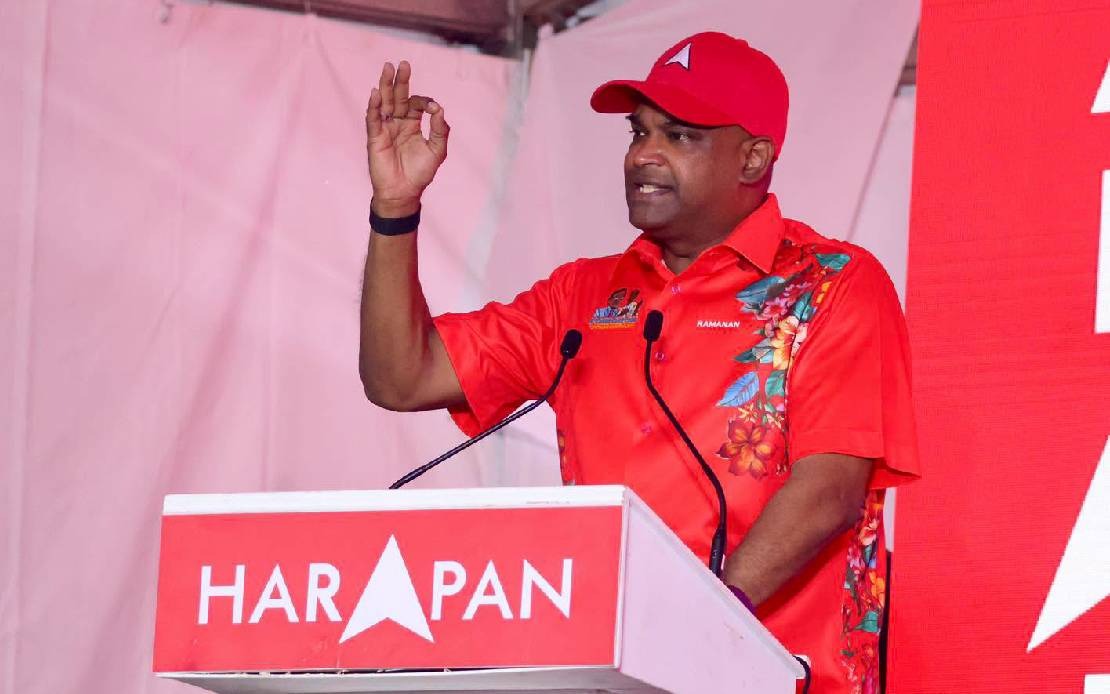
The Federal Government continues to regard Johor as among its most critical development frontiers, according to PKR Vice-President Datuk Seri R Ramanan, who outlined the administration's multifaceted approach to advancing the state through capital-intensive initiatives and targeted welfare measures. Speaking at a Johor Ke Depan roadshow in Simpang Renggam, Ramanan characterised the ongoing commitment as fundamental to ensuring equitable distribution of national prosperity across Johor's diverse communities and economic sectors.
The federal strategy encompasses a comprehensive portfolio of large-scale infrastructure undertakings designed to modernise Johor's productive capacity and connectivity. These projects form part of a broader developmental narrative that aims to position the state as a cornerstone of Malaysia's economic growth trajectory. By channelling significant resources into physical infrastructure, the government seeks to enhance living standards, facilitate commerce, and create employment pathways for local populations. The emphasis on infrastructure reflects recognition that Johor, as Malaysia's southernmost peninsula state and a critical economic hub bordering Singapore, requires sustained capital investment to maintain its competitive edge within the region.
Crucially, the federal push extends beyond concrete and steel into social safety mechanisms. A suite of assistance programmes targeting households and vulnerable groups has been deployed or expanded to ensure that development benefits permeate beyond business corridors into everyday family circumstances. These measures address housing, healthcare, education, and income support—areas where state-level outcomes directly influence voter perception of federal performance. For Johor residents, such programmes represent tangible recognition of local needs and aspirations, anchoring the abstract promise of national development in lived reality.
Ramanan's remarks carry particular weight as Johor moves toward its state election scheduled for July 11, with early voting commencing on July 7. A total of 172 candidates will contest across multiple state seats, making this poll a crucial test of political preferences in a state that has historically swung between different coalitions. The timing of Ramanan's intervention—emphasising federal support for Johor—signals that Pakatan Harapan (PH), currently leading the federal government, recognises the electoral stakes in the state. By framing federal investments as evidence of commitment, the coalition attempts to build momentum for its state-level candidates.
The political calculus underlying Ramanan's messaging extends to administrative synchronisation between Johor's state government and the federal administration. He explicitly called for voters to grant PH the state-level mandate, arguing that alignment between these two tiers of governance would accelerate project implementation and policy coherence. This argument addresses a practical reality: infrastructure and development initiatives often require coordination between federal funding, federal regulatory authority, and state-level implementation. Where the state government comes from a different political coalition than the federal government, bureaucratic friction and resource competition can slow execution. A unified PH administration across both levels could theoretically streamline decision-making and reduce delays.
Johor's strategic importance transcends routine electoral politics. The state remains Malaysia's industrial and manufacturing powerhouse, home to significant petrochemical, oil and gas, and semiconductor operations. Its proximity to Singapore creates opportunities for cross-border economic integration while also posing competitive pressures. Infrastructure investment in Johor therefore resonates across Malaysia's economic establishment, not merely within the state's borders. Enhanced port facilities, logistics networks, and transportation corridors benefit businesses nationwide and strengthen Malaysia's position in regional supply chains.
Yet Ramanan's assertion that Johor stands as a top federal priority warrants scrutiny against budgetary reality. While such statements are standard political rhetoric, actual resource allocation—reflected in annual budget tables, project timelines, and implementation metrics—reveals genuine priorities. Voters in Johor would be justified in examining whether announced projects have materialised, whether timelines have been met, and whether promised assistance programmes have reached intended beneficiaries. The gap between rhetoric and results often determines electoral outcomes.
The roadshow format itself merits consideration as a political tool. By convening PKR's Datuk Seri Amirudin Shari, Amanah's Faiz Fadzil, and individual PH candidates for Machap (Nur Hafiz Roslan), Benut (Abd Razak Ismail), and Layang-Layang (Guna Balakrishnan) at a single event, organisers sought to project coalition unity and substantiate collective commitment to Johor. Such gatherings aim to localise federal government messaging, embedding it in the presence of credible state-level voices and candidate-specific endorsements. For PH, this represents an attempt to counteract any perception that the federal government remains distant or indifferent to Johor-specific challenges.
The broader context involves Johor's recent political volatility. The state witnessed dramatic shifts following the 2022 general election, and subsequent intra-coalition dynamics have occasionally strained federal-state relations. Federal leaders understand that complacency in Johor invites electoral punishment. By prominently reasserting Johor's importance, the administration signals that neglect is not an option, even as it courts electoral support. For Malaysian observers across other states, Ramanan's statements illuminate how the federal government leverages resource allocation narratives during election campaigns.
Looking ahead, the July 11 election will test whether voter confidence in federal commitment translates into state-level support for PH candidates. Economic conditions, local governance records, and community-specific grievances will ultimately weigh as heavily as grand infrastructure announcements. Nevertheless, Ramanan's public emphasis on Johor as a federal priority establishes a baseline expectation: residents expect sustained investment, timely implementation, and visible progress. Should the forthcoming state government disappoint on these metrics, future federal pledges regarding development priorities will ring hollow.

