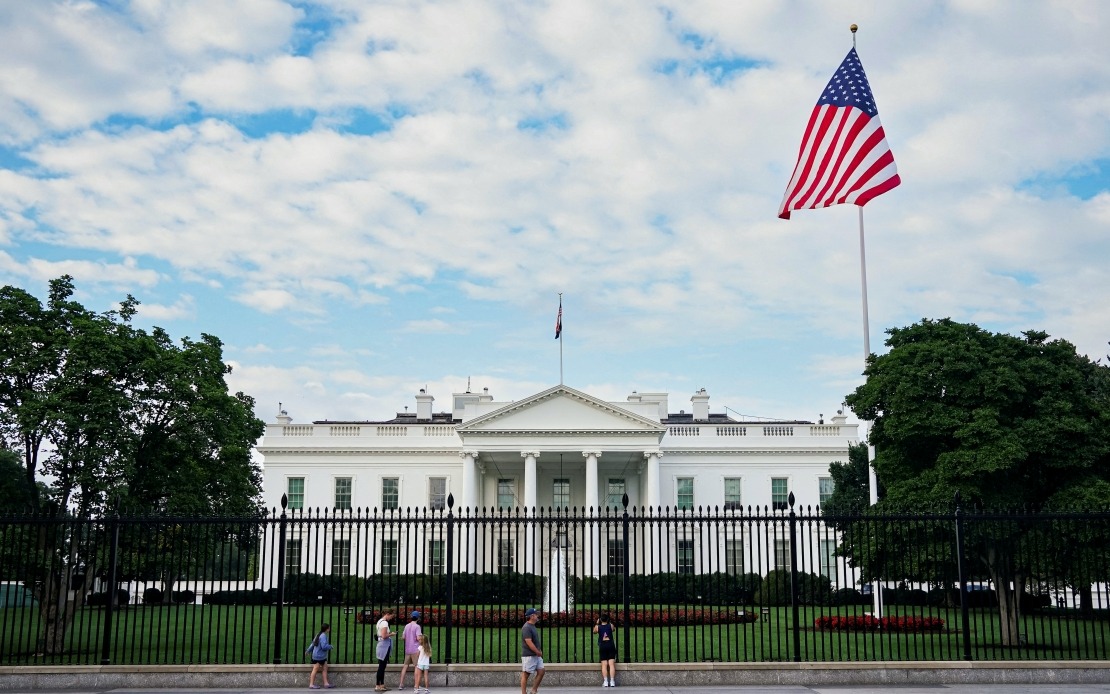
The Federal Bureau of Investigation has announced the successful prevention of coordinated attacks that were allegedly planned to target the UFC America 250 event held at the White House on Sunday, an unprecedented cage-fighting spectacle organized to commemorate President Donald Trump's 80th birthday celebration and the nation's 250th anniversary. FBI Director Kash Patel disclosed the foiled plot on social media, stating that law enforcement became aware of the potential threat on June 10, roughly three days before the event took place. The announcement comes as the United States confronts an escalating pattern of political violence, raising fresh concerns about security vulnerabilities around high-profile government venues and public gatherings.
According to multiple officials cited by Fox News, the alleged plot involved a sophisticated multi-stage assault design intended to maximize casualties and create maximum disruption. The first phase reportedly centred on deploying explosive-laden drones to strike buildings in proximity to the event venue, intended to create panic and chaos among attendees. This initial strike was meant to serve a tactical purpose beyond immediate destruction—it aimed to trigger a mass evacuation that would funnel crowds in a specific direction, thereby concentrating them in a designated area where a second element of the attack would be activated. Intelligence officials said the plan included positioning a sniper team in a pre-arranged location designed to intercept the fleeing spectators as they evacuated the affected area.
The scope of the alleged conspiracy extends considerably beyond the five individuals currently in custody. Federal investigators have identified 23 people believed to be part of a broader network of potential plotters, suggesting this was not an isolated incident but rather part of a coordinated recruitment and operational effort. Officials indicated that planning extended to what was characterized as a "second wave" assault, which would have involved storming the White House gates, presumably after initial chaos was sown by the drone and sniper elements. This multi-layered operational design reflects considerable tactical sophistication and coordination among the alleged conspirators, though authorities have not yet disclosed the ideological motivation or group affiliation driving the plot.
The White House hosted roughly 4,000 spectators for the unprecedented UFC America 250 event on the South Lawn, making it one of the most densely populated public gatherings on the presidential residence grounds in recent history. The decision to host a professional combat sports tournament at this location proved controversial, with two Virginia residents mounting a legal challenge arguing the event violated regulations governing use of the White House grounds. However, a federal judge sitting in the US District Court for the District of Columbia rejected this challenge on Friday, determining that the event could proceed without legal impediment. The court's decision allowed security preparations to move forward without disruption, though it also meant authorities had only days to implement the comprehensive security protocols necessary to protect thousands of attendees.
This incident represents a troubling escalation in what security experts and law enforcement officials describe as a broader deterioration in political stability and civility within the United States. The alleged coordinated nature of the threat, combined with evidence of network coordination among dozens of individuals, suggests organized intent rather than isolated extremist actions. For Malaysian and Southeast Asian observers, such incidents underscore the security challenges faced by democracies managing large public events while protecting national leadership and democratic institutions, challenges that parallel concerns in the region as political tensions intensify across various national contexts.
The timing of the threat—coinciding with both a presidential celebration and the nation's foundational anniversary—may indicate the conspirators sought to strike at symbolically significant moments. Whether the alleged plot was motivated by anti-government sentiment, opposition to the current administration, or other ideological drivers remains unclear from publicly available information. What is evident is that the multi-stage operational design suggests planning, coordination, and access to resources including drones and weapons, indicating this was not a spontaneous or opportunistic attack but a deliberate conspiracy requiring sustained preparation.
This foiled attack joins a troubling sequence of security incidents centered on American political figures and national symbols. In April, an armed individual breached security protocols at the White House Correspondents' Dinner, successfully penetrating a security checkpoint while carrying guns and knives before being apprehended. That individual faced charges related to attempted assassination of the president, demonstrating that security perimeters protecting senior government officials and major public events have experienced multiple breaches. These incidents collectively raise questions about the adequacy of current security protocols, intelligence gathering methods, and the capacity of law enforcement to identify and neutralize threats before they materialize into violence.
The FBI's preventive action in this instance highlights the critical importance of advance intelligence gathering and inter-agency cooperation in identifying conspiracy networks before they can activate operational plans. Director Patel's statement that "multiple individuals are now in custody, and alleged attacks were stopped in their tracks" suggests law enforcement had developed sufficient intelligence to make arrests, though it remains unclear whether arrests occurred before or during final operational stages. The identification of 23 additional individuals suggests ongoing investigation and potential for further arrests as authorities unwind the broader conspiracy network and establish the full extent of planning and coordination.
For the broader region, these security challenges illustrate why Southeast Asian nations must remain vigilant regarding the potential for organized violence targeting government installations and major public events. The increasing sophistication of weaponry available to potential conspirators—including commercially accessible drone technology—creates novel security challenges that transcend traditional perimeter defence. The incident also demonstrates the importance of robust intelligence-sharing mechanisms and rapid inter-agency coordination in responding to developing security threats, lessons relevant to regional security cooperation frameworks and bilateral intelligence partnerships.
The successful prevention of this alleged attack represents a significant counterintelligence success for federal authorities, though the identification of 23 additional potential conspirators suggests the investigation remains in active phases. As details emerge regarding the motivations, organizational structures, and intended targets of the broader conspiracy network, security analysts will likely examine whether this plot represents a unique incident or symptomatic of broader currents of violent extremism within American society. The incident underscores that protecting democratic institutions and public figures requires sustained intelligence efforts, inter-agency coordination, and continuous adaptation of security protocols to address evolving threats. For nations throughout Asia and the Pacific, the American experience offers important lessons regarding the persistent security challenges democracies face in balancing openness with protection.

%22%2F%3E%3C%2Fpattern%3E%3C%2Fdefs%3E%3Crect%20width%3D%22100%25%22%20height%3D%22100%25%22%20fill%3D%22url(%23ph40buhg)%22%2F%3E%3Crect%20width%3D%22100%25%22%20height%3D%22100%25%22%20fill%3D%22url(%23ph40buhp)%22%2F%3E%3Ctext%20x%3D%2250%25%22%20y%3D%2250%25%22%20text-anchor%3D%22middle%22%20dominant-baseline%3D%22central%22%20fill%3D%22rgba(255%2C255%2C255%2C0.95)%22%20font-family%3D%22Georgia%2C%20'Times%20New%20Roman'%2C%20serif%22%20font-weight%3D%22700%22%20font-size%3D%22320%22%20letter-spacing%3D%22-0.02em%22%3EGRS%3C%2Ftext%3E%3C%2Fsvg%3E)