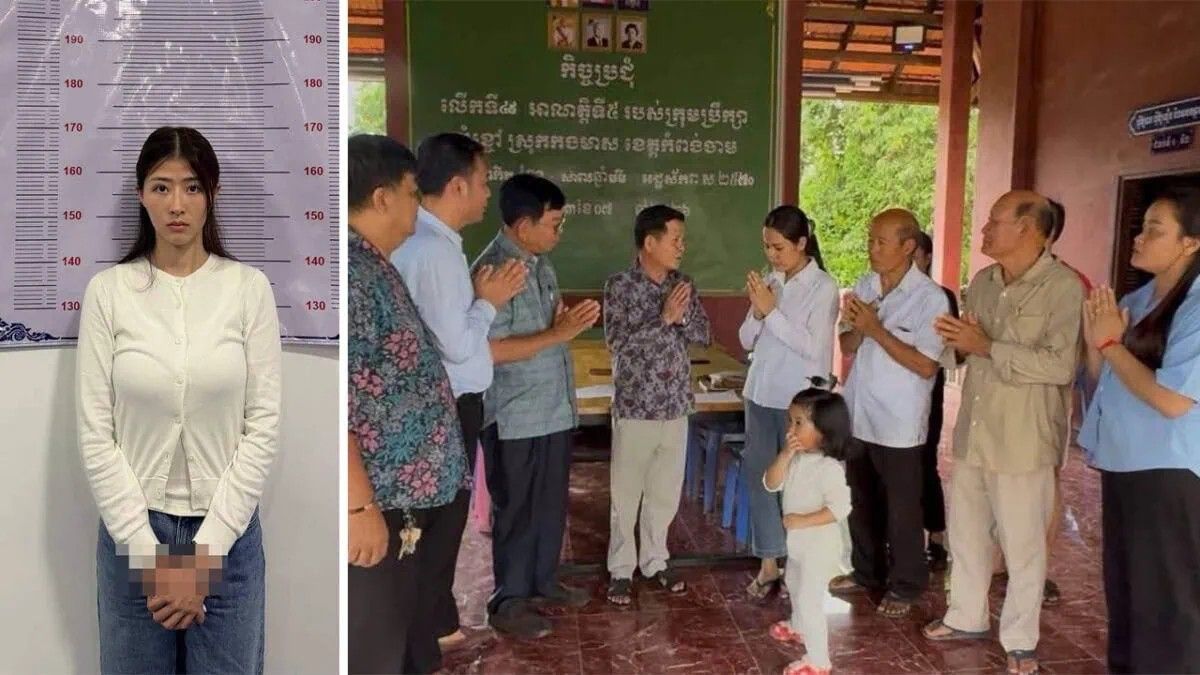
The family of Kuoch Limhan, a Ministry of Public Works and Transport official killed in a fatal traffic collision in Phnom Penh last month, has accepted an out-of-court settlement and withdrawn its civil complaint against the driver involved. The agreement, finalised on August 6, included a civil compensation payment of S$60,000 from Oknha Tong Hok Seng, father of the accused driver Sam Meychou, to Limhan's widow. The settlement represents a significant development in what has become a high-profile case in Cambodia's capital, though legal experts note that the resolution of the civil component does not insulate the defendant from ongoing criminal prosecution.
The fatal incident occurred on the night of July 28 in Sen Sok district when Limhan, an official with the construction laboratory division, was struck while riding his motorcycle. According to police investigations and eyewitness accounts, Meychou allegedly crossed the centre line while attempting to overtake another vehicle, colliding directly with Limhan's motorcycle. The impact was catastrophic—Limhan was reportedly returning home with milk for his young daughter when the collision occurred, and he was killed instantly at the scene. Security camera footage from nearby establishments captured the immediate aftermath, showing Meychou and a companion departing the accident site in a tuk tuk while Limhan's body remained on the rain-soaked street, an image that circulated widely on social media and intensified public attention on the case.
Meychou surrendered herself to authorities on July 30, approximately 36 hours after the collision. The Phnom Penh Municipal Court responded swiftly, announcing charges of causing a fatal traffic accident and fleeing the scene on July 31. Following interrogation and evidence review, the investigating judge ordered her detention pending trial, a decision that reflected the severity of the charges and the apparent strength of the prosecution's preliminary case. The criminal case number 4396 was formally filed with the court on the same date, establishing the legal framework for what observers expected would be a contested prosecution.
The civil settlement was negotiated and formalised through an agreement witnessed by Kong Sekleng, the commune chief, and lawyer Phon Thearin, indicating that both sides sought to resolve the compensation dispute without prolonged litigation. Seung Kimhor, acting as representative for Limhan's family, signed the agreement alongside Oknha Tong Hok Seng. The settlement document explicitly characterises the resolution as amicable and stipulates that both parties have resolved their dispute through mutual understanding and goodwill, language that suggests genuine negotiation rather than coercion. Critically, the agreement includes a clause preventing either party from pursuing additional claims or demands related to the incident.
The decision by Limhan's family to accept the settlement reflects the financial and emotional toll of protracted legal proceedings in Cambodia's judicial system. Traffic deaths, particularly those involving high-profile government officials, typically generate intense media scrutiny and public pressure for swift justice. By accepting the civil compensation, the family has secured immediate financial relief to support the widow and child left behind, addressing the immediate material consequences of Limhan's death. The S$60,000 payment, while substantial, appears calibrated to resolve civil liability without necessarily implying guilt in the criminal context—a distinction Cambodia's legal framework permits under its separation of civil and criminal proceedings.
However, the withdrawal of the family's civil complaint does not compromise the criminal case against Meychou. The prosecution, operating independently of the victim's family and representing the state's interest in enforcing traffic laws and public safety, will proceed with its charges. This bifurcation is standard in many jurisdictions but can create tension in societies where victims' families traditionally play a central role in the pursuit of justice. The criminal investigation will continue to rely on the physical evidence collected at the scene, vehicle examination, witness testimony, and the security footage that documented both the collision and Meychou's subsequent departure. The prosecution must establish guilt beyond reasonable doubt regardless of the family's settlement, though the withdrawal of the civil claim may signal to the court that the victim's family does not view the circumstances as warranting the maximum possible sentences.
The case underscores persistent challenges in Cambodia's approach to traffic safety and accountability. Hit-and-run incidents remain distressingly common in Phnom Penh, where motorcycles dominate traffic and enforcement of traffic laws has historically been inconsistent. The fact that Meychou initially fled the scene rather than remaining to assist the victim reflects a troubling pattern in Cambodian traffic culture, where drivers sometimes prioritise avoiding immediate confrontation over providing emergency assistance. The swift police response and court action in this instance suggests that the prominence of the victim—a government official—may have accelerated the normally sluggish pace of Cambodian criminal justice, raising questions about the differential treatment of cases involving ordinary citizens.
For Malaysian and Southeast Asian observers, the case illustrates the complexity of resolving traffic deaths across the region's diverse legal systems. Malaysia's approach to hit-and-run cases typically prioritises criminal accountability and victim compensation through statutory schemes rather than private settlement negotiations. Cambodia's willingness to permit families to withdraw civil complaints, while maintaining criminal prosecution, reflects a different balance between restorative and punitive justice. Understanding these variations is particularly important for Malaysian expatriates and business people operating in Cambodia, who may find themselves navigating unfamiliar legal territory should they become involved in traffic incidents.
The continuation of the criminal case suggests that Cambodian authorities intend to pursue the matter vigorously, despite the family's settlement. If convicted, Meychou faces penalties that could include substantial imprisonment and fines under Cambodia's traffic laws, though the family's withdrawal of the civil complaint may influence sentencing considerations. The case will likely be closely monitored by civil society organisations and international observers focused on rule of law in Cambodia, as it represents an opportunity for the judicial system to demonstrate consistent application of traffic safety standards regardless of defendants' social or economic status. The next phase of proceedings—the full criminal trial—will determine whether the judiciary can deliver accountability in a case that has already captured public attention and raised expectations for justice.

