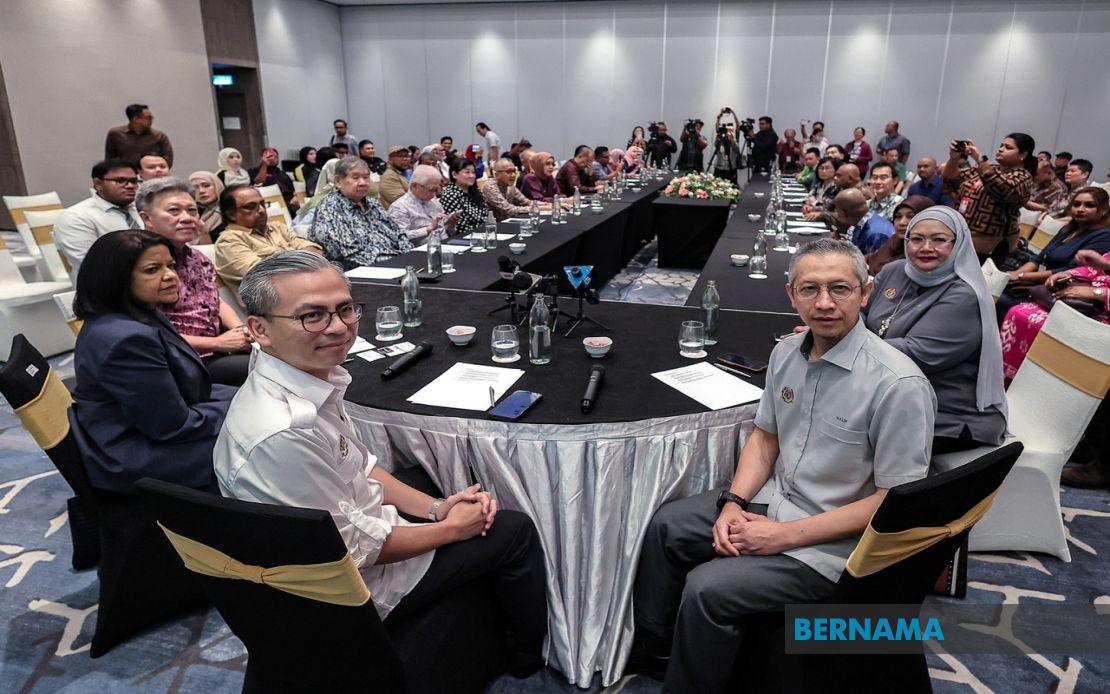
Communications Minister Datuk Fahmi Fadzil has unveiled a proposal to institutionalise dialogue between the government and Malaysia's media industry by incorporating dedicated retreat sessions into every future edition of the National Journalists' Day (HAWANA) celebration. Speaking at a press conference in Butterworth following an extensive two-hour dialogue with media representatives during HAWANA 2026, Fahmi outlined a vision for creating a formal, recurring platform through which journalists and news organisations can systematically channel feedback, insights and legislative proposals to the government.
The minister indicated that the Communications Ministry would coordinate with the Malaysian Media Council (MMC) to establish and oversee these retreat sessions, ensuring they maintain consistency and professional standards across subsequent iterations of the annual celebration. By formalising the retreat process rather than treating it as a one-off engagement, the government appears intent on demonstrating a sustained commitment to consulting the media sector on matters of mutual concern.
According to Fahmi, these structured retreat sessions would serve multiple functions within the broader ecosystem of government-media relations. Beyond simply creating space for conversation, the retreats would function as a systematic mechanism for collecting submissions that address both immediate industry grievances and longer-term strategic concerns. The scope would extend to encompassing proposed amendments to existing legislation and regulatory frameworks, giving journalists and media executives a legitimate channel through which to advocate for legal reforms.
The retreat format also recognises the distinction between the sustainability challenges facing Malaysia's news organisations and broader policy questions affecting the sector. By deliberately separating discussion of industry viability concerns from general communications policy matters, the government signals an understanding that different segments of the media conversation require tailored attention. This approach acknowledges that economic survival issues facing mainstream media outlets warrant specific focus and potentially distinct policy responses.
One of the most pressing concerns Fahmi identified during the dialogue relates to the economic viability of mainstream media in the digital age. He highlighted a critical imbalance whereby local news content, when republished or distributed through social media platforms, generates no direct financial return for the original news organisations or journalists who produced it. This dynamic represents a fundamental threat to the business models upon which Malaysia's established media institutions have traditionally relied, forcing a recalibration of how content creation can remain financially sustainable.
Recognising the transnational dimension of this challenge, Fahmi indicated that the government stands ready to facilitate discussions between Malaysian media organisations and major social media platforms regarding revenue-sharing arrangements or other compensation mechanisms. The minister's willingness to serve as an intermediary or facilitator in negotiations between domestic media companies and international technology firms reflects an acknowledgment that individual news organisations may lack sufficient bargaining power to negotiate independently with Silicon Valley giants. This represents a recognition that government intervention may be necessary to level what has become an increasingly asymmetrical relationship.
The dialogue session itself drew participation from significant figures across Malaysia's media and government hierarchy. Present were Communications Ministry secretary-general Datuk Abdul Halim Hamzah and deputy secretary-general for Strategic Communications and Creative Industry Datuk Bahria Mohd Tamil. The Malaysian National News Agency (Bernama) delegation included chairman Datuk Seri Wong Chun Wai, chief executive officer and HAWANA 2026 working committee chair Datin Paduka Nur-ul Afida Kamaludin, and editor-in-chief Arul Rajoo Durar Raj. Additionally, the Malaysian Media Council's chairman Tan Sri Nallini Pathmanathan attended alongside senior executives from various private media organisations, indicating broad representation across the sector.
The depth and duration of engagement—with the dialogue extending nearly two hours—suggests that both government and media representatives viewed this as substantive discussion rather than ceremonial exercise. The presence of senior permanent government officials alongside ministerial representation indicates that the government is approaching media engagement at an institutional level rather than through ad-hoc political gestures. This structural positioning may signal genuine intent to implement outcomes from the dialogue rather than treating such sessions as public relations exercises.
For Malaysia's media landscape, this proposal carries significant implications. The formalisation of regular retreat sessions could establish precedent for systematic government-media consultation, potentially creating expectations that government will maintain responsive engagement with journalistic concerns. This institutionalisation might also strengthen the position of the Malaysian Media Council as the primary coordinating body for industry representation, though questions remain about how effectively the council represents diverse media interests, particularly those of smaller or independent news organisations.
The economic sustainability crisis facing Malaysia's news organisations reflects global challenges affecting the entire journalism sector. However, the particulars of Malaysia's context—the dominance of a few large media conglomerates, regulatory constraints on certain news outlets, and the rapid shift of advertising revenue toward digital platforms—create a distinctly local dimension to the problem. Fahmi's acknowledgment of this challenge suggests the government recognises that without addressing media viability concerns, the pool of journalists and news organisations capable of sustaining professional reporting capacity will continue to contract.
The proposal also raises questions about the government's broader vision for the media sector's role in Malaysian society. By positioning regular dialogue sessions within HAWANA celebrations rather than establishing them as separate, standalone forums, the government integrates media consultation into celebration of the journalism profession itself. This framing suggests that supporting media sustainability is conceived as consistent with celebrating journalistic achievement rather than as a separate or defensive measure.
Moving forward, the success of these proposed retreat sessions will depend significantly on how transparently the government addresses proposals emerging from the sessions and how systematically it communicates progress on media-related policy matters. The commitment to regular engagement rings hollow if subsequent government action fails to demonstrate responsiveness to documented industry concerns. Establishing clear mechanisms for tracking how industry proposals are processed through government channels would substantially enhance the credibility and legitimacy of these retreat initiatives.