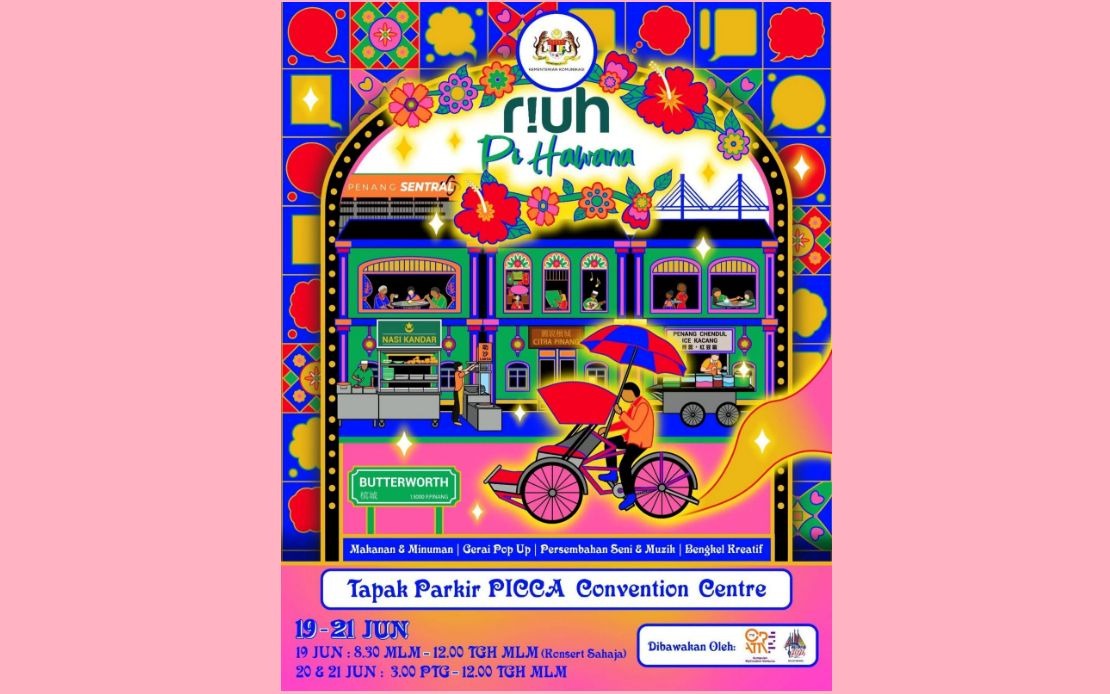
Three of Malaysia's most energetic rock and alternative bands are set to lead a major music and cultural festival in Penang this month. Exists, Bunkface and Masdo will headline the RIUH Pi HAWANA Carnival, taking place from June 19 to 21 at the PICCA Convention Centre Parking Lot at Butterworth Arena. The three-day event, organised by MyCreative Ventures alongside the National Journalists' Day celebration (HAWANA) 2026, promises to blend live performances with interactive cultural workshops, food experiences and community activities in a laid-back, family-oriented setting that appeals to all ages.
The carnival's timing is no coincidence—it runs parallel to a major national conference for media professionals. The HAWANA 2026 Summit, to be opened by Prime Minister Datuk Seri Anwar Ibrahim on June 20, is expected to draw approximately 1,000 journalists and media workers from across Malaysia and internationally. This positioning allows the carnival to function both as entertainment and as a reflection of Malaysia's media sector's commitment to public engagement and cultural expression. The summit carries the theme "Media Integrity strengthens Credibility," emphasising the role professional journalism plays in building public trust—a message the carnival's community-focused programming reinforces.
Scheduling across the three days reflects a measured approach to visitor flow and programming. On Friday, June 19, performances run from 8.30 pm until midnight, with Exists taking the opening slot to set the tone for the weekend. Saturday and Sunday extend operating hours, running from 3 pm through midnight, allowing families to attend earlier sessions while evening crowds build for the main headline acts. Bunkface will perform on June 20, while Masdo closes the festival on June 21, creating a natural narrative arc across the event.
Beyond the three headliners, the carnival curates a diverse supporting lineup that spotlights Penang's local music talent. Chelsea Ng, Sakura Band, Fugo, Saint Kylo, Lucidrari and Budak Nakal Hujung Simpang will rotate through performance slots throughout the weekend, ensuring attendees experience variety and discover emerging acts. This roster composition—mixing established names with rising artists—reflects a deliberate strategy to build audience loyalty while introducing listeners to fresh sounds, strengthening the local music ecosystem.
The event organisers project around 30,000 visitors over three days, making this a significant gathering for the Penang entertainment calendar. To accommodate and engage this crowd, the carnival extends well beyond live music. Local food and beverage vendors will establish stalls, creating economic opportunities for small entrepreneurs and offering visitors authentic regional cuisine. Local brands will display their products, turning the carnival into an informal marketplace that strengthens connections between creators and consumers.
A standout feature is the slate of interactive creative workshops designed to demystify artistic practices and encourage hands-on participation. Cyanotype printmaking and lumen photography using silver offer visitors tangible experiences in darkroom techniques that many will encounter for the first time. Stone seal carving provides insight into traditional craftsmanship, while zine-making workshops teach self-publishing fundamentals—all practical skills with growing appeal among younger audiences interested in independent creative work.
Three workshops specifically celebrate Penang's cultural heritage. Nyonya beading experiences connect participants to the intricate traditions of Peranakan communities, whose influence on Malaysian culture remains profound yet often underexplored. The Boria heritage exploration activity preserves knowledge of this theatrical form—a uniquely Malaysian performance genre that blends comedy, social commentary and musical storytelling. By embedding these workshops within a contemporary music festival, the carnival positions traditional culture not as museum artefacts but as living, evolving practices relevant to modern audiences.
For Malaysian entertainment audiences, particularly those in the northern states, the carnival represents a substantive alternative to Kuala Lumpur-centric events. Penang's position as a cultural hub historically distinct from the capital means regional audiences often experience touring shows rather than events genuinely rooted in local artistic communities. The RIUH Pi HAWANA Carnival, with its emphasis on Penang-based performers and heritage activities, asserts the state's independent creative identity while fostering community pride in local talent.
The orchestration of the carnival alongside HAWANA 2026 also signals a broader institutional recognition that media professionals and cultural creators share common interests in transparency, community dialogue and creative freedom. By hosting a public festival during a media summit, organisers implicitly acknowledge that journalism and the arts serve complementary functions—both depend on honest expression and public trust. For journalists attending the summit, the carnival offers an evening respite and a visible reminder of the cultural vibrancy they cover and help preserve.
From a practical standpoint, the extended hours and weekend scheduling remove barriers to attendance. Evening-only programming on Friday suits working visitors, while daytime activities on Saturday and Sunday accommodate families and tourists exploring Penang. This flexibility acknowledges the diverse schedules of potential attendees and maximises the carnival's reach across demographic and income groups. The atmosphere is deliberately framed as relaxed rather than exclusive, mirroring global trends toward festivals that prioritise accessibility and community participation over premium ticketing.
The carnival also demonstrates the viability of regional entertainment investment outside Klang Valley. With music venues in secondary cities facing economic pressures, large-scale events like this provide crucial visibility and revenue opportunities for local bands, vendors and creative workers. Success here may encourage similar initiatives in other states, gradually decentralising Malaysia's entertainment infrastructure and reducing industry over-concentration in one metropolitan area.
Looking at broader implications, the RIUH Pi HAWANA Carnival exemplifies how cultural events can serve multiple functions simultaneously—entertaining audiences, supporting local creators, preserving heritage and building institutional legitimacy for media organisations. For anyone in Penang or neighbouring states seeking live music, meaningful cultural engagement and community atmosphere, the June 19-21 event offers rare substance alongside spectacle.

%22%2F%3E%3C%2Fpattern%3E%3C%2Fdefs%3E%3Crect%20width%3D%22100%25%22%20height%3D%22100%25%22%20fill%3D%22url(%23ph40buhg)%22%2F%3E%3Crect%20width%3D%22100%25%22%20height%3D%22100%25%22%20fill%3D%22url(%23ph40buhp)%22%2F%3E%3Ctext%20x%3D%2250%25%22%20y%3D%2250%25%22%20text-anchor%3D%22middle%22%20dominant-baseline%3D%22central%22%20fill%3D%22rgba(255%2C255%2C255%2C0.95)%22%20font-family%3D%22Georgia%2C%20'Times%20New%20Roman'%2C%20serif%22%20font-weight%3D%22700%22%20font-size%3D%22320%22%20letter-spacing%3D%22-0.02em%22%3EGRS%3C%2Ftext%3E%3C%2Fsvg%3E)