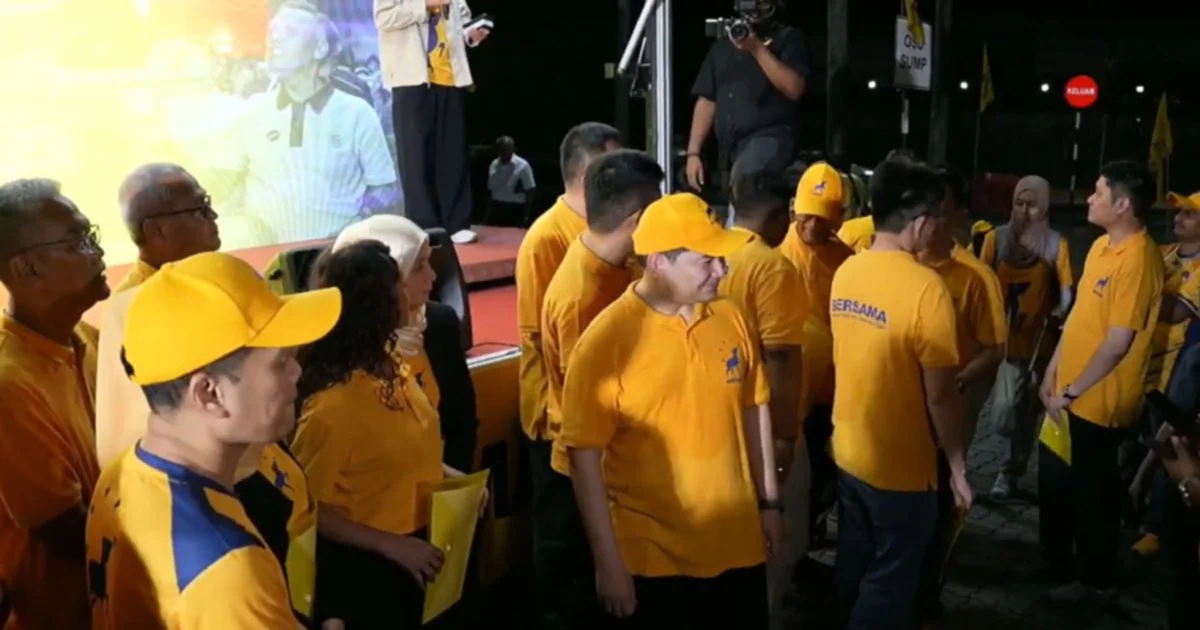
Parti Bersama Malaysia (Bersama) formally announced its roster of 15 candidates for the Johor state election on Friday, signalling the party's intention to field a diverse group representing different segments of the electorate. The lineup encompasses business professionals, service sector managers, and working-class representatives, reflecting the party's strategy to broaden its appeal across socioeconomic groups in the southern state.
The inclusion of an entrepreneur, supermarket manager, and logistics worker within the slate demonstrates Bersama's effort to present candidates with practical experience in commerce, retail operations, and supply chain management—sectors that significantly impact household living costs and employment in Johor. This approach contrasts with traditional party nominations that have historically favoured politicians with longer parliamentary records or party seniority.
Johor remains a crucial battleground in Malaysian politics, both as the country's second-most populous state and a stronghold of alternating political fortunes. Recent state elections in the peninsula have shown that voter expectations increasingly emphasize economic competence and grassroots understanding of daily commercial pressures. Bersama's candidate selection appears calibrated to address these concerns by showcasing individuals whose backgrounds directly intersect with the concerns of ordinary Johoreans.
The party's decision to field 15 candidates across the state's constituencies reflects its commitment to contesting a substantial portion of available seats. However, Bersama enters the race as a newer entrant in Malaysia's crowded political landscape, competing against established parties with deeper organizational infrastructure and longer voter recognition. The business and working-class composition of its slate may provide an alternative pitch to constituencies fatigued by conventional political narratives.
For Malaysian voters in Johor, the emergence of candidates with direct experience in entrepreneurship and frontline service roles offers a different value proposition. An entrepreneur brings familiarity with business regulations, investment climate, and private sector employment creation. A supermarket manager understands retail operations, consumer prices, supply chain efficiency, and the pressures facing small and medium enterprises. A logistics worker brings firsthand knowledge of transportation infrastructure, port operations, and the practical challenges of freight movement—all issues affecting business costs and competitiveness in the state.
Bersama's emphasis on occupational diversity within its candidate pool also carries implicit messaging about meritocracy and representation of non-elite backgrounds. Malaysian politics has long grappled with perceptions of disconnection between politicians and constituents, particularly regarding understanding of workplace realities and consumer pressures. Candidates with active experience in commerce and logistics can legitimately claim direct familiarity with conditions their constituents face daily.
The timing of Bersama's announcement positions the party as an active contender ahead of the anticipated Johor state election, though no official polling date has been set. State elections typically occur within a five-year window from the previous polling, with Johor's most recent election held in 2023. The party's preparation and candidate vetting process suggests confidence in its readiness to campaign across multiple constituencies simultaneously.
From a regional Southeast Asian perspective, Bersama's candidate strategy reflects broader global trends toward voter preference for representatives with professional expertise rather than purely political backgrounds. Similar patterns have emerged in Indonesia, Thailand, and the Philippines, where technocrats and business professionals increasingly seek electoral office. This phenomenon suggests evolving voter sophistication and demand for practical problem-solving capability in governance.
For Johor's economic interests, the presence of candidates with logistics and retail sector expertise could prove significant. The state hosts critical infrastructure including Port Klang's operations, manufacturing zones, and extensive road networks serving the Singapore trade corridor. Candidates versed in these sectors may prioritize issues such as port efficiency, infrastructure maintenance, and logistics cost reduction—concerns that directly affect Johor's competitive position in Malaysia's economic architecture.
Bersama's broader challenge remains building voter familiarity and trust in a political environment dominated by larger, established parties. While occupational diversity in its candidate slate demonstrates strategic thinking about voter appeals, the party must also invest in campaign messaging that clearly articulates how its candidates' backgrounds translate into concrete policy advantages for Johor constituents. The supermarket manager and logistics worker, for instance, must effectively communicate how retail and transportation sector knowledge informs their positions on state development priorities.
The party's ability to retain and develop these candidates beyond the election cycle will also determine whether Bersama's occupational diversity represents genuine long-term transformation in Malaysian politics or merely a campaign tactic. Voters increasingly distinguish between genuine representation and superficial attempts to signal relatability. Bersama's candidates must demonstrate sustained commitment to addressing the specific concerns of their professional communities if they succeed in winning seats.
Looking ahead, Bersama's Johor lineup will be closely observed as an indicator of how Malaysian voters respond to candidates whose primary credentials derive from business and professional experience rather than political networks or party lineage. The state election will test whether occupational diversity and practical sector expertise have become sufficiently valued by the electorate to overcome the institutional advantages enjoyed by longer-established parties with entrenched organizational machinery across constituencies.

