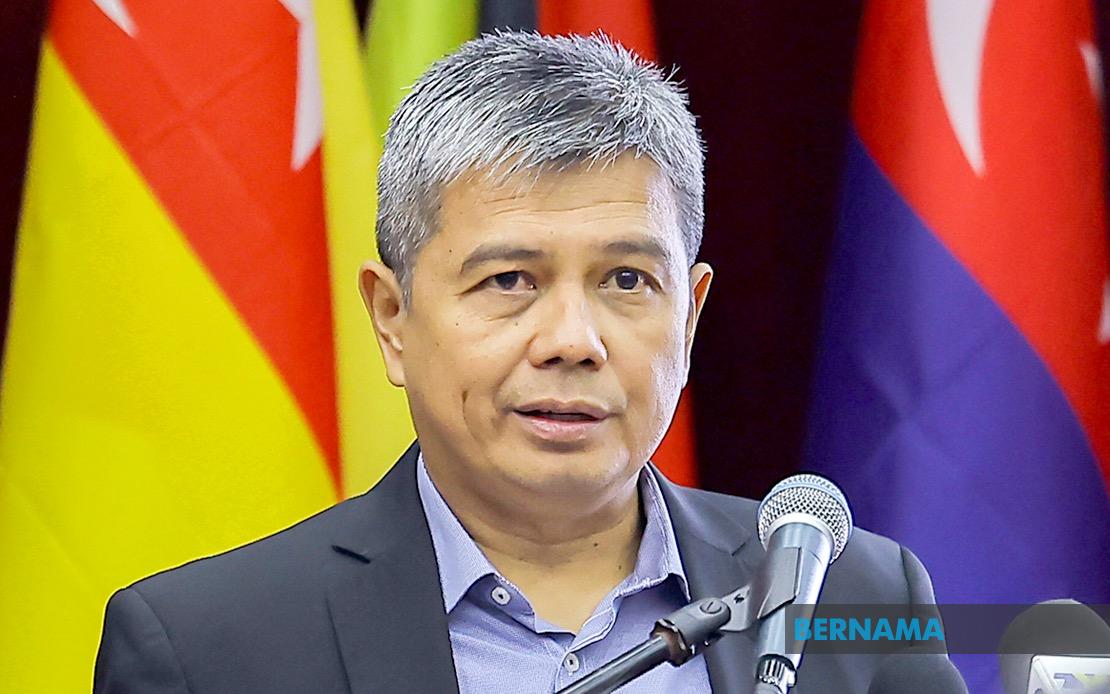
The Election Commission has issued a formal reminder to all political parties contesting tomorrow's 16th Johor State Election that the campaign period closes definitively at 11.59 pm tonight, after which all electoral activities must cease immediately. EC secretary Datuk Khairul Shahril Idrus delivered the notice from the commission's Johor Bahru office, underscoring the enforcement of a legally mandated blackout period that precedes all Malaysian state and federal elections.
Once the official campaign period expires, contesting parties face strict prohibitions on conducting any form of electioneering activity. This encompasses conventional ground operations such as direct voter canvassing near polling locations, as well as digital campaigning across the full spectrum of social media platforms including Facebook, X, Instagram, TikTok and Threads. The comprehensive nature of these restrictions reflects the commission's determination to create an equal information environment for voters in the final hours before balloting, preventing last-minute messaging campaigns that might unduly influence electoral decisions.
A particular focus of the commission's reminder concerns the operation of campaign booths, locally termed barung, on polling day itself. The EC has explicitly prohibited all contesting parties and candidates from opening, establishing, or maintaining any such structures at polling stations or their vicinity. Violating this provision constitutes a criminal offence under the Election Offences Act 1954, carrying potential penalties that underscore the seriousness with which Malaysia's electoral framework treats campaign conduct breaches.
Beyond campaign restrictions, the commission has issued detailed guidance for voters participating in tomorrow's election. Notably, the use of mobile phones inside polling streams—the individual voting compartments where voters mark their ballots—is strictly prohibited. This regulation aims to prevent the clandestine capture and circulation of ballots or voting processes, safeguarding ballot secrecy. Signage alerting voters to this restriction will be prominently displayed both outside and within polling stations to ensure widespread awareness.
Voters who arrive at polling stations with mobile phones must deposit them in designated collection areas immediately upon receiving their ballot papers, then retrieve the devices only after completing their votes. This procedural requirement, while seemingly administrative, reflects constitutional concerns about protecting the confidentiality of voting behaviour—a cornerstone principle of democratic elections in Malaysia. The arrangement acknowledges contemporary reality while maintaining institutional safeguards developed over decades of electoral practice.
The commission has encouraged voters to avoid congestion by casting ballots during recommended time slots accessible through the MySPR Semak application, which displays individualised voting windows tailored to distribute voter flows evenly throughout polling day. However, voters retain the flexibility to vote at any point during the official polling hours of 8 am to 6 pm, or according to the specific gazetted operating schedules of their respective polling centres. This balance between efficiency encouragement and voter flexibility characterises the commission's administrative approach.
Authentication procedures at polling stations require all voters to present valid identity documentation for verification against electoral rolls. The commission has emphasised that voters must retain personal control of identification documents at all times, declining requests from anyone other than authorised election officials to handle such materials. This safeguard prevents fraudulent ballot casting or voter impersonation, threats that have occupied the commission's attention in previous electoral cycles across Malaysia.
Employers throughout Johor have received reminders of their legal obligations to provide eligible employees with adequate time to vote in tomorrow's election. The Election Offences Act 1954 prescribes this requirement, creating a statutory duty that carries enforcement mechanisms. Given that state elections occur on working days to maximise participation among employed populations, this employer cooperation remains operationally essential for achieving sufficient voter turnout.
Preparations for tomorrow's election reached completion this week when the commission conducted comprehensive equipment inspections on Thursday and Friday. Presiding Officers at each of Johor's polling streams received thoroughly checked ballot boxes, indelible ink supplies, printed ballot papers, and voting booths following these verification procedures. The commission's quality assurance process examined not only that equipment quantities matched allocation schedules, but also that all materials functioned correctly and showed no signs of damage or degradation that might compromise voting operations.
These logistical preparations, combined with the campaign blackout enforcement and voter guidance, represent the institutional mechanisms through which Malaysian electoral commissions seek to ensure procedurally sound and administratively efficient elections. The Johor State Election tomorrow will test whether these systems function as designed, with the commission's final evening reminders serving as the last formal communication before voters proceed to the ballot box.

