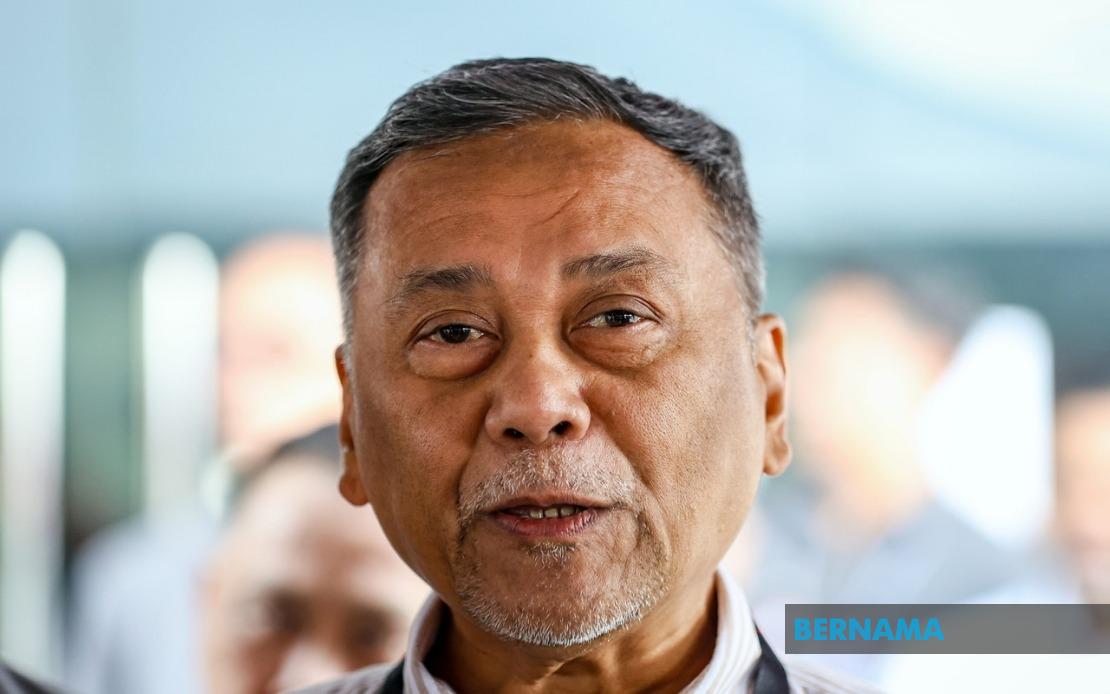
With polling day just hours away in Johor's 16th state election, the Election Commission has clarified the division of responsibilities in tackling illicit campaign content, placing digital material firmly within the Malaysian Communications and Multimedia Commission's oversight. EC Chairman Datuk Seri Ramlan Harun made the distinction explicit during an inspection of ballot preparation facilities in Pontian on July 10, underscoring how campaign violations now span both physical and virtual spaces in Malaysia's evolving electoral landscape.
The EC's enforcement mechanisms have proven effective in addressing traditional campaign breaches, with physical posters and banners removed from various locations after complaints reached the commission's dedicated team. However, the rapid proliferation of social media and online advertising platforms has created jurisdictional complexities that require a more specialized approach. By routing online complaints through the MCMC, the EC acknowledges that digital content regulation demands technical expertise and real-time monitoring capabilities that regulatory agencies with specific telecom mandates are better positioned to provide.
The timing of this clarification reflects broader tensions emerging during the campaign period. UMNO Supreme Council member Datuk Seri Shahaniza Shamsuddin had publicly challenged the EC's response to campaign materials featuring former Prime Minister Datuk Seri Najib Razak and his wife, Datin Seri Rosmah Mansor—individuals not standing as candidates. Shahaniza, serving as Pahang UMNO's information chief, characterized such imagery as deliberately inflammatory and designed to manipulate voter sentiment through association with prominent political figures outside the formal candidate pool.
The use of non-candidate personalities in electoral campaigns raises deeper questions about the integrity of voter choice and the boundaries of acceptable political communication. When campaign materials prominently feature individuals not directly accountable to voters through the electoral process, the potential for voter confusion and manufactured sentiment becomes significant. This is particularly acute in Malaysia's competitive multi-party environment, where brand loyalty to party leadership figures can overshadow substantive policy discussion and local candidate assessment.
Ramlan's visit to ballot box checking centres at Dewan Jubli Intan Sultan Ibrahim in Pontian and the Permas Multi-purpose Hall in Kukup underscored the commission's broader focus on electoral administration during this critical pre-poll phase. The inspection regime reflects the EC's commitment to ensuring logistical readiness and transparency in vote handling procedures, building public confidence that counting mechanisms are secure and properly supervised across diverse polling locations.
The distinction between physical and digital enforcement carries practical implications for Malaysian voters seeking to report violations. Those encountering problematic posters or banners can continue lodging complaints with the EC's established enforcement framework, triggering rapid removal procedures. Those encountering inappropriate campaign content online—whether through social media, messaging applications, or web platforms—should channel reports directly to the MCMC, which maintains dedicated systems for investigating and removing content that violates electoral regulations or broadcasting guidelines.
For the MCMC, this delegation represents an expanded operational role during election periods, requiring coordination between multiple regulatory bodies and platform providers. The commission must balance rapid content removal against free speech protections and ensure that reports are genuinely frivolous or malicious complaints rather than legitimate political expression. This threshold-setting becomes particularly sensitive in Malaysia, where media ownership concentration and political polarization can create incentives for complaining parties to weaponize complaint mechanisms against rival campaigns.
The 2.7 million voters preparing to elect 56 assemblymen across 16 state constituencies will likely encounter campaign materials across multiple channels over the coming hours. Rural voters may primarily encounter physical posters and direct outreach, while urban and younger demographics will be more exposed to digital campaign content. This fragmentation means that campaign regulatory effectiveness depends on coordinated action across the EC and MCMC, with clear public understanding of which agency addresses which violations.
Shahaniza's specific concern about imagery of Najib and Rosmah touches on precedents from previous Malaysian elections where personality-driven campaigns have dominated policy discussions. The normalization of such practices could fundamentally alter voter behavior, potentially subordinating local accountability to national party leadership narratives. Enforcing clear boundaries on non-candidate imagery represents an effort to preserve meaningful local contestation within state elections, preventing them from becoming mere referendums on federal party leadership.
As voters head to polls on July 11, the EC's clarified guidance provides a practical roadmap for civic participation in campaign regulation. The division between EC physical enforcement and MCMC digital authority reflects institutional evolution in response to Malaysia's increasingly hybrid media environment. Whether this two-track system proves sufficiently responsive and coordinated will likely influence how electoral administration adapts to future elections when digital campaigning continues expanding.
The Johor election ultimately tests not only voter preferences among competing political visions but also the institutional resilience of Malaysia's electoral framework when confronted with modern campaign techniques. By explicitly directing online complaint channels toward the MCMC, the EC signals that effective electoral governance requires clear institutional boundaries and complementary regulatory expertise. This technical clarification, seemingly procedural, actually reflects substantive evolution in how Malaysian democracy navigates the intersection of traditional and digital political communication.

