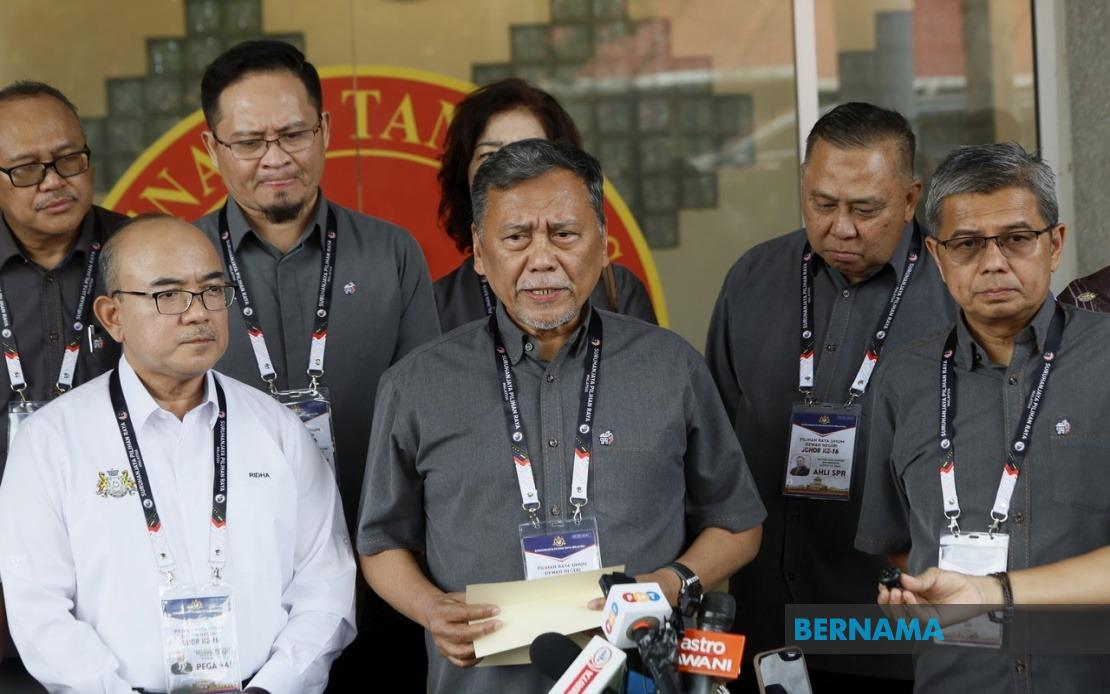
The Election Commission has set an ambitious target of achieving a 96 per cent turnout during early voting for the Johor state election, drawing on historical performance data from comparable electoral exercises. EC chairman Datuk Seri Ramlan Harun announced the projection at Kem Mahkota in Kluang, indicating that the commission's expectations are anchored in proven patterns of participation among eligible voters in advance polling.
Early voting for the Johor state election proceeded across a geographically distributed network of 62 centres throughout the state, operating under a staggered schedule to accommodate different voter cohorts and administrative requirements. While 29 centres concluded operations at midday, a further five venues closed at 2 pm, leaving 28 centres operational until 5 pm. This carefully orchestrated timetable reflects the commission's aim to process a substantial electorate efficiently while maintaining security and procedural integrity.
The early voting phase was restricted to a defined segment of the eligible population: 20,607 voters in total, comprising military personnel and their families alongside police officers and their spouses. Among these, 8,544 represented Malaysian Armed Forces members and their spouses, whilst 12,063 comprised police personnel and their families. This targeted early voting window allows essential security and defence personnel to participate in the democratic process despite their operational commitments.
The logistical framework for managing early ballots demonstrates the commission's meticulous approach to electoral security and result verification. Ballot boxes from all 62 early voting centres would be transferred to police stations for secure storage, remaining sealed until counting operations began. This measure protects ballot integrity and prevents premature tabulation of results, ensuring that early votes remain confidential and secure until the official counting process commences.
Result tallying is scheduled for Saturday evening, with the commission expecting to announce full outcomes before midnight and potentially as early as 10 pm. This compressed timeline reflects improved operational efficiency and coordination among relevant agencies, though the actual duration will depend on variables including voter participation rates, ballot validation procedures, and the complexity of any closely contested constituencies. The Saturday evening count represents a departure from traditional counting schedules and demonstrates the commission's commitment to rapid result publication.
For Malaysia's broader electoral system, the Johor state election serves as a significant bellwether regarding public engagement with democratic processes. With approximately 2.7 million ordinary voters eligible to cast ballots, the overall participation rate will provide valuable insight into voter sentiment and engagement levels across the state. EC officials have explicitly appealed to this substantial electorate to honour their civic responsibilities and participate actively in Saturday's polling, framing electoral participation as a fundamental contribution to the nation's democratic framework.
The targeting of a 96 per cent turnout among early voters reflects the commission's confidence in the procedural framework and suggests that military and police personnel consistently demonstrate high participation rates. However, the success of this ambitious target depends on effective communication with eligible early voters, accessible voting locations, and minimal logistical disruptions. Any shortfall from the projected figure would merit analysis regarding barriers to participation or shifts in engagement patterns among security service members.
From a Southeast Asian perspective, Malaysia's electoral administration continues to evolve in response to operational challenges and technological opportunities. The structured approach to early voting demonstrates institutional maturity and reflects lessons learned from previous electoral cycles. The commitment to announcing results before or around 10 pm represents a modernisation effort that contrasts with some regional precedents, signalling enhanced operational capacity within the Malaysian electoral commission.
The Johor state election occurs within a broader context of Malaysian politics characterised by competitive dynamics and shifting voter preferences. State-level elections serve as intermediate testing grounds between federal electoral cycles, offering opportunities to gauge public opinion on specific policy domains and political personalities. The turnout figures and geographical distribution of results from this exercise will inform analysts and political strategists regarding underlying trends in voter behaviour and regional political alignments.
Chairman Ramlan's appeal to voters encapsulates the commission's foundational philosophy: that democratic participation represents both an individual right and a collective responsibility essential to sustaining Malaysia's constitutional framework. By framing the election within this broader civic context, commission leadership seeks to encourage voluntary participation whilst maintaining the institutional neutrality and procedural impartiality expected of Malaysia's electoral administration. The success of Saturday's polling will be measured not only in raw turnout figures but also in the public's perception of the election's fairness, accessibility, and integrity.

