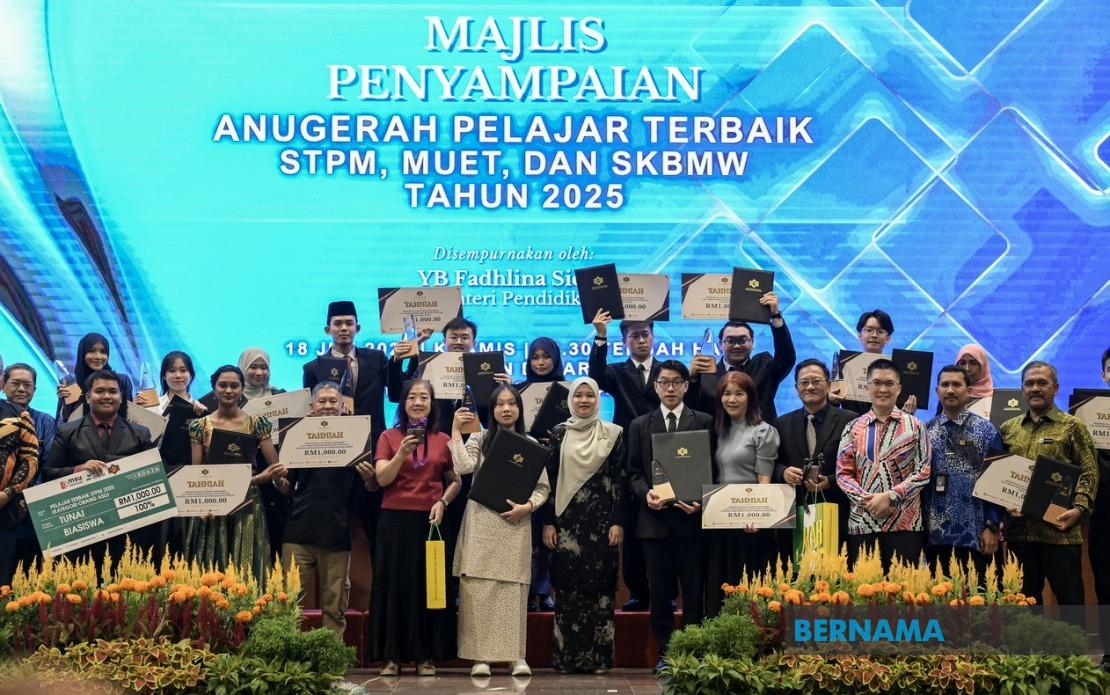
The government has unveiled a fresh scholarship programme targeting Malaysia's top pre-university performers, with public universities committing to sponsor tuition fees for eighteen exceptional STPM 2025 graduates. Education Minister Fadhlina Sidek introduced the initiative during an awards ceremony at the Malaysian Examinations Council headquarters in Kuala Lumpur, signalling renewed commitment to elevating the Form Six pathway and countering declining enrolment in the traditional pre-university stream.
The tuition fee sponsorships represent a structural shift in how Malaysia incentivises academic excellence at the post-secondary level. Rather than offering one-off merit awards, participating public universities have agreed to integrate scholarship provision into their undergraduate admissions process, effectively lowering the financial barrier for high-performing students who might otherwise pursue alternative qualifications or study abroad. This systematic approach differs markedly from past ad-hoc arrangements and suggests institutional buy-in from the higher education sector.
Fadhlina framed the initiative within broader efforts to revitalise Form Six education, which has experienced demographic pressures and shifting student preferences toward other pathways over recent years. The scholarship programme complements parallel investments in infrastructure and resources, including the expansion of Form Six Colleges across the country, provision of smartboards in classrooms, and the government's MADANI Book Vouchers scheme designed to ease financial strain on students and families.
The timing of this announcement reflects deeper anxieties within Malaysia's education establishment about maintaining the pipeline of well-qualified university entrants. Form Six has historically served as a testing ground for academic rigour and a source of highly prepared undergraduates, yet many families now view it as longer and less flexible than diploma programmes or international qualifications. By offering direct financial incentives to top performers, the government hopes to signal that excellence in STPM carries tangible rewards and opens doors to quality public university education without prohibitive costs.
Accompanying the scholarship news was confirmation that the 2025 STPM cohort achieved an aggregate cumulative grade point average of 2.88, a marginal improvement from 2.85 in the preceding year. While the increase appears modest, education officials characterised it as evidence that systemic reforms and enhanced teaching resources are beginning to yield results. For Malaysian university admissions officers and employers, the metric suggests that the quality of pre-university qualifications remains relatively stable even as the absolute number of Form Six candidates fluctuates.
Deputy Education Minister Wong Kah Woh, MPM chairman Prof Datuk Dr Md Amin Md Taff, and KPPM director-general Datuk Dr Mohd Azam Ahmad attended the awards presentation, underscoring the multi-level government engagement with pre-university education. Their collective presence signalled that the scholarship initiative enjoys backing across the education ministry's bureaucracy and that expanding Form Six capacity remains a priority in the broader education transformation agenda.
From a regional perspective, Malaysia's push to strengthen domestic pre-university pathways carries implications for cross-border education mobility. As neighbouring countries like Singapore and Thailand offer increasingly competitive alternatives, and private institutions proliferate within Malaysia, publicly-funded scholarships serve as a tool to retain talented students within the government-sponsored system. This approach mirrors strategies adopted elsewhere in Southeast Asia, where education ministers seek to build domestic human capital capacity while managing fiscal constraints.
The scholarship scheme also addresses equity concerns within the pre-university landscape. Historically, Form Six has drawn disproportionately from urban and higher-income households, while rural and economically disadvantaged students may lack access to information about the pathway or face affordability barriers. By tying scholarships explicitly to merit rather than means-testing, the government positions the programme as universally accessible to any student capable of achieving top grades, thereby theoretically opening doors across socioeconomic lines.
Yet questions remain about the scale and sustainability of the initiative. With only eighteen scholarships distributed across all public universities nationally, the programme affects a tiny fraction of the STPM cohort. While symbolic in importance, the initiative will likely require expansion if it is to meaningfully shift perceptions about Form Six affordability or alter student choice patterns at the margins. Future iterations may incorporate broader bursary schemes or living allowances to address financial barriers beyond tuition fees.
The announcement arrives amid ongoing curriculum reviews and pedagogical reforms within Malaysian secondary education. Policymakers continue debating whether the STPM examination structure, assessment methods, and subject offerings adequately prepare students for modern workforce demands and university-level study. The scholarship initiative operates in parallel with these structural conversations, suggesting that improving Form Six appeal requires both financial incentives and substantive educational improvements.
Looking ahead, the success of this scholarship scheme will likely influence whether the government expands it to subsequent STPM cohorts and whether private universities adopt similar models. Should the programme prove effective in boosting Form Six enrolment and completion rates, it could serve as a template for other initiatives aimed at strengthening traditional educational pathways against competition from alternative qualifications and private providers increasingly dominating Malaysia's post-secondary landscape.

%22%2F%3E%3C%2Fpattern%3E%3C%2Fdefs%3E%3Crect%20width%3D%22100%25%22%20height%3D%22100%25%22%20fill%3D%22url(%23ph40buhg)%22%2F%3E%3Crect%20width%3D%22100%25%22%20height%3D%22100%25%22%20fill%3D%22url(%23ph40buhp)%22%2F%3E%3Ctext%20x%3D%2250%25%22%20y%3D%2250%25%22%20text-anchor%3D%22middle%22%20dominant-baseline%3D%22central%22%20fill%3D%22rgba(255%2C255%2C255%2C0.95)%22%20font-family%3D%22Georgia%2C%20'Times%20New%20Roman'%2C%20serif%22%20font-weight%3D%22700%22%20font-size%3D%22320%22%20letter-spacing%3D%22-0.02em%22%3EGRS%3C%2Ftext%3E%3C%2Fsvg%3E)