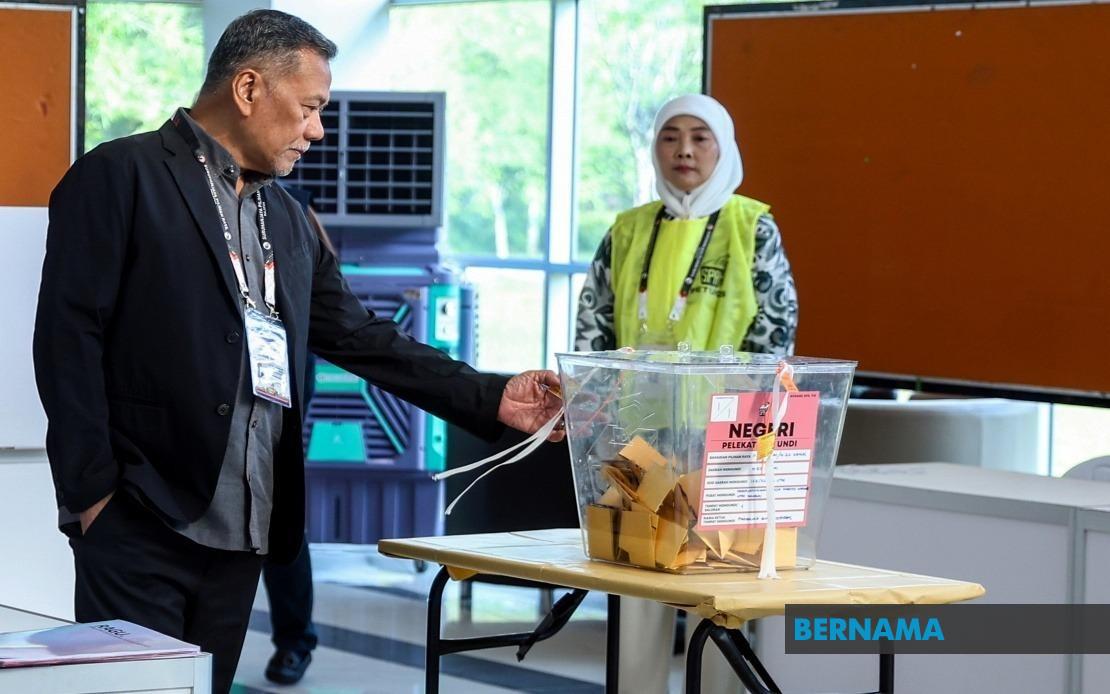
Election Commission chairman Datuk Seri Ramlan Harun made a comprehensive tour of four polling centres across Johor Bahru on July 11 to verify that voting procedures were functioning efficiently and transparently during the state election. The inspection, which began at approximately 8:50 am, represented a formal oversight mechanism to monitor poll day operations and ensure that democratic standards were being upheld across the constituencies.
Ramlan's first stop was the Dewan Raya Taman Ungku Tun Aminah, the designated polling centre for the Skudai constituency. This facility operated seven separate polling streams, each designed to manage voter flow and reduce queuing times. The opening inspection allowed the EC chairman to assess the physical infrastructure, including ballot distribution systems, screening booths, and counting arrangements that had been prepared for the electorate.
From Skudai, the EC chairman proceeded to the Raja Zarith Sofiah Library at Universiti Teknologi Malaysia in Senai. This polling centre, with two polling streams, presented a different operational scale compared to the initial venue. University settings often face unique challenges in managing student voters and ensuring accessibility for academic staff and campus residents, making this inspection particularly relevant for understanding how Malaysian polling authorities handle institutional voting environments.
The Kempas constituency's polling centre at Sekolah Agama Taman Bukit Mewah was Ramlan's third destination on the inspection route. Operating six polling streams, this location represented another configuration of voter distribution management. Religious school premises as polling stations carry particular significance in Malaysia's electoral landscape, reflecting the integration of community institutions in democratic processes.
Ramlan concluded his visit at Sekolah Menengah Kebangsaan Bandar Uda Utama in the Perling constituency, which managed nine polling streams—the largest operational footprint across the four centres visited. The varying numbers of streams across constituencies reflect demographic distribution and anticipated voter turnout patterns, requiring careful resource allocation and personnel deployment to ensure efficient processing throughout the day.
During each stop, election officials provided detailed briefings on how voting procedures were executing according to established protocols. These discussions would have covered critical operational aspects including voter identification verification, ballot issuance protocols, electronic voting machine functionality (if applicable), and safeguards against irregularities. Such technical consultations are essential for identifying any procedural bottlenecks or implementation challenges emerging in real-time.
Beyond procedural verification, Ramlan also examined the physical facilities available to voters and election personnel. This includes assessing the adequacy of voting booths for privacy, availability of accessible facilities for voters with disabilities, staff rest areas, and sanitation provisions. In Malaysia's hot and humid climate, particular attention would be given to ventilation, water availability, and general comfort conditions that affect both voter experience and staff productivity during extended polling periods.
The inspection tour reflects the Election Commission's role as an independent umpire in Malaysia's electoral system. Datuk Seri Ramlan Harun's personal oversight of polling day operations underscores the institutional importance placed on maintaining public confidence in electoral integrity. In Malaysia's competitive political environment, where state elections can substantially shift the balance of power, visible commitment to fair administration helps legitimize outcomes across all segments of the voting population.
For Malaysian voters and the broader Southeast Asian region observing Malaysian politics, such oversight activities demonstrate the procedural maturity of the country's electoral institutions. The EC's capacity to conduct systematic inspections across multiple constituencies simultaneously indicates institutional resources and organizational capability that are not uniformly present across all regional democracies. This operational robustness helps explain why Malaysian elections, despite occasional controversies, generally proceed without the logistical chaos that sometimes accompanies polls in other developing democracies.
The scheduled press conference following Ramlan's inspection would provide an opportunity to communicate findings to media representatives and, through them, to the voting public. These statements become part of the post-election narrative, contributing to overall assessments of electoral credibility. In an era of intense political polarization, the tone and content of official statements from independent bodies like the EC carry significance beyond mere procedural reporting.
The 16th Johor state election represented a significant electoral exercise with implications for both state-level governance and broader Malaysian political dynamics. The commission's commitment to maintaining standards across all polling venues, as evidenced by Ramlan's personal inspection schedule, demonstrates how contemporary Malaysian institutions manage the challenges of administering elections across diverse geographical and demographic settings. This attention to detail at operational ground level contributes to the incremental trust-building necessary for sustained democratic participation in competitive electoral systems.

