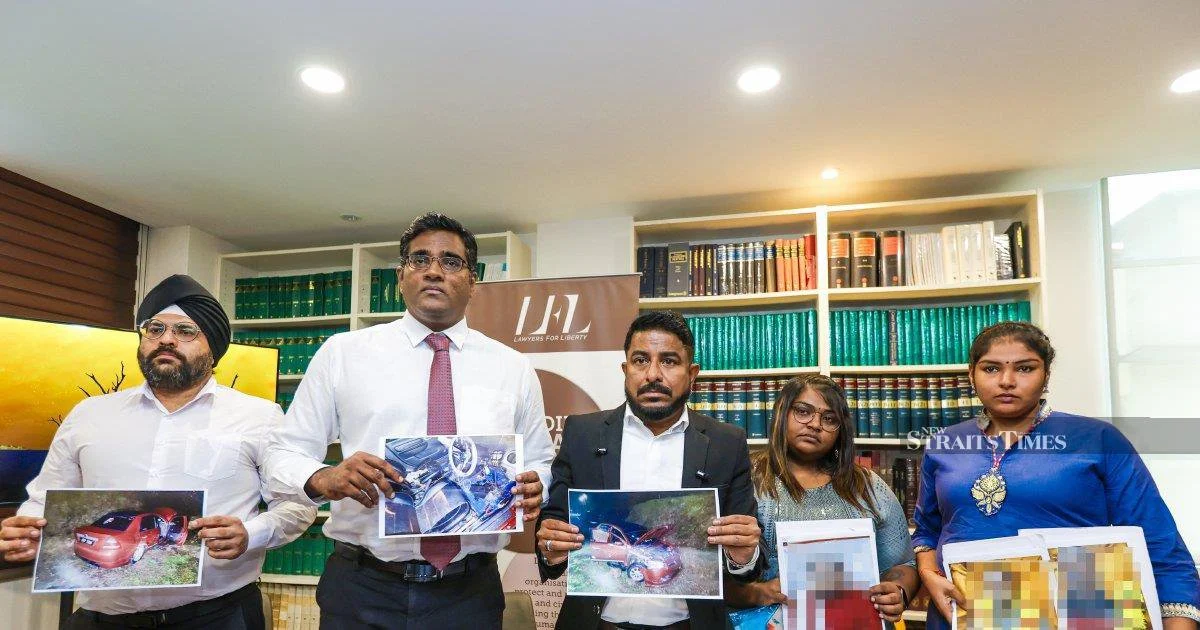
The grieving families of three men killed in a police shooting in Durian Tunggal, Melaka have escalated their push for answers by calling on the Malaysian Anti-Corruption Commission to investigate the manner in which authorities have handled the incident. The demand, raised in Putrajaya, signals growing frustration among the victims' relatives over what they perceive as inadequate accountability and potential obstruction in the official response to the deaths.
Police shootings that result in fatalities remain contentious matters in Malaysia, particularly when circumstances surrounding the incident remain unclear to the public and families of the deceased. The Durian Tunggal case appears to fall into this category, with relatives suggesting that standard investigative procedures may have been compromised or bypassed. By invoking the MACC, the families are attempting to shift scrutiny from regular police oversight mechanisms to an independent anti-corruption body with broader investigative powers and a mandate to examine administrative impropriety.
The decision to seek MACC involvement reflects a broader pattern seen in Malaysia where families of individuals killed by state actors increasingly distrust conventional investigative channels. When deaths occur during police operations, the same police force that was involved in the incident typically leads aspects of the inquiry, creating a structural conflict of interest that families and civil rights advocates have repeatedly flagged as problematic. The MACC's intervention could theoretically provide greater independence, though the commission has its own limitations in investigating operational police conduct.
The three men's deaths in Durian Tunggal add to a growing catalogue of fatal police encounters in Malaysia that have prompted public concern and family-led activism. Each such incident raises questions about police training, rules of engagement, and the adequacy of post-incident investigations. The families' move suggests they believe the standard administrative or internal processes have either failed to address their concerns or moved at a pace they consider unacceptable.
Malaysia's police force operates under significant pressure, managing public order and security across a diverse, densely populated country. However, this operational context does not diminish the need for transparent, impartial investigations when lethal force results in death. The challenge lies in balancing institutional deference to law enforcement with the legitimate demand for external accountability. The families' petition to the MACC represents an attempt to recalibrate this balance in their favour.
The MACC, established under the Malaysian Anti-Corruption Commission Act 2009, possesses broad powers to investigate corruption and misconduct in government and related bodies. Police personnel and operations can fall within its purview, particularly if decisions or actions are alleged to involve abuse of authority or concealment. However, the commission's capacity to investigate operational police decisions—such as the circumstances requiring the use of lethal force—remains legally and practically limited compared to its core anti-corruption mandate.
From a regional perspective, Malaysia is not alone in grappling with accountability for fatal police encounters. Neighbouring countries including Singapore, Thailand, and the Philippines face similar pressures, with varying approaches to independent investigation and public oversight. Malaysia's informal reliance on family activism and civil society pressure, rather than robust institutional mechanisms, suggests a gap in statutory safeguards that regional peers have increasingly sought to address.
For the families involved, the Durian Tunggal incident represents not merely a personal tragedy but a test of whether Malaysia's institutional frameworks can deliver justice and transparency in sensitive cases involving state actors. Their decision to escalate the matter to the MACC, rather than accept preliminary findings or await internal reviews, signals that trust in existing mechanisms has eroded. This dynamic, if widespread, carries implications for police-community relations and public confidence in law enforcement across the country.
The outcome of any MACC involvement will likely set a precedent for how similar cases are handled going forward. If the commission agrees to investigate and identifies substantive concerns about case mishandling, pressure may mount for reforms to how police deaths are reviewed. Conversely, if the MACC declines jurisdiction or finds insufficient grounds for action, families may seek remedies through civil courts or international human rights mechanisms, further complicating Malaysia's institutional response.
The families' initiative also reflects the evolving role of civil society in Malaysian governance. Absent a statutory public inquiry mechanism for police shootings, relatives have become de facto drivers of accountability, leveraging media attention, legal advocacy, and inter-agency pressure to demand oversight. This places significant burden on individual families while highlighting a systemic gap: Malaysia lacks a dedicated, independent body with explicit authority to investigate fatal police encounters, a feature present in many comparable democracies.
As the families pursue their MACC complaint, the broader question of police accountability in Malaysia remains unresolved. Whether this particular case prompts institutional reform or becomes another instance of protracted, fragmented investigation will depend on political will and the MACC's interpretation of its own mandate. For now, the families' persistence in Putrajaya underscores the determination of those seeking answers to remain engaged despite the obstacles inherent in challenging state institutions.

%22%2F%3E%3C%2Fpattern%3E%3C%2Fdefs%3E%3Crect%20width%3D%22100%25%22%20height%3D%22100%25%22%20fill%3D%22url(%23ph40buhg)%22%2F%3E%3Crect%20width%3D%22100%25%22%20height%3D%22100%25%22%20fill%3D%22url(%23ph40buhp)%22%2F%3E%3Ctext%20x%3D%2250%25%22%20y%3D%2250%25%22%20text-anchor%3D%22middle%22%20dominant-baseline%3D%22central%22%20fill%3D%22rgba(255%2C255%2C255%2C0.95)%22%20font-family%3D%22Georgia%2C%20'Times%20New%20Roman'%2C%20serif%22%20font-weight%3D%22700%22%20font-size%3D%22320%22%20letter-spacing%3D%22-0.02em%22%3EGRS%3C%2Ftext%3E%3C%2Fsvg%3E)