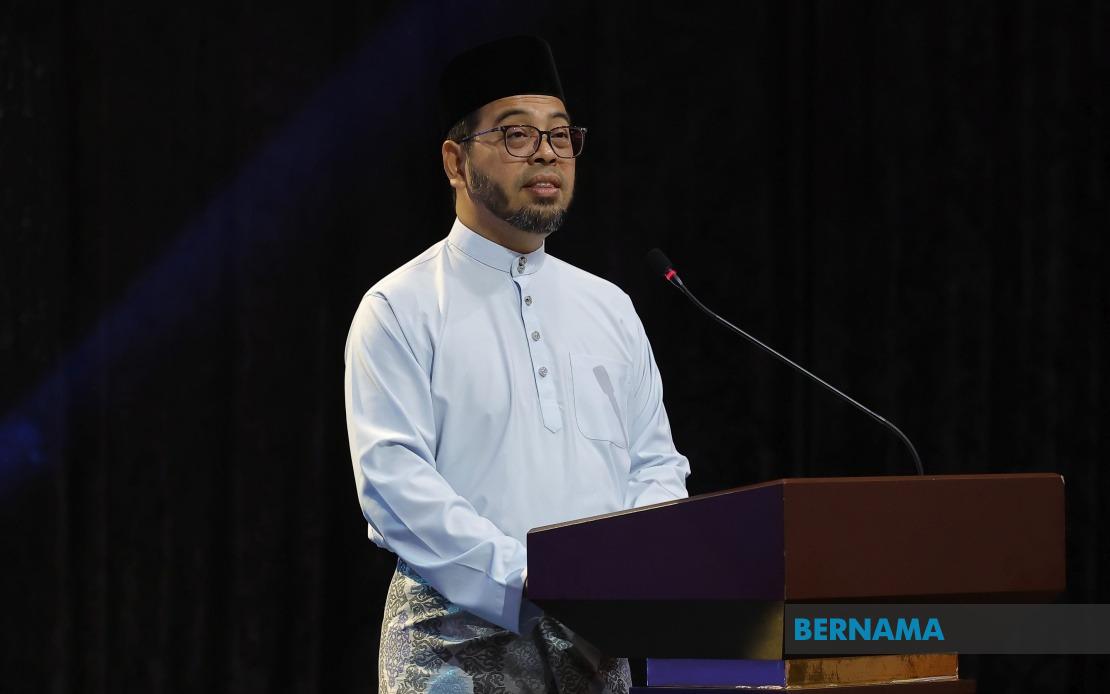
At the national Maal Hijrah 1448H/2026M celebration held at Putra Mosque in Putrajaya on June 17, Minister in the Prime Minister's Department (Religious Affairs) Dr Zulkifli Hasan delivered a pointed message: Malaysian Muslims must transcend internal divisions and animosities to forge a more resilient and cohesive ummah capable of confronting an increasingly turbulent world.
Dr Zulkifli's remarks, delivered in the presence of Sultan of Perak Sultan Nazrin Shah and Deputy Prime Minister Datuk Seri Fadillah Yusof, underscored a fundamental conviction—that meaningful transformation within society cannot occur without corresponding changes within individuals themselves. He emphasised that personal development across intellectual, spiritual and moral dimensions forms the bedrock upon which collective strength must be built. Without this foundation of internal renewal, he suggested, institutional and national initiatives will struggle to gain traction or deliver lasting impact.
The minister articulated a classical concept central to Islamic governance: that communal harmony generates blessings and prosperity for all members, whereas fragmentation breeds suffering and diminishes national capacity. This framing invokes both theological reasoning and practical governance logic, suggesting that divisions among Muslims represent not merely theological or sectarian concerns but concrete obstacles to addressing shared vulnerabilities. In Malaysia's context, where religious and communal identity intersects with citizenship and national belonging, such messaging carries particular weight.
Global economic volatility and supply chain instability were cited as concrete reasons why Muslims in Malaysia cannot afford the luxury of internal discord. Dr Zulkifli positioned these external pressures as imperatives driving the need for unified responses at the national level. The reference to Malaysia's exposure to international economic shocks reflects genuine anxieties about the nation's economic resilience in an era of geopolitical fragmentation and trade uncertainty. This frames Muslim unity not as an abstract religious ideal but as a practical requirement for economic security and stability.
Crucially, Dr Zulkifli called on citizens to sustain backing for government initiatives specifically designed to elevate the standing of Muslims and preserve the vitality of Islamic principles within Malaysian society. This language signals continuity with the broader MADANI framework—the governing philosophy emphasising rakyat-centric, institutional, environmental, and national resilience priorities. By coupling calls for Muslim unity with appeals for government support, Dr Zulkifli implicitly positions the administration as guardian and custodian of Muslim interests and Islamic values in the nation.
The minister reinterpreted the concept of hijrah for contemporary audiences, moving beyond its historical association with physical migration during the Prophet Muhammad's era. Instead, he presented hijrah as an ongoing spiritual and moral journey—one involving the rejection of harmful patterns and the cultivation of virtues that reinforce social bonds among Muslim communities. This reframing makes hijrah relevant to modern Malaysian Muslims navigating pluralistic environments and contemporary ethical challenges, suggesting that migration inward and upward—toward virtue, knowledge and righteousness—constitutes the essential meaning for believers today.
Strengthening community unity was positioned not as an end in itself but as an enabling condition for more effective implementation of initiatives promoting Islamic values. This represents a strategic sequencing: internal cohesion must precede outward advocacy. The logic suggests that fractured communities cannot credibly or effectively champion Islamic principles, whereas unified communities possess both moral authority and practical capacity to advance their shared vision of Islamic flourishing within a multicultural nation-state.
Dr Zulkifli also acknowledged the pluralistic reality of Malaysian citizenship, recognising that despite theological and philosophical differences, all citizens—regardless of belief background—bear collective responsibility for safeguarding the nation's peace, stability and shared prosperity. This inclusive framing balances appeals to Muslim solidarity with recognition of Malaysia's multiconfessional character, avoiding sectarian rhetoric while maintaining focus on ummah concerns.
The ceremony itself conveyed symbolic importance through its prestigious guest list and award presentations. Sultan Nazrin Shah's participation affirmed royal endorsement of messages regarding religious unity and good governance. The presentation of the National Tokoh Maal Hijrah award to IIUM Rector Prof Emeritus Datuk Dr Osman Bakar recognised intellectual and institutional leadership within Islamic higher education. Simultaneously, the International Tokoh Maal Hijrah award to Moroccan Islamic scholar Dr Ahmad Al-Raysuni signalled Malaysia's engagement with global Islamic thought leadership and its positioning within transnational networks of Islamic scholarship.
For Malaysian readers and policymakers, Dr Zulkifli's remarks reflect government determination to harness religious identity and ummah consciousness as stabilising forces during a period of economic anxiety and geopolitical uncertainty. The appeal transcends routine religious rhetoric, functioning instead as a call for social discipline, institutional compliance and collective sacrifice—framed within an explicitly Islamic vocabulary that carries deep resonance across Malaysia's Muslim majority population. Whether such appeals succeed in reducing real sectarian and theological divisions among different Muslim communities remains an ongoing empirical question, but their deployment at the highest levels suggests official recognition that internal Muslim unity remains contested and requires sustained rhetorical and institutional reinforcement.

%22%2F%3E%3C%2Fpattern%3E%3C%2Fdefs%3E%3Crect%20width%3D%22100%25%22%20height%3D%22100%25%22%20fill%3D%22url(%23ph40buhg)%22%2F%3E%3Crect%20width%3D%22100%25%22%20height%3D%22100%25%22%20fill%3D%22url(%23ph40buhp)%22%2F%3E%3Ctext%20x%3D%2250%25%22%20y%3D%2250%25%22%20text-anchor%3D%22middle%22%20dominant-baseline%3D%22central%22%20fill%3D%22rgba(255%2C255%2C255%2C0.95)%22%20font-family%3D%22Georgia%2C%20'Times%20New%20Roman'%2C%20serif%22%20font-weight%3D%22700%22%20font-size%3D%22320%22%20letter-spacing%3D%22-0.02em%22%3EGRS%3C%2Ftext%3E%3C%2Fsvg%3E)