Kuala Lumpur City Hall has unveiled an ambitious RM200 million transformation programme targeting 287 hawker centres across the federal territory, part of the broader Lestari Niaga @ Kuala Lumpur 2026 initiative aimed at raising operational standards for the city's informal food sector. The scale of this intervention reflects growing recognition that Malaysia's estimated 11,000 street traders and hawkers in the capital require systematic infrastructure upgrades to remain competitive and sustainable in an increasingly formalised urban economy.
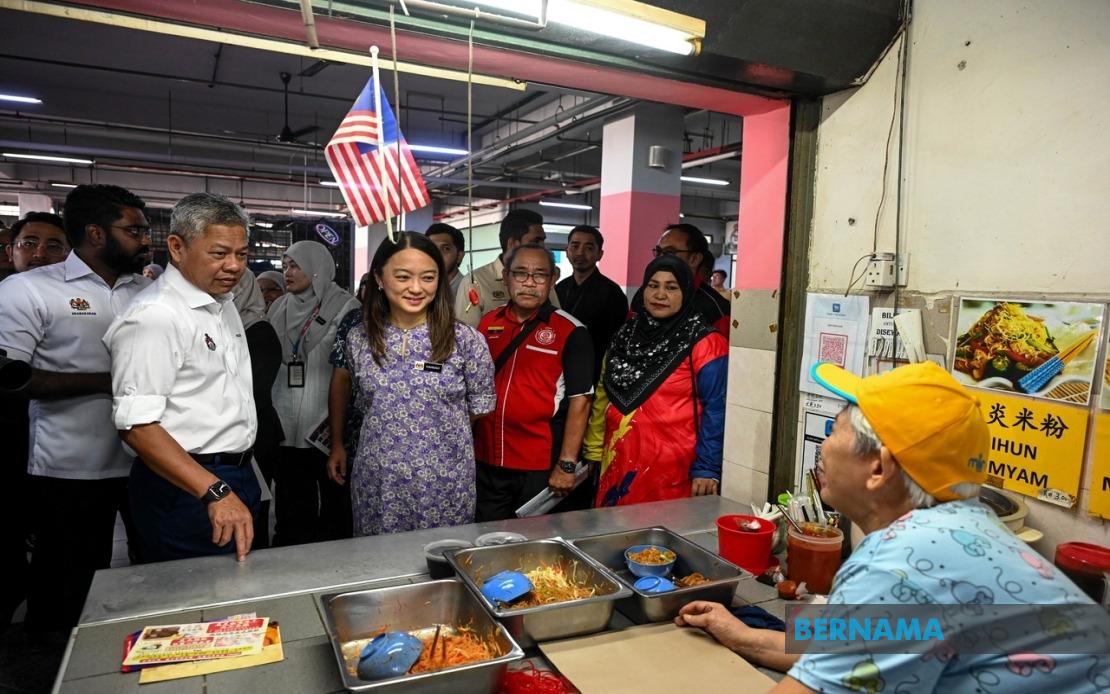
Minister in the Prime Minister's Department (Federal Territories) Hannah Yeoh emphasised that the initiative represents a holistic approach to urban commerce, one that attempts to balance the interests of multiple constituencies rather than prioritising any single stakeholder group. Her remarks, made during an inspection of upgrades near UTC Sentul, underscore a political sensitivity around hawker relocation and modernisation—issues that have generated public controversy in recent years as cities reshape their commercial landscapes. The government's acknowledgement that residents, traders, and building operators each hold legitimate claims on urban space suggests a maturing policy framework, though translating this into equitable outcomes remains challenging.
The mechanics of the programme reveal careful attention to the financial vulnerabilities of micro-traders. During the UTC Sentul project, which launched on June 15, DBKL is providing monthly financial assistance of RM1,500 to the 20 active traders whose operations will be disrupted over the three-month construction window. Mayor Datuk Seri Fadlun Mak Ujud justified this direct-support model by highlighting the inefficiencies of temporary trading sites, which typically incur high operational costs and generate poor foot traffic due to inconvenient locations. This pragmatic reasoning reflects lessons learned from previous modernisation exercises where hastily arranged relocation arrangements inadvertently damaged trader livelihoods during transition periods.
The UTC Sentul project itself exemplifies the programme's physical ambitions. The RM1.6 million initiative will replace existing structures with 20 modern modular kiosks designed for completion before October. The choice of modular construction technology suggests DBKL is attempting to balance durability with flexibility, allowing for future reconfiguration as commercial patterns evolve. By moving beyond temporary structures toward permanent, albeit standardised, installations, the city is signalling long-term commitment to formalising the hawker sector rather than viewing it as a transient phenomenon to be managed away.
The composition of the 287-site portfolio reveals the diversity within Kuala Lumpur's informal trading ecosystem. Of the 11,000 traders encompassed by the full programme, approximately 4,000 operate as street hawkers without fixed premises, while 5,000 already conduct business from DBKL-controlled assets such as designated hawker centres. The remaining cohort comprises traders in a reapplication category, likely individuals whose operating licences or registrations require renewal or modification. This segmentation matters because different trader categories face different constraints and opportunities; street hawkers, for instance, may struggle more with relocation than those already operating from designated sites, requiring differentiated support strategies.
Phasing represents another strategic element. DBKL's initial focus concentrates on 224 locations, indicating that the RM200 million allocation will be deployed sequentially rather than simultaneously across all sites. This staged approach allows the authority to refine operational procedures, respond to unanticipated challenges, and adjust financial support mechanisms based on early-phase performance. For traders, phased rollout means some locations will experience modernisation sooner than others, potentially creating short-term competitive disparities as upgraded hawker centres attract customers seeking cleaner, safer environments. These dynamics deserve monitoring, as uneven implementation could inadvertently advantage early-phase traders while disadvantaging those awaiting later upgrades.
The geographic expansion of the financial assistance model beyond UTC Sentul to areas including Jalan Dato Senu, Pudu Ulu, and Bandar Tun Razak suggests DBKL intends the RM1,500 monthly support as a standard feature rather than an exceptional gesture. Institutionalising such allowances requires sustainable funding mechanisms and clear eligibility criteria to prevent political pressure for indefinite extensions or ad hoc expansions. The long-term fiscal implications remain unclear; scaling the RM1,500 monthly payment across thousands of traders during multiple concurrent projects could create substantial budgetary commitments that extend beyond the RM200 million headline figure.
From a Malaysian and regional perspective, this initiative reflects broader urbanisation pressures affecting Southeast Asian cities. As metros like Kuala Lumpur tighten health, safety, and aesthetic regulations, informal traders face mounting compliance costs. The Lestari Niaga programme attempts to subsidise this transition, recognising that abrupt formalisation without financial support can devastate livelihoods. However, the long-term sustainability of the hawker sector depends not just on infrastructure investment but on whether modernised facilities generate sufficient economic returns to justify higher operational standards.
The initiative also touches on fundamental questions about urban economic inclusion. Hawker centres have historically served as economic entry points for immigrants and low-skilled workers, enabling them to accumulate capital and transition into formal business ownership. If modernisation raises operational costs—through higher licensing fees, utility charges, or rental structures—without corresponding demand increases, some traders may find formal participation less viable than before. DBKL's pricing structure for the modernised kiosks, not detailed in available statements, will prove crucial in determining whether the upgrade actually expands economic opportunity or merely formalises existing inequality.
The Lestari Niaga @ Kuala Lumpur 2026 timeline suggests DBKL aims for substantial completion within two years. Meeting this deadline while maintaining stakeholder engagement and trader support requires significant administrative coordination. Early projects like UTC Sentul will serve as proof-of-concept cases demonstrating whether the model achieves its objectives of creating safer, better-organised trading environments without displacing vulnerable traders. Subsequent phases will likely incorporate lessons from these initial implementations, making iterative refinement essential to programme success.
Looking forward, the initiative's success will be measured not merely by infrastructure delivered but by trader welfare outcomes. Metrics such as income sustainability, operating cost changes, customer satisfaction, and trader retention rates will indicate whether modernisation enhances or undermines livelihoods. Additionally, the programme's approach to balancing resident demands for traffic flow and cleanliness against trader interests in maintaining customer accessibility will test whether urban governance can genuinely accommodate multiple stakeholder perspectives or whether infrastructure modernisation inevitably privileges formal order over informal commerce.