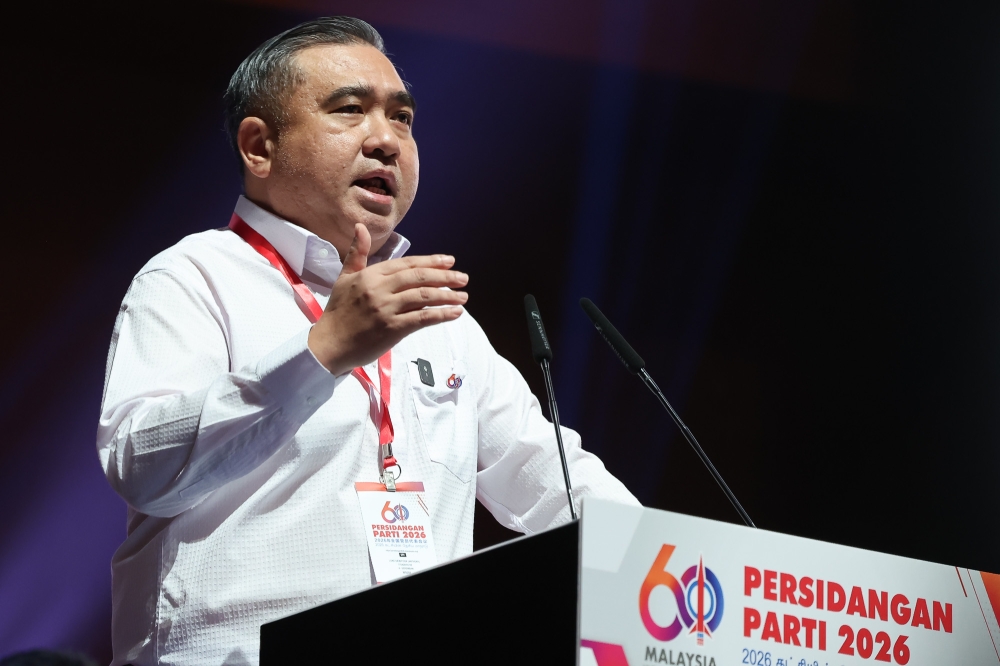
The Democratic Action Party reinforced its unwavering commitment to Prime Minister Datuk Seri Anwar Ibrahim's initiative to repeal the Universities and University Colleges Act (AUKU) during a statement made in Putrajaya on August 16, with party representatives declaring their support extends to the complete measure without reservation. The backing from one of the coalition's most influential Chinese-majority parties underscores the political consensus forming around this contentious piece of legislation, which has long drawn criticism from academics, student activists, and civil society groups who view it as overly restrictive on campus freedoms.
Yet this moment of unity also revealed underlying tensions within the ruling alliance about how far institutional reform should ultimately reach. Transport Minister Anthony Loke, speaking on behalf of the coalition partnership, articulated a position suggesting that abolishing AUKU alone would represent an incomplete response to the structural challenges facing Malaysia's university ecosystem. His comments indicated that stakeholders across the government increasingly recognise that a singular legislative change, while symbolically important and substantively necessary, cannot fully address the multifaceted governance and operational deficiencies that have accumulated within tertiary education institutions.
The AUKU, enacted in 1971, has functioned as the primary regulatory framework governing both autonomous universities and university colleges across the country. For more than five decades, the legislation has embodied restrictions on student political activism, academic freedom of expression, and institutional autonomy in ways that advocates argue have stifled intellectual discourse and limited universities' capacity to serve as genuine centres of critical inquiry. The law's provisions have drawn particular scrutiny following high-profile incidents involving student arrests, disciplinary actions against academics, and institutional constraints on campus debate.
Anwar's commitment to pursuing repeal represents a significant policy shift within his administration, signalling recognition that modernising Malaysia's higher education framework requires dismantling outdated statutory constraints. The Prime Minister's positioning on this issue aligns with broader reform rhetoric that has characterised his tenure, though implementing such changes necessarily involves navigating complex parliamentary procedures and managing potentially divergent priorities among coalition partners with varying constituencies and interests.
Loke's articulation that reforms must transcend simple legislative abolition points toward recognition within government circles that the AUKU repeals would function best as a foundational step within a comprehensive higher education transformation agenda. Such broader reform could encompass institutional governance structures, funding mechanisms, quality assurance frameworks, and the relationship between government oversight and university operational independence. Malaysian universities have consistently underperformed in international rankings relative to regional peers, a challenge that many education analysts attribute partly to governance structures and regulatory environments that constrain institutional flexibility and innovation.
The DAP's emphatic endorsement carries significance beyond symbolic backing, given the party's substantial parliamentary representation and its traditional positioning as advocate for civil liberties and institutional reform. The party's support effectively removes a potential source of coalition fragmentation on this issue, facilitating smoother passage of repeal legislation once the government formally tables such measures. For other coalition members assessing their own positions on AUKU reform, DAP's stance likely influences calculations about the political costs and benefits of supporting or opposing the measure.
Southeast Asian universities operate within increasingly competitive regional and global contexts where institutional flexibility, research capacity, and student experience quality determine relative positioning. Thailand and Indonesia have undertaken substantial higher education reforms in recent years, prompted partly by recognition that regulatory frameworks inherited from earlier governance eras constrain adaptation to contemporary demands. Malaysia's universities face similar imperatives to evolve, particularly as the country seeks to position itself as a regional research and innovation hub within an increasingly knowledge-intensive global economy.
The distinction between AUKU abolition and broader reform frameworks reflects a common challenge in legislative reform efforts: determining whether targeted measures addressing specific statutory problems suffice or whether more comprehensive restructuring becomes necessary to achieve substantive policy objectives. Historical experience suggests that removing restrictive legislation, while necessary, often proves insufficient without accompanying attention to replacing frameworks, building institutional cultures supportive of reform goals, and ensuring resource allocation structures align with professed policy intentions.
As Malaysia's government moves forward with AUKU repeal discussions, the coalition's internal conversation about reform scope—as evidenced by Loke's remarks—suggests deeper deliberation about higher education's optimal role within the Malaysian economy and society. These conversations, occurring largely outside public view, will significantly influence the ultimate trajectory of university sector transformation. Whether government initiatives eventually encompass the broader institutional overhaul that Loke implies remains uncertain, but the apparent consensus that change requires systematic thinking beyond simple statutory repeals suggests the reform conversation will likely deepen rather than conclude following AUKU abolition.

