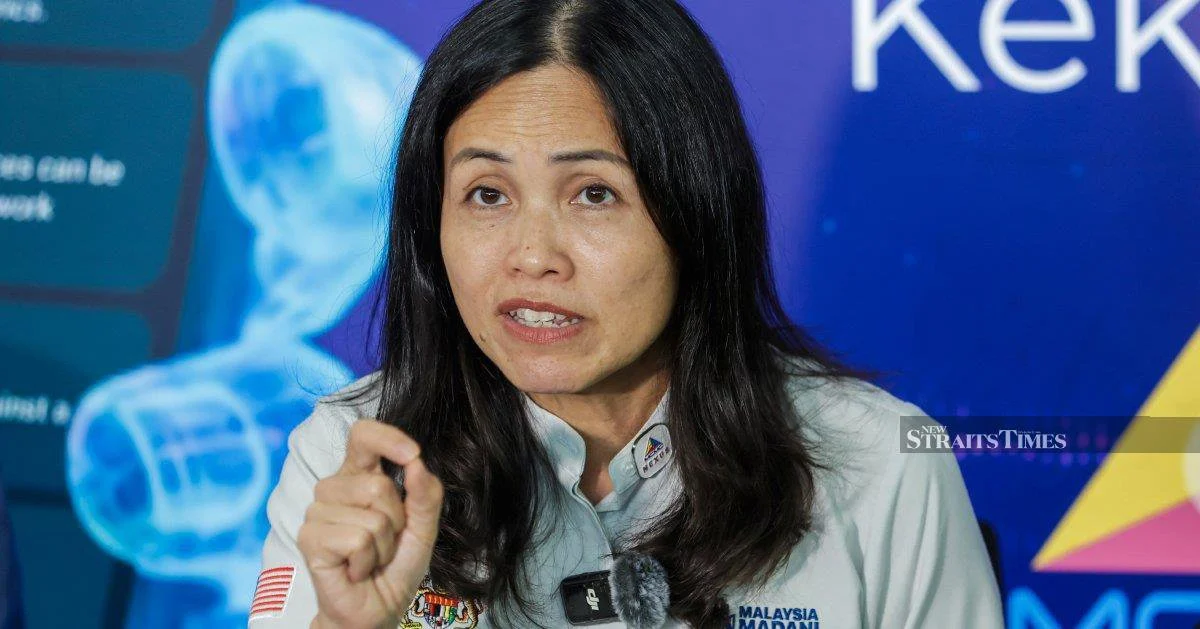
Johor DAP chairman Teo Nie Ching has levelled fresh allegations that political adversaries are orchestrating a deliberate campaign involving doctored campaign materials targeting potential party candidates, an effort she contends is designed to chip away at Pakatan Harapan's electoral standing in the forthcoming Johor state elections.
The accusation, made in Kuala Lumpur, points to an increasingly sophisticated approach to political contestation in Malaysia's electoral arena. Rather than engaging directly with policy platforms or grassroots campaigning, Teo suggests opponents are resorting to what amounts to disinformation tactics—manufacturing false or distorted imagery of candidates to create confusion among voters and sow doubts about PH's readiness to govern.
Such allegations of manipulated campaign materials represent a troubling trend in regional politics. Southeast Asian democracies have increasingly grappled with the problem of fabricated political content, where doctored images and misleading visuals are weaponised to damage political opponents during critical electoral periods. Malaysia's experience reflects broader challenges facing the region as campaigns become more digitally sophisticated and harder to verify in real time.
For Pakatan Harapan, whose 2018 election victory was powered partly by sophisticated digital campaigning and social media mobilisation, these allegations suggest the coalition faces new vulnerabilities. While PH once led the field in leveraging online platforms, the current environment appears to have evolved into an arena where multiple actors possess the capability and willingness to flood the information space with questionable content. This shift fundamentally alters the campaign calculus, forcing established parties to invest resources in combating false narratives rather than advancing their own messages.
The specific targeting of candidate posters deserves scrutiny because such materials remain influential in Malaysian electoral contests, particularly in constituencies where digital penetration is lower or where traditional forms of political communication retain significant weight. A voter encountering a doctored poster in their neighbourhood may not immediately recognise it as fabricated, potentially creating lasting negative impressions that prove difficult to correct even after the falsehood is identified and publicised.
Teo's public articulation of these concerns carries strategic weight beyond the immediate allegation. By naming the tactic openly, the DAP leader alerts supporters and media observers to scrutinise political materials more carefully, potentially inoculating portions of the electorate against manipulation. Simultaneously, the accusation itself becomes a news story, drawing attention to what she characterises as underhanded opposition strategies. This dynamic reflects how allegations of electoral misconduct have become embedded within the broader campaign narrative itself.
The question of who stands behind such disinformation efforts remains unresolved by Teo's statement. The phrase "certain parties" leaves considerable ambiguity—whether she refers to rival state-level coalitions, federal government actors with an interest in Johor outcomes, or external operators acting independently remains unclear. This opacity mirrors a broader challenge in Malaysia's political ecosystem, where attribution of disinformation campaigns often proves elusive, and definitive evidence linking specific actors to specific false content circulates slowly if at all.
From a Malaysian perspective, these revelations highlight the gap between formal electoral rules and the messy reality of modern campaign environments. Election Commission guidelines govern traditional campaign materials relatively well, but the rapid creation and dissemination of digital or printed fake content operates in a regulatory grey zone where enforcement lags considerably behind innovation. Johor, as one of Malaysia's largest and most politically significant states, becomes a proving ground for new campaign tactics precisely because electoral outcomes there carry weight beyond the state itself.
The timing of Teo's allegations relative to the Johor electoral calendar matters considerably. In the weeks and months leading up to voting, voter attention gradually intensifies, and political messaging saturates public space. Allegations of manipulation emerging during this period risk compounding uncertainty among undecided voters, potentially benefiting whichever coalition can claim the mantle of electoral integrity and trustworthiness. For Pakatan Harapan, rebuilding voter confidence after setbacks in recent years makes credibility particularly precious.
Historically, Malaysian elections have witnessed occasional instances of candidate misrepresentation and false campaign materials, but the scale and sophistication Teo's allegations suggest represent a potentially new phase. As technology enables cheaper and faster content creation and distribution, the barrier to entry for disinformation campaigns has lowered substantially. This democratisation of manipulation tools means that even moderately resourced political actors can now wage coordinated information warfare that previously required institutional backing.
The broader implications extend beyond Johor's boundaries. If political actors across Malaysia's competitive electoral landscape increasingly adopt such tactics, voter scepticism toward all campaign information may deepen, potentially eroding democratic engagement itself. When citizens cannot confidently distinguish authentic political messaging from fabrication, the foundation for informed electoral choice weakens considerably, ultimately harming democratic quality regardless of which coalition benefits in any particular election cycle.

%22%2F%3E%3C%2Fpattern%3E%3C%2Fdefs%3E%3Crect%20width%3D%22100%25%22%20height%3D%22100%25%22%20fill%3D%22url(%23ph40buhg)%22%2F%3E%3Crect%20width%3D%22100%25%22%20height%3D%22100%25%22%20fill%3D%22url(%23ph40buhp)%22%2F%3E%3Ctext%20x%3D%2250%25%22%20y%3D%2250%25%22%20text-anchor%3D%22middle%22%20dominant-baseline%3D%22central%22%20fill%3D%22rgba(255%2C255%2C255%2C0.95)%22%20font-family%3D%22Georgia%2C%20'Times%20New%20Roman'%2C%20serif%22%20font-weight%3D%22700%22%20font-size%3D%22320%22%20letter-spacing%3D%22-0.02em%22%3EGRS%3C%2Ftext%3E%3C%2Fsvg%3E)