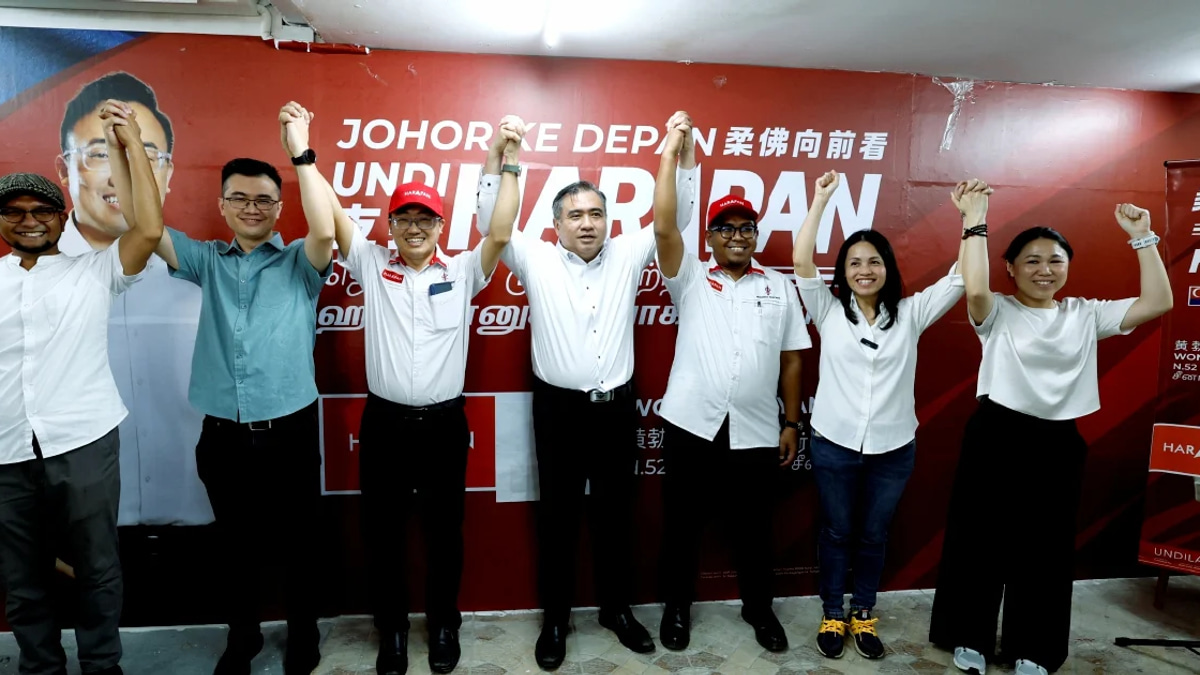
The Democratic Action Party has announced its electoral slate for two contested seats in Johor, tapping insiders from both its government apparatus and youth wing to strengthen the party's foothold in the state. Nor Zulaila Ghani will represent DAP in the Tiram constituency, while Lee Wern Yiing has been selected to contest Johor Jaya, signalling the party's strategy to field candidates with established party credentials and administrative experience.
Nor Zulaila's appointment carries particular significance given her position within the federal bureaucracy. As private secretary to Liew Chin Tong, the deputy finance minister, she operates at the intersection of party politics and government administration. This role places her at the centre of economic and fiscal policy discussions, offering her insights into the national financial agenda and close working relationships with key decision-makers. Her candidacy may appeal to voters seeking representation from someone with demonstrable expertise in government functioning and ministerial-level exposure.
The deputy finance minister position itself deserves context for Malaysian readers unfamiliar with its operational scope. Liew Chin Tong, a senior DAP figure and former Iskandar Puteri Member of Parliament, holds a portfolio that gives him influence over Malaysia's fiscal strategy, budgeting priorities, and economic coordination. Nor Zulaila's proximity to this role means she has likely engaged with matters ranging from infrastructure spending to revenue policy, potentially making her a credible voice on economic issues affecting Johor voters.
Lee Wern Yiing brings a different profile to the Johor Jaya contest. As chief of the DAP's youth organisation in Johor, Lee has invested time in grassroots party-building and the cultivation of younger voters. Youth leadership positions typically require the ability to mobilise supporters, organise events, and articulate party positions to a demographic increasingly central to electoral outcomes. Lee's appointment acknowledges the growing importance of youth engagement in Malaysian politics and suggests DAP's intent to present forward-looking candidates.
Johor has emerged as a critical political battleground in recent Malaysian electoral cycles. The state, home to Malaysia's second-largest urban population and strategically important economically, has seen shifting political allegiances that have reshaped national coalitions. DAP's presence in Johor has historically been stronger in urban centres like Johor Bahru and surrounding districts, though the party has pursued a broader geographic strategy in recent years. The selection of candidates for Tiram and Johor Jaya suggests an effort to maintain and expand this reach.
The timing of candidate announcements frequently correlates with broader electoral preparation strategies. DAP's willingness to field candidates from within its established structures—rather than recruiting prominent outsiders—indicates confidence in party machinery and loyalty. Both appointees are internal promotions, suggesting the party values consistency and ideological alignment over celebrity candidacy. This approach carries trade-offs; while it reinforces party unity, it may limit appeal to swing voters seeking fresh faces outside traditional political establishments.
For Malaysian voters in these constituencies, the nominations invite reflection on what governmental competence and party positioning mean in the current political climate. Nor Zulaila's government experience may resonate with constituents prioritising economic management and bureaucratic efficiency, particularly if Tiram voters feel disconnected from federal development priorities. Lee's youth-focused background could appeal to voters seeking generational change and candidates unencumbered by older political baggage.
The broader implications extend across Johor's political landscape. DAP continues refining its state-level electoral strategy after the 2022 general election reshaped coalition alignments nationally. The party's performance in Johor will significantly influence whether Pakatan Harapan can reclaim ground lost in recent years and whether the coalition can construct viable governing alternatives at the state level. These two nominations are pieces of a larger puzzle involving seat allocation, coalition arithmetic, and voter sentiment across multiple constituencies.
Regionally, DAP's candidate selection reflects broader trends in Southeast Asian opposition politics, where established parties increasingly invest in internal talent development rather than importing external figures. This mirrors strategies observed in other democracies, where opposition movements strengthen by creating clear career pathways and demonstrating institutional depth. For Johor specifically, it signals DAP's expectation of remaining a consequential political force requiring the cultivation of multiple tiers of leadership.
The selection process also highlights how Malaysian political parties balance representation considerations. Both Nor Zulaila and Lee represent opportunities for the party to showcase women's and youth participation respectively—Nor Zulaila as a woman rising through government ranks, Lee as a young leader with grassroots credentials. These demographics carry increasing weight in Malaysian electoral politics as voting populations become more diverse and conscious of representation issues.
Electoral observers will scrutinise how these candidates perform relative to incumbent or competing candidates, as Johor results often preview broader national sentiment. Strong performances could validate DAP's internal promotion strategy and strengthen party morale heading into future elections. Weaker results might prompt reconsideration of candidate selection methodologies or signal underlying voter dissatisfaction requiring broader strategic reassessment.