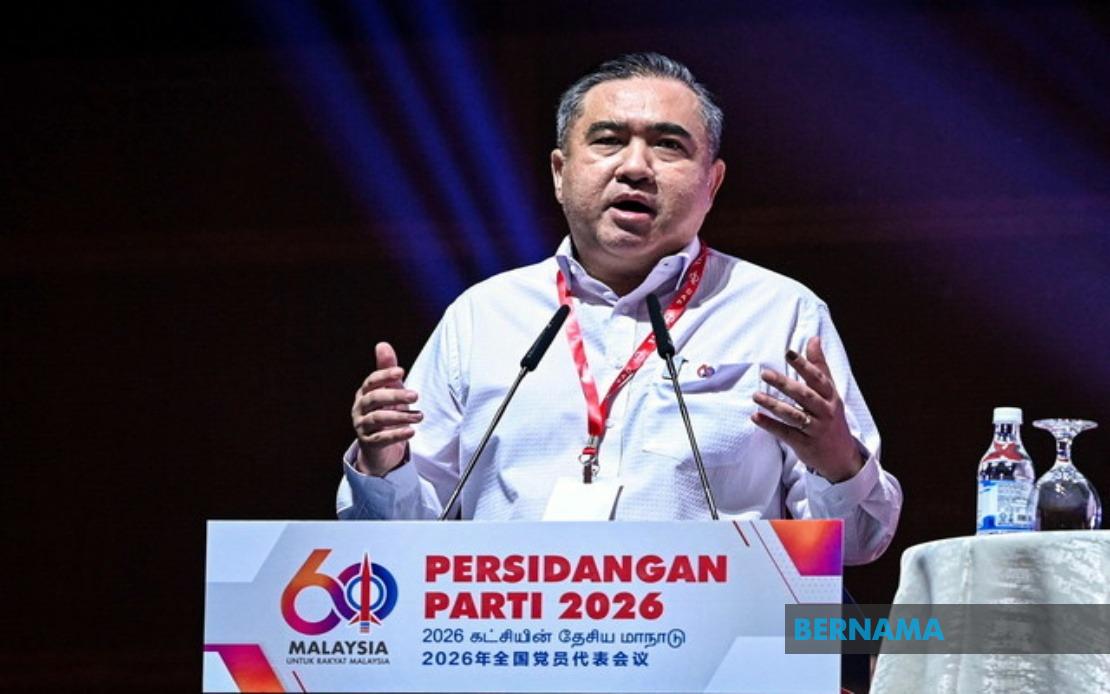
The Democratic Action Party has thrown its weight behind the government's initiative to repeal the Universities and University Colleges Act 1971, marking a significant alignment on an issue that has animated opposition advocacy for decades. Party secretary-general Anthony Loke articulated the endorsement during his policy address at the DAP 2026 National Conference in Putrajaya, framing the government's move as evidence of the party's commitment to substantive institutional reform rather than mere political incumbency. The timing of this declaration follows Prime Minister Datuk Seri Anwar Ibrahim's announcement at the PKR 2026 National Congress, where he signalled the government's intention to expand democratic space within Malaysia's university system by dismantling the restrictive legislative framework that has governed student conduct and activism for over five decades.
Loke's remarks underscored DAP's historical position on the Act, emphasizing that the party has campaigned against AUKU's constraints since long before joining the governing coalition. He positioned the repeal as emblematic of the government's broader reform agenda, one rooted in transforming Malaysian institutions rather than perpetuating existing power structures. The secretary-general's comments suggest that the party views the proposed legislative change not merely as a tactical concession to student activists but as a philosophical commitment to revitalizing Malaysia's tertiary education ecosystem with enhanced civil liberties protections.
Prime Minister Anwar justified the repeal proposal by referencing submissions and memoranda from student leaders requesting substantive changes to the Act. The Cabinet is expected to deliberate on the formal repeal proposal the following Wednesday, positioning the matter for potential advancement through Malaysia's legislative machinery. This procedural timeline indicates that the government intends to move with relative expediency on an issue that has proven contentious within Malaysia's higher education sector and among student organizations, which have long portrayed AUKU as an impediment to youth political participation and campus democracy.
The Universities and University Colleges Act has undergone seven amendments since its enactment in 1971, each modification ostensibly attempting to calibrate the balance between institutional governance and student freedoms. The 2012 amendment represented a watershed moment, permitting students to engage in political party activities beyond campus boundaries, thereby acknowledging that blanket prohibitions on partisan involvement were becoming increasingly untenable in a democratic context. More recently, the 2024 amendments transferred disciplinary authority away from vice-chancellors to a dedicated Student Disciplinary Committee, redistributing power in ways that proponents argue enhance procedural fairness and reduce the concentration of administrative discretion in university leadership.
These incremental reforms to AUKU's disciplinary provisions have reflected growing recognition that the Act's original architecture, designed during Malaysia's early post-independence period, ill-suited contemporary expectations of institutional transparency and student due process. The 2024 amendment to Section 15A further expanded students' financial autonomy by permitting representative councils and student bodies to solicit and receive funding in diverse forms, contingent upon compliance with applicable regulations and statutory requirements. Together, these amendments suggest a gradual legislative drift toward liberalization, even as critics have maintained that piecemeal modification cannot substitute for comprehensive repeal.
DAP's endorsement is particularly significant given the party's historic positioning within Malaysia's political landscape as an advocate for civil liberties and institutional reform. The party's insistence that the government extend the reform momentum beyond AUKU itself—specifically toward ensuring equitable access to higher education regardless of ethnic or racial background—reveals a strategic intent to leverage the repeal as a launching point for more ambitious restructuring of Malaysia's education hierarchy. This approach suggests that DAP perceives the AUKU initiative as an opportunity to recalibrate public discourse around meritocracy and inclusivity within tertiary institutions.
The implications for Malaysia's student movements and campus politics are substantial. Repealing AUKU would eliminate the legislative scaffolding that has constrained student union activities, political organization, and public discourse on campuses for five decades. Malaysian students have long chafed under restrictions that their counterparts in comparable democracies do not face, and repeal would signal a fundamental reorientation toward treating university communities as mature participants in democratic deliberation rather than as populations requiring paternalistic oversight. The removal of these restrictions could energize campus-based activism on diverse issues ranging from environmental sustainability to social justice, with ramifications extending into national political consciousness.
For Southeast Asia more broadly, Malaysia's potential repeal of AUKU would position the country as advancing democratic norms within university systems, potentially influencing deliberations in neighboring jurisdictions grappling with similar tensions between institutional autonomy and state oversight. Thailand, Indonesia, and the Philippines have all confronted comparable questions about the appropriate scope of student activism and the legitimacy of governmental constraints on campus speech and organization. Malaysia's experience with legislated restrictions and subsequent reform efforts thus carries pedagogical weight for a region wherein higher education has emerged as a crucial arena for democratic formation and civic participation.
However, the transition from legislative repeal to substantive cultural change within universities will depend heavily on how institutional leadership responds to the newfound freedoms. Vice-chancellors and university administrators, accustomed to regulatory frameworks that centralized disciplinary authority, may initially navigate the reformed environment cautiously, and establishing norms of student autonomy that transcend the formal removal of legal prohibitions will require deliberate institutional commitment. The government and academic leadership will need to develop complementary policies and governance structures that operationalize the democratic potential that AUKU repeal would create.
Anwar's characterization of the repeal as advancing "democratic space" and "freedom" reflects a rhetorical commitment to conceptualizing universities as sites of civic development rather than mere credential factories or administrative entities subordinate to state direction. Whether this symbolic commitment translates into sustained policy support and sufficient resource allocation for universities to function as truly autonomous democratic institutions remains an open question. Malaysian academic institutions have historically operated within constrained fiscal environments and within governance frameworks emphasizing hierarchical accountability, and expanding democratic participation within such contexts requires not merely legal reform but institutional transformation.
The DAP's call for the government to sustain reform momentum beyond AUKU, particularly regarding equitable access to higher education across ethnic lines, addresses a structural inequality that has persisted despite Malaysia's constitutional commitment to equal citizenship. The party's framing suggests an understanding that formal legal freedom, absent complementary efforts to democratize university access and reduce socioeconomic barriers to tertiary education, would benefit primarily students already positioned to exploit expanded space for activism and political participation. This dimension of the DAP position introduces a redistributive justice component into the discourse around AUKU repeal, complicating the narrative to encompass not merely freedom of expression and association but also meaningful equality of educational opportunity.

