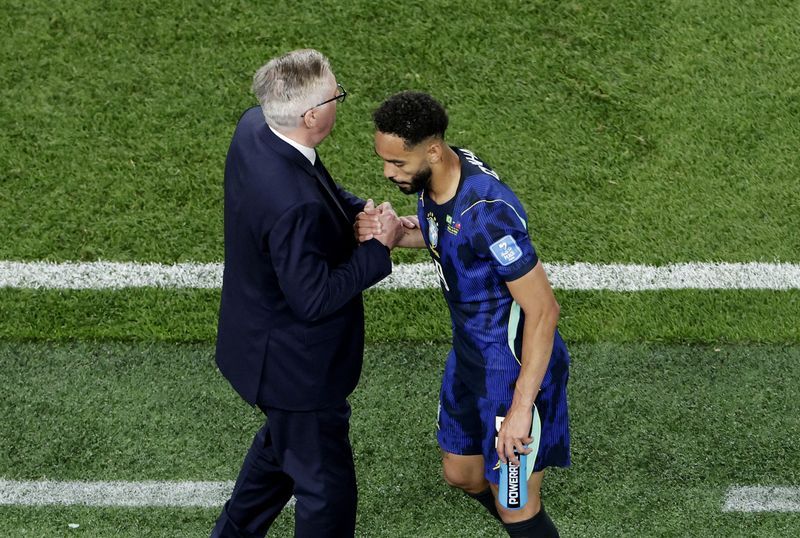
Brazil emerged from their Copa América clash with Haiti carrying a more optimistic blueprint for their tournament campaign, though the convincing 3-0 scoreline masked underlying vulnerabilities that will face stiffer examination against stronger opposition. Coach Carlo Ancelotti's strategic recalibration, most notably the introduction of Matheus Cunha for Igor Thiago in attack, offered Brazilian supporters their first substantive indication that the team's frustrating 1-1 draw with Morocco was not necessarily indicative of their true capabilities moving forward.
Haiti presented limited resistance throughout the encounter in Philadelphia, operating with minimal tactical discipline and repeatedly exposing vast defensive terrain when attempting their attacking forays. This defensive naiveté inadvertently provided Brazil with an ideal environment to develop rhythm and cohesion without the urgency that competitive matches typically demand. Nevertheless, the attacking combination that flourished on the left flank suggested Ancelotti has identified a configuration capable of generating the quick, incisive play the modern Seleção requires to compete at the highest level.
Cunha's repositioning proved instrumental in transforming how Brazil functioned in the final third. Unlike his predecessor who operated in relative isolation, Cunha's tireless movement and positioning created natural passing lanes between the midfield and forward areas. His willingness to drift inward from the flank established an organic connection that had been conspicuously absent since Neymar's serious injury disrupted Brazil's left-side dynamics. Lucas Paquetá, who had endured considerable criticism following a laboured display against Morocco, discovered renewed purpose operating as the left-sided midfielder in Ancelotti's diamond formation. The pairing between Paquetá, Cunha, and Vinicius Jr generated the attacking platform responsible for Brazil's goal-scoring opportunities, with movement and positioning proving far superior to the opening fixture.
The fluency demonstrated on the left wing represents genuine tactical progress. Vinicius Jr appeared liberated, receiving consistent support from midfield rather than operating in the disconnected manner that had characterized earlier matches. Cunha's intelligent movement did not merely create passing options; it fundamentally altered Brazil's attacking structure, enabling combinations that required precision rather than individual inspiration. This blueprint offers Ancelotti a foundation upon which to construct an attacking system that balances the modern premium placed on fluid movement with Brazil's traditional strengths in technical execution.
However, the opposite flank presented an entirely contrasting narrative. Raphinha failed to impose himself for a second consecutive match, his contribution diminishing throughout the contest before substitution. Earlier in the week, a blister-related issue had forced him to miss training, and his physical sharpness remained visibly compromised from the opening whistle. Compounding the injury concerns, Raphinha's current positioning as a traditional right winger appears fundamentally misaligned with his club football responsibilities at Barcelona, where he operates with greater central freedom similar to Cunha's performance against Haiti. His misplaced passes and inability to control routine deliveries suggested either lingering physical discomfort or positional maladjustment, representing a pressing concern for Ancelotti as the tournament progresses.
The personnel challenges extend beyond wing positioning. Casemiro, now 34 years old, faces legitimate scrutiny regarding his capacity to maintain defensive solidity when confronting more ambitious opponents than Haiti. Bruno Guimarães, who functioned comfortably as a right-sided midfielder in the diamond formation, potentially offers greater defensive insurance should Ancelotti opt to reinforce the midfield base. This flexibility could prove invaluable when Brazil faces opponents willing to press aggressively and exploit the space that an aging defensive midfielder increasingly struggles to patrol.
Raphinha's potential absence from upcoming fixtures like the Scotland match introduces selection complexity that Ancelotti must navigate carefully. Rayan's brief appearance following Raphinha's substitution offered little evidence that he represents a ready alternative, leaving Luiz Henrique as the more credible option should injury preclude the Barcelona winger from participating further. These substitution patterns reveal that Brazil's squad depth at wing positions remains a vulnerability, particularly on the right flank where attacking contributions have proven inconsistent.
Although Brazil's performance against Haiti lacked the commanding authority typically associated with tournament-favourites, the tactical adjustments provided substantial encouragement regarding the team's tournament trajectory. Ancelotti's diamond formation, when deployed with the correct personnel, appears capable of generating the balanced attacking play that modern tournament football increasingly demands. The left-sided combination of Paquetá, Cunha, and Vinicius Jr established patterns suggesting genuine tactical coherence rather than reliance on individual excellence.
The broader significance of this match extends beyond three points. Ancelotti has demonstrated willingness to adapt and refine his approach based on the Morocco experience, suggesting a coaching philosophy grounded in pragmatism rather than tactical rigidity. The introduction of Cunha represented a solution to a specific tactical deficiency, and the resulting improvement in movement and connection validated the adjustment. Such adaptive management often proves decisive in knockout tournaments where marginal improvements in performance can determine advancement.
Looking ahead, Brazil faces the genuine challenge of maintaining attacking fluency while addressing defensive vulnerabilities. Haiti's limited tactical sophistication meant that Ancelotti's team could afford experimental approaches without serious consequence. Future opponents will punish carelessness, particularly in central midfield where Casemiro's mobility limitations might be ruthlessly exposed. Whether Bruno Guimarães shifts to a more defensive role, and whether Raphinha's physical condition improves, will substantially influence Brazil's capacity to advance as genuine tournament contenders rather than simply another wealthy squad struggling to meet inflated expectations.
The victory itself carried limited significance against Haiti, but the blueprint that emerged represented genuine progress. Ancelotti has provided Brazilian supporters a clearer understanding of where this talented but previously disjointed squad might reach, contingent upon resolving the right-flank deficiencies and defensive stability concerns that the stronger competition ahead will certainly expose.