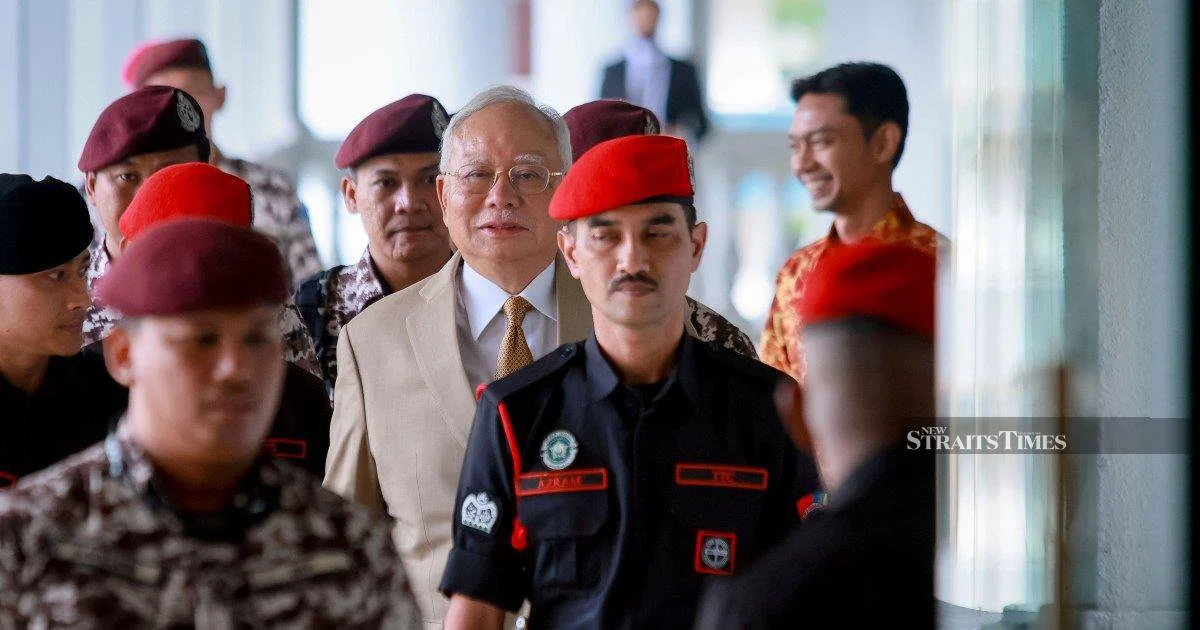
A Malaysian court has dealt a significant legal blow to former Prime Minister Datuk Seri Najib Razak by determining that his inaction regarding the transfer of billions of ringgit connected to 1Malaysia Development Bhd (1MDB) into his personal bank accounts constituted unreasonable conduct. The judge's assessment strikes at the heart of Najib's defence strategy, which has relied heavily on claims of ignorance and assertions that he was unaware of the fund movements through his accounts.
The judgment underscores a fundamental principle of personal financial responsibility that extends beyond mere technical banking procedures. The sums involved were described by the court as substantial—far from negligible amounts that could reasonably be overlooked or dismissed as routine transactions. This characterisation is significant because it establishes that the scale of the transfers alone should have triggered heightened scrutiny and inquiry from Najib, regardless of his claimed lack of knowledge about their ultimate source or destination.
The 1MDB scandal remains one of the most consequential financial crimes in Malaysian history, with investigations revealing that approximately USD4.5 billion was misappropriated from the sovereign wealth fund between 2009 and 2015. The fund, ostensibly established to develop Malaysia's economy through strategic investments, became instead a vehicle for what authorities alleged was one of the largest kleptocratic schemes globally. The transfers into Najib's accounts represented a critical piece of evidence in establishing the flow of illicit funds and their integration into personal finances.
From a Malaysian governance perspective, this ruling reinforces the judiciary's commitment to holding senior political figures accountable for financial irregularities, even when direct criminal intent is contested. The decision reflects an evolving legal standard in Malaysia where high-ranking officials cannot simply claim passivity or ignorance when enormous sums flow through their personal banking channels. This represents a meaningful shift in how accountability mechanisms operate at the apex of power, signalling that position and influence do not shield individuals from the obligations that accompany control of substantial financial resources.
The implications for Malaysia's ongoing anti-corruption efforts are considerable. As the country continues to grapple with the legacy of 1MDB and strengthens its institutional frameworks for combating financial crime, judicial decisions that establish clear expectations for due diligence by those in positions of authority send important messages about the seriousness with which such matters are treated. This judgment demonstrates that Malaysian courts are willing to scrutinise the conduct of former leaders and apply rigorous standards of reasonableness to their actions.
For regional observers, the case also illustrates how sophisticated transnational financial schemes can implicate personal account holders even when layered through complex corporate structures. The 1MDB situation, with its international dimensions involving banks and entities across multiple jurisdictions, highlighted vulnerabilities in financial oversight systems that countries throughout Southeast Asia have since worked to address. The court's finding that Najib should have questioned and investigated the transfers reflects modern expectations regarding beneficial ownership transparency and due diligence in banking.
The judgment's language—characterising the transferred sums as significantly more than trivial amounts—carries particular weight in Malaysian jurisprudence. Courts in Malaysia have historically approached financial cases with attention to the materiality principle, and the explicit rejection of any suggestion that these amounts were inconsequential establishes a baseline below which inaction cannot be defended. This standard effectively means that substantial transfers warrant proportionate investigative effort from account holders, particularly those with the resources and sophistication to conduct such inquiries.
The case also intersects with broader questions about the fiduciary responsibilities of government officials in handling public funds and the transparency obligations that attach to their personal finances. While Najib's bank accounts were technically private, the funds they received originated from a state-owned entity, creating a grey area between personal and public accountability that Malaysian courts have increasingly addressed. The ruling suggests that this jurisdictional boundary does not entirely shield individuals from scrutiny when public monies are involved.
Moving forward, the decision will likely influence how similar cases are prosecuted and how courts assess the reasonableness of conduct by wealthy individuals and public figures when large sums appear in their accounts. Malaysian financial institutions and regulatory bodies may also draw lessons regarding their own obligations to monitor and report suspicious activity, particularly when account activity involves former senior government officials. The ruling reinforces that institutional compliance cannot be outsourced entirely to account holders; rather, it forms part of a broader ecosystem of financial oversight.
For Najib specifically, this judgment represents a substantial setback in his ongoing legal proceedings and appeals. While multiple cases related to 1MDB remain in various stages of the Malaysian judicial system, this finding provides important precedent that courts will not accept passivity or claimed ignorance as reasonable responses to the movement of enormous sums through personal accounts. The case continues to unfold, with appeals and additional proceedings still to be determined, but the court's clear articulation of expected standards for financial due diligence marks a significant moment in Malaysia's reckoning with one of its most damaging scandals.

%22%2F%3E%3C%2Fpattern%3E%3C%2Fdefs%3E%3Crect%20width%3D%22100%25%22%20height%3D%22100%25%22%20fill%3D%22url(%23ph40buhg)%22%2F%3E%3Crect%20width%3D%22100%25%22%20height%3D%22100%25%22%20fill%3D%22url(%23ph40buhp)%22%2F%3E%3Ctext%20x%3D%2250%25%22%20y%3D%2250%25%22%20text-anchor%3D%22middle%22%20dominant-baseline%3D%22central%22%20fill%3D%22rgba(255%2C255%2C255%2C0.95)%22%20font-family%3D%22Georgia%2C%20'Times%20New%20Roman'%2C%20serif%22%20font-weight%3D%22700%22%20font-size%3D%22320%22%20letter-spacing%3D%22-0.02em%22%3EGRS%3C%2Ftext%3E%3C%2Fsvg%3E)