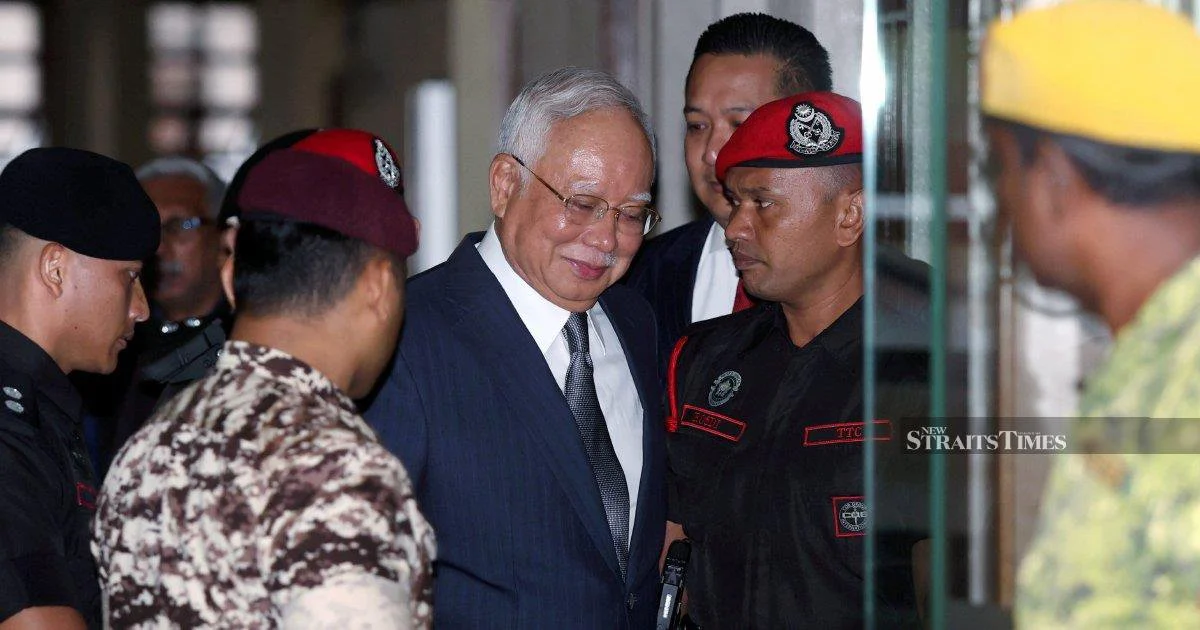
A Malaysian court has found that Datuk Seri Najib Razak and fugitive businessman Low Taek Jho—commonly known as Jho Low—functioned in deliberate coordination to channel vast sums from 1Malaysia Development Bhd (1MDB) into unauthorized accounts. The judicial determination represents a critical assessment of the intricate relationship between Malaysia's former prime minister and the international financier at the heart of one of the world's most significant corporate fraud cases.
The court's conclusion that the two men operated in tandem underscores the sophisticated nature of the scheme that authorities allege systematized the pillaging of sovereign wealth. Rather than characterizing their actions as separate criminal ventures, the judicial finding frames their conduct as a coordinated enterprise in which complementary roles and mutual interest aligned to facilitate the transfer of public resources. This assessment carries profound implications for understanding how institutional safeguards at 1MDB were circumvented and how global financial systems were exploited to obscure the movement of stolen capital.
The significance of establishing this working relationship extends beyond determining individual culpability. Courts must demonstrate the connective tissue between seemingly disparate transactions to prove conspiracy and coordination, a task that required detailed examination of communications, financial flows, and patterns of decision-making within 1MDB's governance structure. The finding that Najib and Jho Low operated hand-in-hand suggests evidence emerged demonstrating their mutual awareness, shared objectives, and deliberate division of responsibilities in executing the diversions.
Jho Low's role as a fugitive businessman adds complexity to the case's international dimensions. Since fleeing Malaysia, he has evaded multiple jurisdictions' attempts at extradition while remaining implicated in investigations across several nations, including the United States and Singapore. His absence from Malaysian courts has meant that much of the evidence against him derives from documentary trails, witness testimony, and financial reconstruction rather than direct interrogation. The court's determination nonetheless attributes to him an active, coordinating role rather than characterizing him as a secondary facilitator.
The mechanics of how billions were siphoned reflect the sophisticated infrastructure that can be constructed when senior government officials and private actors with international financial expertise align their efforts. 1MDB, established as a state investment fund intended to generate returns for Malaysia, instead became a conduit through which public monies flowed into accounts beyond government oversight. The alleged cooperation between Najib and Jho Low suggests that this diversion required both political authorization at the highest levels and the financial sophistication to route funds through complex international transactions.
For Malaysian observers, this judicial determination resonates within broader questions about institutional accountability and the concentration of authority. When those holding executive power collaborate with private financiers to redirect public resources, the mechanisms designed to prevent such conduct—whether auditing procedures, board oversight, or legislative scrutiny—become compromised. The case illustrates how institutional failures do not arise simply from incompetence but can result from deliberate circumvention by those positioned to exploit their authority.
The implications for Southeast Asia's regulatory environment are substantial. The 1MDB scandal has prompted financial institutions across the region to scrutinize their own governance frameworks and transparency requirements. Malaysian authorities have implemented enhanced monitoring of fund movements and strengthened requirements for documentation and oversight of state enterprises. Yet the court's findings suggest that determined actors with sufficient political leverage can still operate outside these systems, raising uncomfortable questions about the adequacy of current safeguards.
The international dimensions of this case continue to unfold, with investigations in multiple jurisdictions examining how 1MDB funds transited through global banking systems. Financial institutions in Singapore, Switzerland, and other jurisdictions have faced scrutiny for their role in processing transactions. The court's determination that Najib and Jho Low worked in coordination provides a clearer framework for understanding how these international fund movements constituted a unified criminal scheme rather than isolated transactions by individual actors.
As Malaysia continues processing legal proceedings related to 1MDB, the court's findings establish a factual foundation for understanding the conspiracy's structure and scope. The determination that Najib and Jho Low operated hand-in-hand fundamentally shapes how culpability is assessed and how remedial measures can be designed. For a nation that experienced systematic diversion of state resources, establishing clear judicial findings about coordinated misconduct represents a necessary step toward both accountability and reform of the systems that permitted such misconduct to occur.

%22%2F%3E%3C%2Fpattern%3E%3C%2Fdefs%3E%3Crect%20width%3D%22100%25%22%20height%3D%22100%25%22%20fill%3D%22url(%23ph40buhg)%22%2F%3E%3Crect%20width%3D%22100%25%22%20height%3D%22100%25%22%20fill%3D%22url(%23ph40buhp)%22%2F%3E%3Ctext%20x%3D%2250%25%22%20y%3D%2250%25%22%20text-anchor%3D%22middle%22%20dominant-baseline%3D%22central%22%20fill%3D%22rgba(255%2C255%2C255%2C0.95)%22%20font-family%3D%22Georgia%2C%20'Times%20New%20Roman'%2C%20serif%22%20font-weight%3D%22700%22%20font-size%3D%22320%22%20letter-spacing%3D%22-0.02em%22%3EGRS%3C%2Ftext%3E%3C%2Fsvg%3E)