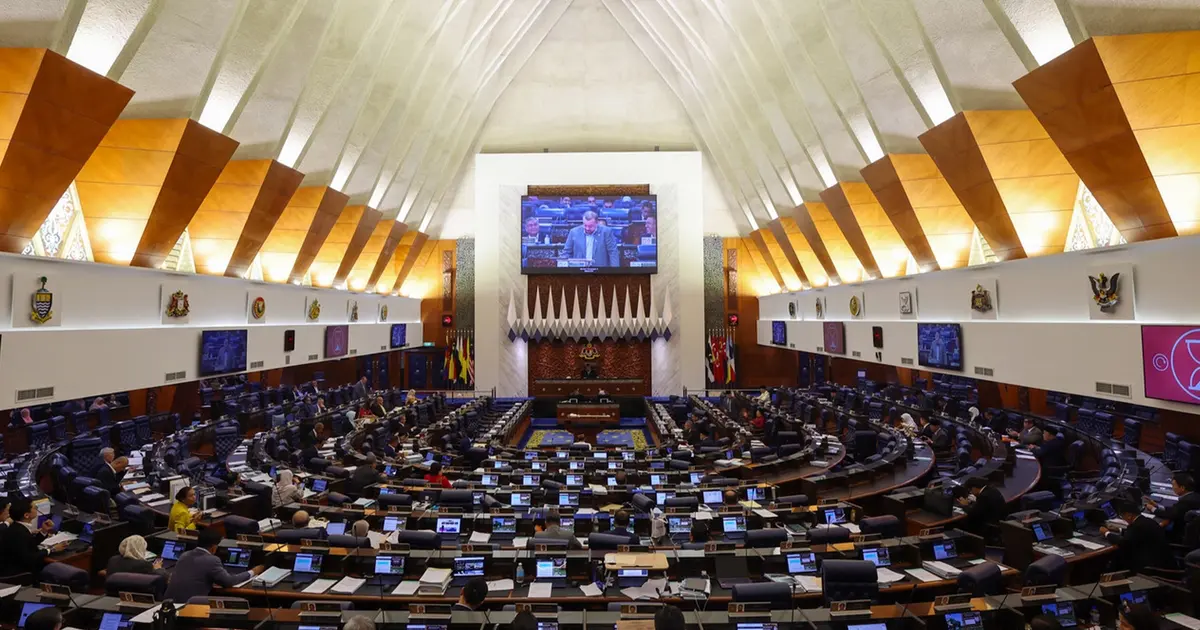
Malaysia's Dewan Rakyat is set to reconvene on Monday with a fresh push to impose a 10-year tenure ceiling on the office of prime minister, marking the second attempt to pass the contentious constitutional amendment after it fell short of the required two-thirds parliamentary majority during the previous sitting.
The proposed legislation sits at the centre of an ongoing constitutional reform agenda that touches on fundamental questions of executive power and institutional checks within Malaysia's Westminster-influenced governance framework. The earlier failure to secure sufficient support highlighted deep divisions within the ruling coalition and raised questions about parliamentary cohesion on major structural reforms.
Alongside the prime ministerial term limit proposal, the Dewan Rakyat will consider three additional pieces of major legislation that collectively represent the government's legislative priorities for the current session. The bundling of these bills reflects Parliament's capacity to address multiple constitutional and statutory matters simultaneously, a schedule that demands careful management to ensure meaningful debate without procedural shortcuts.
The 10-year tenure cap represents a significant departure from Malaysia's current constitutional framework, which places no formal limit on how long an individual may serve as prime minister. Supporters of the amendment argue that such restrictions enhance democratic accountability and prevent excessive centralisation of executive power in a single individual's hands. They point to global examples where term limits have been adopted across presidential and parliamentary systems as safeguards against authoritarian governance.
Opponents, conversely, contend that premature removal of experienced leadership disrupts continuity in policymaking and undermines the stability needed for long-term national development. Some also question whether arbitrary term limits address the real mechanisms through which executive power becomes concentrated, suggesting that parliamentary oversight and party discipline matter more than constitutional ceilings.
The failure to achieve two-thirds support in the previous session reflects deeper fractures within Malaysia's political landscape. Constitutional amendments in Malaysia require endorsement from two-thirds of all members present and voting, a threshold deliberately set high to prevent radical changes during periods of narrow parliamentary majorities. This supermajority requirement means that the government must negotiate across party lines or maintain exceptionally strong internal discipline within its coalition to pass such measures.
The renewed attempt comes amid shifting political dynamics at the national level. The composition of parliamentary blocs has evolved since the last vote, with potential shifts in individual lawmaker positions on this issue. Some members may have reconsidered their stance following constituent feedback or internal party discussions, while others may have changed allegiances or party affiliations. These subtle movements in parliamentary arithmetic can prove decisive when supermajority support is required.
Institutionally, the constitutional amendment process underscores the significance Malaysia's framers attached to protecting the foundational structures of governance. Unlike ordinary legislation, constitutional changes cannot be easily reversed and therefore demand broad consensus. This design reflects a deliberate choice to prevent majoritarian governments from radically reshaping state institutions to suit temporary political needs, though critics argue the two-thirds requirement can also entrench problematic elements or prevent necessary modernisation.
Regionally, Malaysia's experience with this constitutional reform mirrors broader Southeast Asian patterns. Neighbouring countries have grappled with similar questions about executive power limits, with varying outcomes. Thailand has imposed multiple constitutions with differing term limits, while Singapore maintains a different institutional model. The Malaysian experience demonstrates how even technically straightforward reforms encounter resistance rooted in power calculations and genuine philosophical disagreements about governance.
For Malaysian readers and observers, the outcome of this renewed effort signals whether the government possesses the political capital to advance significant constitutional changes, or whether structural divisions prevent consensus on major reforms. Success would affirm the viability of the ruling coalition's legislative agenda and demonstrate that it can secure cross-party support for contentious measures. Conversely, another failure would suggest that the supermajority requirement remains a genuine constraint on the government's reform ambitions.
The timing of the bill's reintroduction, alongside three other major measures, suggests the government views this moment as strategically opportune for advancing its legislative priorities. The Dewan Rakyat session provides an official platform for nationwide debate on these issues, allowing parliamentarians to articulate constituent concerns and engage in record debates that shape public understanding of complex constitutional matters.
The four-bill package reflects how governments bundle related or unrelated legislation into parliamentary sessions to maximise legislative output and maintain momentum on their policy agenda. This approach requires careful sequencing and debate management to prevent any single measure from consuming disproportionate time or overshadowing others pending discussion.
Monday's resumption of parliamentary proceedings will reveal whether arguments in favour of the prime ministerial term limit have shifted sufficiently to overcome previous obstacles, or whether the fundamental political calculations that led to its defeat remain largely unchanged. The stakes extend beyond this single constitutional amendment, touching on broader questions about Malaysia's capacity for institutional reform and the nature of political consensus required for such change.