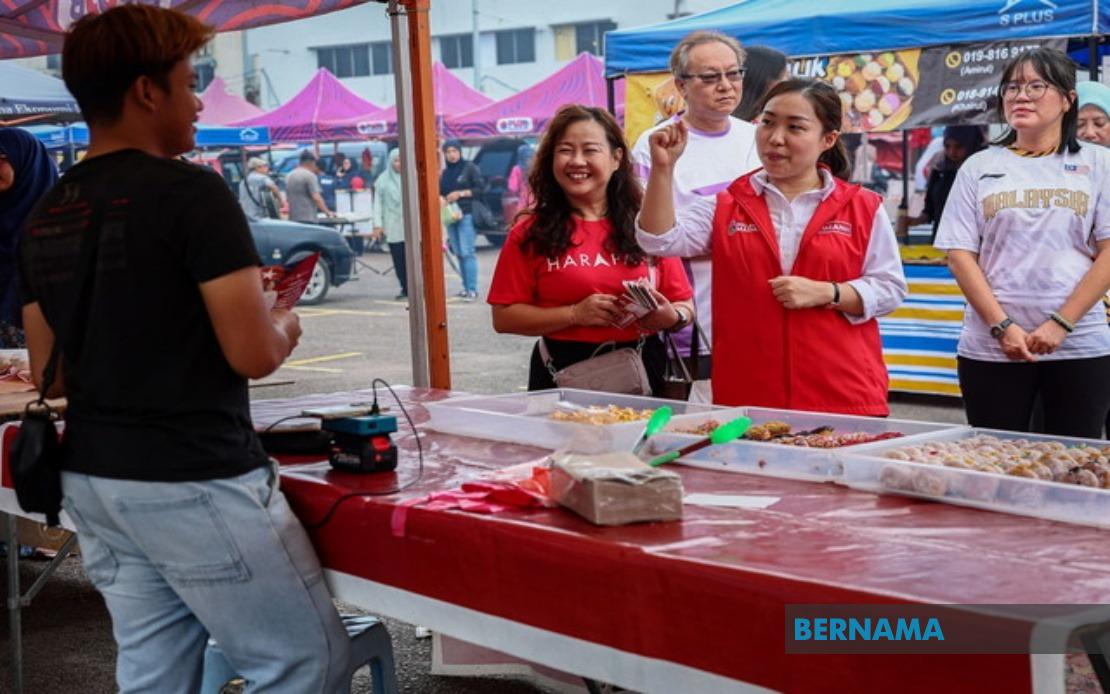
Chu Poh Yee, a young lawyer contesting the Mengkibol state seat for Pakatan Harapan, is charting a distinct electoral path by anchoring her campaign message to three interconnected policy pillars designed to address immediate community concerns whilst positioning Kluang for longer-term development. Speaking ahead of the Johor state election scheduled for July 11, Chu articulated how infrastructure modernisation, local economic revitalisation, and targeted social support form the backbone of her platform should voters grant her the mandate to represent the constituency.
Infrastructure enhancement features prominently in Chu's vision for Mengkibol. Beyond generic commitments to development, she emphasises practical improvements to road networks that would reduce travel times and facilitate commerce. Equally significant is her focus on expanding urban agriculture initiatives through community farming projects, a proposal that resonates with growing interest across Malaysia in food security and sustainable local production. These twin infrastructure approaches reflect an understanding that rural and semi-rural constituencies like Kluang require investments spanning both traditional connectivity and emerging agricultural sustainability models.
The economic dimension of Chu's platform addresses a persistent challenge facing constituencies across Malaysia's southern regions: the outward migration of young talent seeking better opportunities in larger urban centres. Chu identifies Kluang's business environment as inherently capable of supporting substantial expansion, contingent upon local authorities creating genuine entrepreneurship platforms and quality employment pathways. Her invocation of successful initiatives such as the Kluang Rail Festival demonstrates strategic awareness of how cultural and tourism-oriented events can generate measurable economic multiplier effects benefiting residents beyond immediate event organisers.
Chu's emphasis on workforce gender dynamics reveals engagement with demographic shifts reshaping Malaysian society. Her advocacy for women's workplace participation coupled with mechanisms enabling work-life balance signals recognition that female economic participation remains constrained by structural barriers rather than capability. By proposing investment in well-equipped childcare facilities, Chu identifies a critical infrastructure gap that disproportionately affects working mothers and undermines women's career progression. This dimension of her platform addresses both immediate voter concerns and longer-term questions about labour force development in Johor.
The campaign experience itself has tested Chu's resolve. Incidents involving vandalism of Pakatan Harapan campaign materials across multiple Mengkibol locations represent the friction inherent in contested electoral spaces. Rather than signalling weakness, Chu's public resolve to continue campaigning undeterred communicates resilience and commitment, messaging that carries particular weight among voters assessing candidate character and determination. The fact that such provocations have not derailed her campaign narrative suggests either strong underlying support or effective campaign discipline.
Mengkibol presents a particularly competitive electoral environment within the broader Johor contest. As one of fourteen constituencies experiencing straight fights between two candidates, the contest between Chu and Barisan Nasional's Yap Zhi Peng carries heightened stakes for both camps. In a state election field encompassing 172 candidates competing for 56 seats, Mengkibol represents the binary choice voters increasingly encounter in Malaysian electoral politics, where coalition dominance has narrowed competition.
The timeline for the Johor election carries practical implications for voter engagement and campaign momentum. With early voting scheduled for July 7 and polling day on July 11, campaigns operate within a compressed schedule that rewards both ground organisation and message clarity. For candidates like Chu without incumbent advantages, the early voting window becomes strategically critical for mobilising identified supporters before main polling day.
Chu's candidacy embodies a particular PH positioning within Johor: deployment of younger, professional-class candidates articulating development-focused agendas grounded in specific community needs rather than abstract ideological frameworks. Her emphasis on childcare facilities and entrepreneurship platforms appeals to middle-class aspirations whilst her infrastructure commitments address immediate quality-of-life concerns. This multivalent messaging strategy reflects broader coalition efforts to rebuild support across demographically diverse constituencies.
The Kluang district itself merits context within Johor's electoral landscape. As a traditionally Barisan Nasional stronghold, any meaningful Pakatan Harapan challenge requires sustained organisational effort and candidate appeal extending beyond partisan loyalists. Chu's professional credentials and locallyfocused policy discussion position her to contest traditional voting patterns through competence signalling and demonstrated engagement with material constituent interests. Success would require swaying voters sceptical of opposition parties rather than merely consolidating existing PH support.
For Malaysian observers tracking opposition development in non-urban constituencies, the Mengkibol contest represents a microcosm of broader coalition challenges. Pakatan Harapan must demonstrate capacity to govern beyond Selangor and federal territories whilst Barisan Nasional defends historical strongholds against strengthened opposition organisation. Chu's campaign articulates a development agenda that neither strays dramatically from voter expectations nor rehashes threadbare opposition critiques, instead focusing on concrete improvements achievable within local government parameters.

