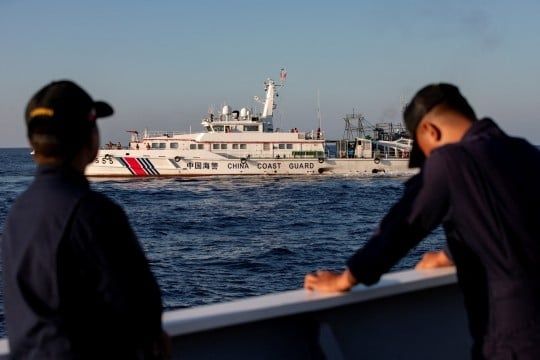
China has publicly recognised Malaysia's diplomatic efforts in shepherding negotiations toward a Code of Conduct for the South China Sea, a landmark framework intended to establish binding rules governing behaviour in one of the world's most strategically vital and contested waterways. Ambassador Ouyang Yujing conveyed Beijing's appreciation during a media engagement in Kuala Lumpur, emphasising that Malaysia's position as co-chair of the implementation mechanism for the Declaration on the Conduct of Parties in the South China Sea places it at the forefront of regional efforts to formalise maritime protocols. The timing of this commendation follows Prime Minister Datuk Seri Anwar Ibrahim's recent statement reaffirming Malaysia's commitment to accelerating the negotiation timeline, signalling alignment between Kuala Lumpur and Beijing on the urgency of completing this delicate agreement.
The Code of Conduct represents far more than procedural diplomacy; it would constitute the first multilateral, legally binding instrument to govern activities across the disputed waters and potentially defuse tensions that have periodically erupted between claimant states and external powers. For Malaysia, which holds significant maritime claims and sits along crucial shipping lanes, securing a workable COC offers tangible benefits: predictable rules that protect its interests while preserving broader regional stability. Ambassador Ouyang characterised the framework as providing an "institutional guarantee for long-term peace and stability," language that reflects Beijing's view that formalised protocols reduce miscalculation and unilateral action.
Over the past twelve months, Kuala Lumpur and Beijing have sustained intensive dialogue through bilateral channels dedicated to maritime issues, moving beyond rhetoric to substantive technical discussions. These conversations have explored avenues for expanded maritime cooperation whilst simultaneously working through the complex sovereignty claims and competing interests that have historically stalled progress. Ambassador Ouyang's reference to "effective communication" and active exploration of cooperation pathways indicates that both nations view engagement as preferable to confrontation, a posture increasingly important given great power tensions elsewhere in the Indo-Pacific region.
The negotiations have now entered what diplomats and analysts term the critical phase, where outstanding structural disagreements must be resolved. Various Southeast Asian leaders, including those from ASEAN member states, have explicitly stated their intention to complete the COC by the end of this calendar year. This deadline, however, remains ambitious given the complexity of reconciling competing claims, establishing dispute-resolution mechanisms, and ensuring that the agreement does not advantage any particular claimant over others. Malaysia's role as co-chair places it in a position to mediate between conflicting positions whilst maintaining relations with all sides.
China's public backing of Malaysia's diplomatic leadership carries strategic weight. By praising Malaysia specifically, Beijing signals to other ASEAN nations that cooperative engagement, rather than confrontation, yields recognition and partnership. This approach contrasts with China's more assertive posture on certain maritime incidents and expansionist activities, suggesting a dual-track strategy: maintaining firmness on territorial positions whilst demonstrating flexibility on process and institutional frameworks. For Malaysia, this endorsement strengthens its credibility as an honest broker among ASEAN members who may harbour concerns about Chinese intentions.
The ambassador also anchored his remarks within the broader context of strengthening bilateral relations between China and Malaysia. He highlighted that high-level exchanges have reached unprecedented frequencies over the past year, referencing Premier Li Qiang's two visits to Malaysia and Prime Minister Anwar Ibrahim's fourth visit to China since assuming office. These intensive exchanges at the apex of government reflect leadership commitment to deepening ties across multiple domains. President Xi Jinping's state visit to Malaysia last year served as a symbolic and substantive milestone, demonstrating China's prioritisation of the Malaysian relationship within its broader Southeast Asian strategy.
This elevated diplomatic tempo translates into expanded cooperation across sectors ranging from trade and investment to infrastructure development and people-to-people exchanges. For Malaysia, closer engagement with China offers economic opportunities and technological partnerships, whilst positioning Kuala Lumpur as a key interlocutor in regional stability discussions. However, Malaysia must carefully balance these deepening ties with maintaining its relationships with other major powers and with fellow ASEAN members who may hold varying perspectives on engagement with Beijing.
The South China Sea COC negotiations occur within a broader context of evolving great power competition in the region. The United States, through freedom of navigation operations and security partnerships, maintains a significant presence, whilst India and other powers monitor developments closely. Malaysia's role in advancing the COC reflects its interest in establishing rules that would constrain military escalation and unilateral actions whilst avoiding explicit alignment with any single power. This balancing act requires considerable diplomatic skill and demonstrates why Ambassador Ouyang's praise, whilst ostensibly routine, carries meaningful implications for Malaysian statecraft.
Looking forward, Malaysia faces the challenge of maintaining momentum toward a comprehensive COC whilst managing expectations among stakeholders with divergent interests. The agreement must satisfy claimant states' concerns regarding sovereignty and resource access, address non-claimant ASEAN members' desires for freedom of navigation, and prove sufficiently binding to prevent future disputes. Successful completion would represent a diplomatic achievement of significant magnitude, validating Malaysia's approach to regional engagement through institutionalised dialogue and consensus-building rather than confrontation or coercive measures.

%22%2F%3E%3C%2Fpattern%3E%3C%2Fdefs%3E%3Crect%20width%3D%22100%25%22%20height%3D%22100%25%22%20fill%3D%22url(%23ph40buhg)%22%2F%3E%3Crect%20width%3D%22100%25%22%20height%3D%22100%25%22%20fill%3D%22url(%23ph40buhp)%22%2F%3E%3Ctext%20x%3D%2250%25%22%20y%3D%2250%25%22%20text-anchor%3D%22middle%22%20dominant-baseline%3D%22central%22%20fill%3D%22rgba(255%2C255%2C255%2C0.95)%22%20font-family%3D%22Georgia%2C%20'Times%20New%20Roman'%2C%20serif%22%20font-weight%3D%22700%22%20font-size%3D%22320%22%20letter-spacing%3D%22-0.02em%22%3EGRS%3C%2Ftext%3E%3C%2Fsvg%3E)