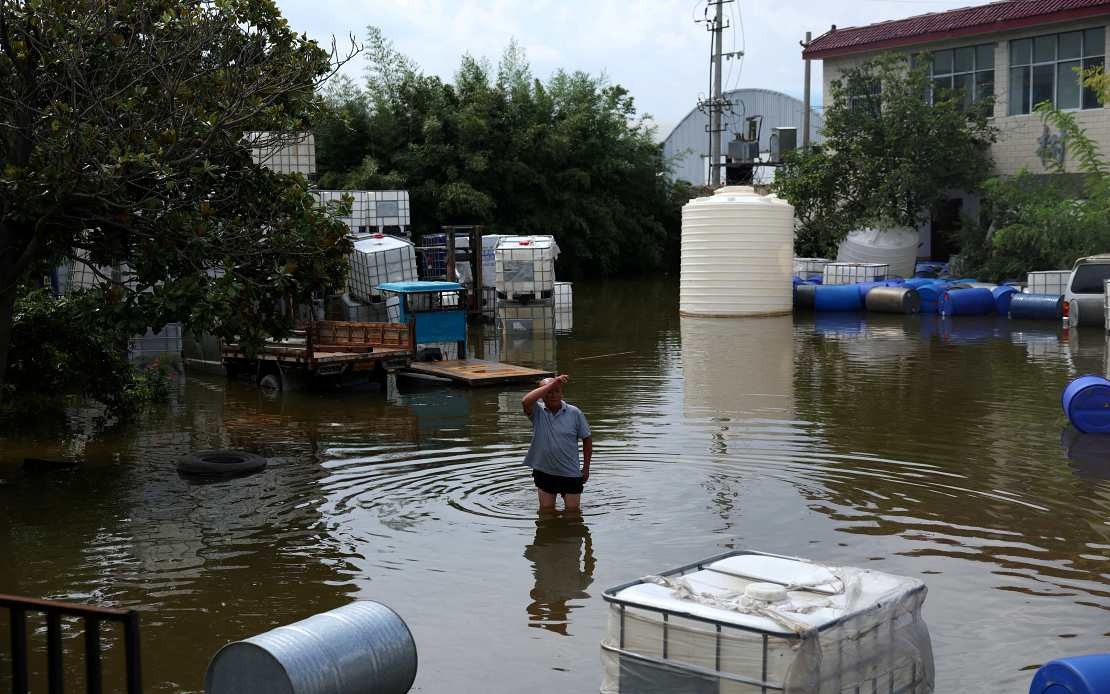
China's Ministry of Emergency Management has mobilised an extensive rescue operation in Zhoukou City, central Henan Province, after the remnants of Typhoon Dolphin triggered severe flooding and a critical levee failure late Thursday evening. The dispatch of rescue forces underscores the intensity of the disaster unfolding across multiple provinces, with emergency authorities treating the situation with the highest level of urgency given the scale of displacement and infrastructure damage already documented.
The rescue contingent comprises 200 specialised engineering personnel sourced from China Anneng Group, alongside 110 units of large-scale engineering equipment capable of managing complex water management and structural repair work. These teams arrived on Friday and immediately integrated into ongoing emergency operations, bringing critical technical expertise to efforts aimed at containing further flooding and restoring damaged infrastructure. The deployment reflects a coordinated national response to what appears to be an unprecedented weather event affecting one of China's most densely populated agricultural heartlands.
The levee breach occurred at approximately 11 pm Thursday when swollen river systems, engorged by torrential rainfall accompanying Typhoon Dolphin, overwhelmed structural defences designed to contain periodic flooding. Typhoon Dolphin, classified as the 13th typhoon of the current season, has proven particularly destructive across central China, with meteorological services reporting rainfall levels significantly exceeding seasonal averages. For Malaysian and Southeast Asian observers, the incident highlights the region's growing vulnerability to extreme weather events intensified by shifting climate patterns affecting the entire monsoon zone.
In response to the escalating crisis, China's National Commission for Disaster Prevention, Reduction and Relief activated a Level-IV national disaster relief emergency response on Friday. This designation represents the highest tier of coordinated disaster management in China's emergency protocols, triggering automatic mobilisation of national resources and enabling rapid deployment of personnel and supplies across provincial boundaries. The activation of this level of response indicates that central authorities have assessed the situation as presenting significant risk to large civilian populations across multiple municipalities.
The affected region extends beyond Zhoukou alone, with neighbouring cities including Xuchang already experiencing severe impacts from the typhoon and associated flooding. Authorities have implemented coordinated relief operations across the broader area to address the humanitarian dimensions of the disaster, particularly concerning displaced residents requiring emergency shelter and essential supplies. The scale of the affected territory suggests that recovery efforts will demand sustained commitment of resources and personnel over an extended timeframe.
Central authorities have allocated 30,000 items of emergency relief supplies to support displaced populations across Zhoukou, Xuchang and surrounding areas. These supplies include folding beds, quilted bedding materials, and comprehensive emergency kits designed to address immediate survival needs for families rendered homeless or stranded by floodwaters. The relief supplies were coordinated through the National Commission's headquarters, the Ministry of Emergency Management, and the National Food and Strategic Reserves Administration, demonstrating the depth of interagency coordination mobilised for disaster response.
The dispatch of relief materials on Friday represented only the initial wave of emergency assistance, with authorities indicating that additional supplies would be delivered as local conditions permitted and needs assessments became more comprehensive. The logistical complexity of delivering supplies across flooded terrain and damaged transportation networks presents considerable operational challenges for relief coordinators. Such scenarios test the effectiveness of China's emergency management infrastructure, particularly in provinces where typhoon activity and river flooding represent recurring seasonal hazards.
For regional observers in Southeast Asia, the Henan situation provides important lessons regarding vulnerability to extreme weather amplified by climate change. Malaysia, Thailand, Vietnam and Cambodia all face similar risks from enhanced monsoon activity and typhoon intensity, yet disaster preparedness infrastructure and emergency response capabilities vary significantly across the region. The speed and scale of China's mobilisation response offers a comparative benchmark for regional governments assessing their own capacity to manage large-scale natural disasters affecting multiple provinces simultaneously.
The economic implications of the disaster extend beyond immediate humanitarian concerns. Henan Province represents one of China's critical agricultural production zones, and extensive flooding during the growing season threatens crop yields and food security considerations across the nation. The province's industrial base and transport infrastructure also face potential disruption from flooding, with implications for supply chain networks extending throughout Asia. Early assessment of agricultural damage will become critical for understanding longer-term economic consequences of the typhoon's passage through central China.

