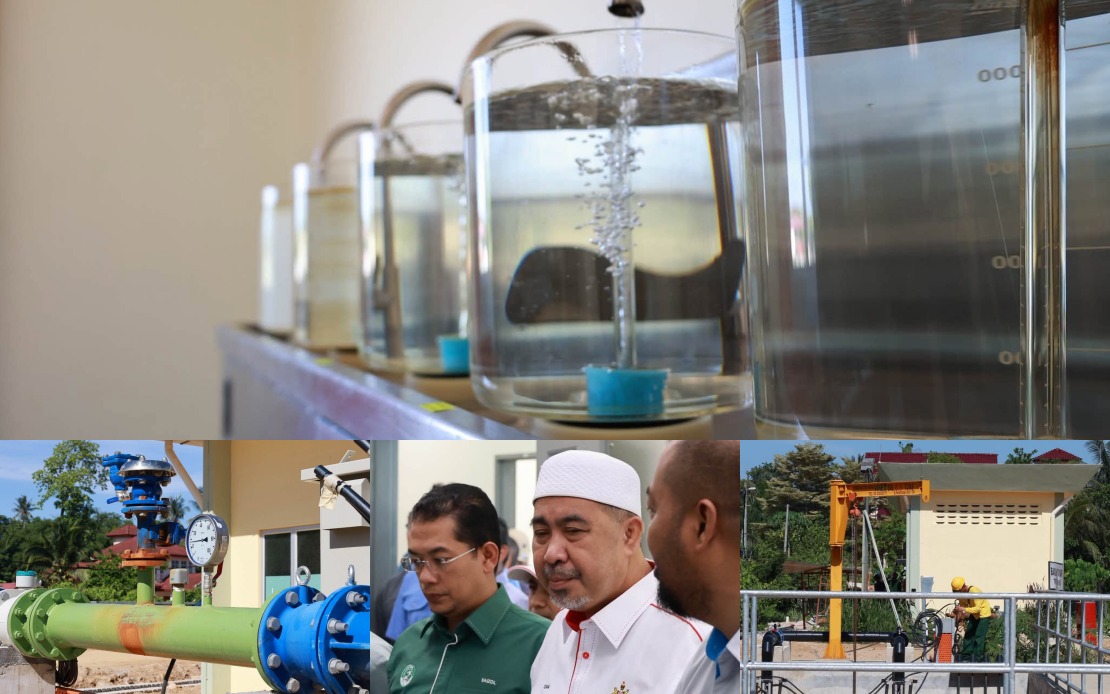
The Chicha 2 Water Treatment Plant in Pasir Hor, located on the outskirts of Kota Bharu, is in its final stages of construction and will commence operations next month, significantly expanding water access for residents across the Kota Seribong district. According to Datuk Dr Izani Husin, who chairs Kelantan's Public Works, Infrastructure, Water and Rural Development Committee, the facility has reached 97 per cent completion, with the RM54.98 million infrastructure project having started in 2024.
The plant is designed to serve multiple communities across the region, including residents in Pasir Hor, Telipot, Kota Seribong, Mulong and Tunjong, collectively benefiting more than 13,000 direct consumers. Beyond immediate supply expansion, the facility will enable the reconnection of approximately 10,000 inactive water accounts that have remained dormant, restoring service to households that have previously lacked reliable access to treated water. This reactivation effort represents a substantial effort to maximise the infrastructure's community reach and ensure equitable water distribution across the targeted areas.
Operating at a production capacity of 20 million litres per day, the Chicha 2 WTP incorporates a groundwater extraction methodology that differentiates it from conventional treatment approaches. The facility draws water from sources located approximately 100 metres underground, utilising a sophisticated aeration system to purify and treat the extracted groundwater to potable standards. This aeration-based treatment method, representing the first deployment of such technology at a Kelantan water treatment facility, demonstrates the state's commitment to adopting innovative water processing solutions and potentially serves as a blueprint for future infrastructure development across the region.
The 1.84-hectare installation sits at the intersection of environmental resource management and public health infrastructure, reflecting broader state-level strategies to secure adequate water supplies for growing populations. Dr Izani emphasised during his site visit that the aeration treatment approach has demonstrated effectiveness and could be replicated at additional water treatment plants across Kelantan, suggesting confidence in the technology's scalability and reliability. This expansion of proven treatment methodologies will be crucial as the state pursues its comprehensive water security agenda.
Kelantan's water infrastructure challenges have been longstanding, with the state grappling with supply deficiencies and service interruptions across multiple districts. The state government has established an ambitious timeline to fully resolve these systemic water supply issues by 2030, contingent upon the successful implementation of several major infrastructure initiatives alongside the construction of new treatment facilities. This phased approach recognises that transforming a state's water security requires sustained investment across multiple projects executed over an extended timeframe rather than singular, isolated interventions.
A critical underlying problem that the Chicha 2 WTP and companion projects aim to address is Kelantan's exceptionally high non-revenue water rate, currently exceeding 50 per cent. This figure indicates that more than half of treated water entering the state's distribution network is lost before reaching consumer taps, representing both financial waste and operational inefficiency. The primary culprits contributing to these losses include deteriorating pipe infrastructure, leakage from aging conduits, subsurface pipe ruptures and malfunctioning water measurement devices throughout the distribution system.
The aetiology of these losses reflects the accumulated wear on infrastructure systems that require substantial rehabilitative investment. Underground pipe networks, many installed decades ago, have corroded or developed structural weaknesses that allow substantial quantities of treated water to escape into surrounding soil before delivery to households and businesses. Broken water meters further complicate the situation, rendering usage measurement impossible and preventing utilities from detecting anomalies that might indicate system failures. Addressing these interconnected problems demands coordinated replacement and rehabilitation campaigns working in tandem with new production capacity additions.
Dr Izani's public messaging emphasised the necessity of community patience as the state pursues staged implementation of its water security strategy. This communication reflects acknowledgment that comprehensive infrastructure transformation cannot be accomplished instantly and requires systematic advancement through sequential project phases. The staged approach allows authorities to sequence investments strategically, manage fiscal resources efficiently and adjust implementation methodologies based on real-world performance data from earlier completed phases.
For Malaysian and regional observers, Kelantan's water development trajectory illustrates the persistent infrastructure challenges confronting developing regions in Southeast Asia. Many states and neighbouring countries face similar combinations of aging distribution networks, insufficient treatment capacity and high non-revenue water rates. The Chicha 2 WTP represents one component within a broader strategic portfolio addressing these multifaceted challenges, combining new production capacity, adoption of advanced treatment technologies and systematic network rehabilitation.
The September operational timeline will mark a tangible milestone in Kelantan's infrastructure modernisation efforts, though completion of this single facility represents merely one chapter in a longer narrative extending through 2030. Successful commissioning will demonstrate the viability of the state's phased approach and provide momentum for subsequent projects. Equally important, the reactivation of 10,000 dormant accounts signals the potential for existing infrastructure investments to unlock previously underutilised human capital and economic productivity throughout the state's water supply system.

