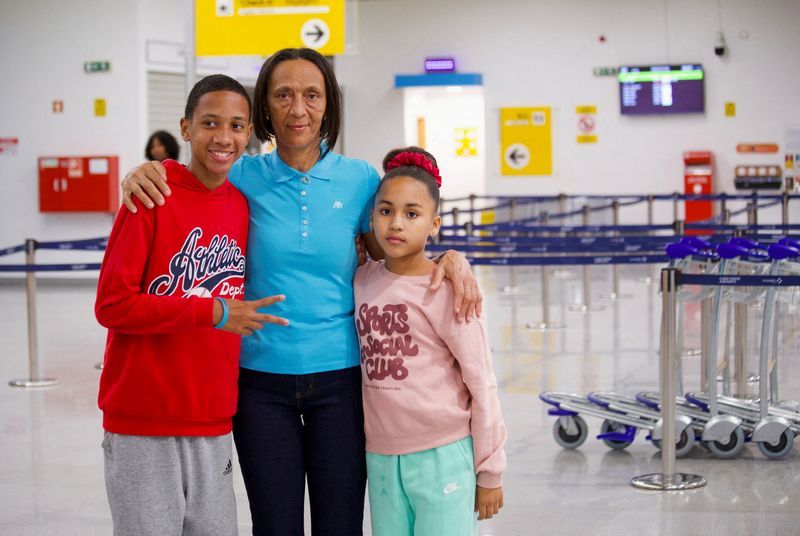
A heartwarming resolution has unfolded in the 2026 World Cup after the mother of Cape Verde's goalkeeper Vozinha secured a visa to travel to the United States, bringing an end to a situation that had captured international attention when the 40-year-old custodian disclosed his mother's inability to attend his tournament debut. Vozinha delivered a masterclass performance in Cape Verde's opening fixture against European champions Spain in Atlanta, producing seven crucial saves to earn his team a remarkable 0-0 draw and player-of-the-match honours. Yet his achievement was overshadowed by personal disappointment—his mother, Ana Candida Evora, had been unable to witness what became the defining moment of his career due to visa complications.
The emotional weight of Vozinha's revelation reverberated across social media and news outlets, drawing sympathetic attention to the broader barriers facing citizens from smaller nations seeking entry to the United States. The goalkeeper's candid discussion about missing his mother during such a significant professional milestone struck a chord with observers, transcending the usual bounds of sports commentary to raise questions about accessibility and fairness in World Cup participation. For a player who had worked his entire career toward a moment on football's greatest stage, the absence of his closest family member represented a hollow victory despite his exemplary on-field display.
Recognising the humanitarian dimensions of the situation, the U.S. State Department moved swiftly to facilitate Evora's travel. Officials confirmed that their visa processing team based in Praia, Cape Verde's capital, had maintained close coordination with Evora and ensured she received all necessary assistance to complete her application. A State Department representative publicly affirmed the decision, declaring that full approval had been granted and that travel arrangements could proceed without further impediment. This intervention demonstrated how high-profile cases can sometimes trigger bureaucratic responsiveness when diplomatic visibility amplifies individual hardship.
The backdrop to Evora's initial exclusion involved stringent travel restrictions that the United States had implemented as part of a broader immigration enforcement agenda. Citizens from numerous countries, including Cape Verde, faced requirements to post substantial bonds—in some cases exceeding $15,000—as a precondition for entry to American territory. These financial barriers had proven prohibitively expensive for many World Cup fans and family members from developing nations, forcing difficult choices between attending the tournament and managing household finances. For Evora, the prospect of funding such a deposit, combined with travel and accommodation costs, had made the journey seem financially impossible.
The situation reflected systemic challenges that extend far beyond this single case. Smaller African nations like Cape Verde, whose populations have limited average incomes compared to Western countries, face disproportionate obstacles in accessing visa-dependent tournaments held in wealthy nations. The financial prerequisites, administrative complexity, and processing timelines can effectively exclude ordinary citizens from witnessing their country's rare appearances in major sporting events. For a nation like Cape Verde, whose football infrastructure and resources lag considerably behind traditional footballing powers, international tournaments represent peak moments of national pride—yet these barriers can prevent families from participating in the collective celebration.
After sustained pressure and public attention to the visa situation, the U.S. government did introduce modifications to its immigration protocols specifically addressing World Cup participants and their families. Individuals holding legitimate World Cup tickets were eventually exempted from the bond requirement, acknowledging the unique circumstances surrounding the tournament. This exemption, however, came only after considerable delay and publicity, suggesting that such accommodations might not have materialised without the amplification provided by Vozinha's emotional disclosure and subsequent media coverage. The amendment represented a partial recalibration of policy rather than a systemic rethinking of how major sporting events should balance national security concerns with inclusive access.
Evora's visa approval now enables her to attend Cape Verde's second group-stage fixture, a match against Uruguay scheduled for Miami on Sunday. Beyond the immediate sentimental value of a mother witnessing her son's World Cup participation, her presence carries broader symbolic weight. It represents a small victory for accessibility in global sport and demonstrates how individual narratives of hardship can occasionally penetrate bureaucratic indifference. For Cape Verde's supporters, Evora's attendance also signals continued national engagement with the tournament despite the structural challenges that had threatened participation from the outset.
The Vozinha saga illuminates persistent inequities in international football and global sporting infrastructure more broadly. Developed nations hosting major tournaments have historically overlooked the accessibility barriers facing citizens of lower-income countries, treating restrictive visa regimes as standard practice rather than potential obstacles to inclusive participation. World Cup organisation committees have growing responsibilities to anticipate such issues and negotiate bilateral agreements that facilitate legitimate travel for fans, families, and supporters from participating nations. Malaysia and other Southeast Asian countries, whose citizens also periodically encounter visa complications when travelling to wealthy nations for sporting events, can recognise similar patterns of exclusion in this scenario.
Looking forward, Vozinha's experience should prompt World Cup organisers and host nations to implement more proactive policies that acknowledge the global nature of football spectatorship. Granting automatic visa waivers or expedited processing for ticketholders, establishing family exemptions from financial prerequisites, and negotiating multilateral agreements on supporter access could transform how tournaments function as genuinely inclusive international events. The World Cup claims to celebrate global football culture, yet systemic barriers that prevent families from poorer nations from attending contradict this aspiration. Evora's late approval, while welcome, underscores that change typically arrives only through publicity rather than principled planning.

%22%2F%3E%3C%2Fpattern%3E%3C%2Fdefs%3E%3Crect%20width%3D%22100%25%22%20height%3D%22100%25%22%20fill%3D%22url(%23ph40buhg)%22%2F%3E%3Crect%20width%3D%22100%25%22%20height%3D%22100%25%22%20fill%3D%22url(%23ph40buhp)%22%2F%3E%3Ctext%20x%3D%2250%25%22%20y%3D%2250%25%22%20text-anchor%3D%22middle%22%20dominant-baseline%3D%22central%22%20fill%3D%22rgba(255%2C255%2C255%2C0.95)%22%20font-family%3D%22Georgia%2C%20'Times%20New%20Roman'%2C%20serif%22%20font-weight%3D%22700%22%20font-size%3D%22320%22%20letter-spacing%3D%22-0.02em%22%3EGRS%3C%2Ftext%3E%3C%2Fsvg%3E)