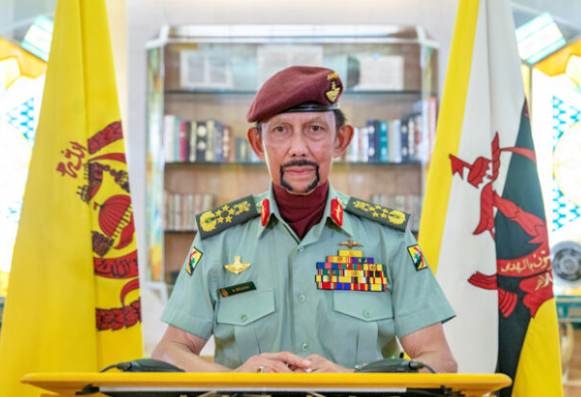
Sultan Hassanal Bolkiah of Brunei has used his Islamic New Year address to rally citizens toward sustained progress across both material and spiritual dimensions, framing the arrival of 1448 Hijrah as an occasion to strengthen rather than reset national endeavours. Speaking in his capacity as head of state and spiritual leader, the monarch emphasised that meaningful advancement in economic development and religious life demands unwavering dedication rather than merely ceremonial observance of calendar transitions. The sultan's remarks reflect a governance philosophy that integrates state modernisation with Islamic values, positioning Brunei's development trajectory within a framework of continuous, purposeful effort rooted in spiritual intention.
The monarch delineated his vision across two interrelated spheres of national activity. Material progress encompasses the economic foundations and physical infrastructure that sustain contemporary society, while spiritual advancement embraces knowledge acquisition, formal education systems, and dakwah—the Islamic obligation to communicate faith and values to others. By explicitly naming these domains within a single framework, Sultan Hassanal Bolkiah signalled that neither can be subordinated to the other, and that national resilience depends on parallel progress in both. This integrated approach distinguishes Brunei's development model from purely secular paradigms, reflecting the constitutional position of Islam within the sultanate and the monarch's theological authority.
Central to the sultan's message was a call for collective gratitude and recommitment rather than complacency. He framed the new year as an opportunity to deepen intentions and renew resolve, cautioning against interpreting calendar transitions as moments to delay action or effort. This rhetorical move addresses a perennial governance challenge: sustaining public momentum for long-term initiatives and preventing the diffusion of responsibility across expanding timescales. By emphasising that the year should serve as a platform for intensifying commitment, the sultan sought to mobilise national energy toward outstanding tasks and unfinished projects across sectors.
The sultan's acknowledgment of global turbulence provided context for Brunei's own stability claims. He referenced the prevalence of international conflict and the suffering it generates, positioning Brunei's comparative peace and freedom from major natural disasters as blessings requiring conscious preservation. This framing transforms stability from a passive state into an active, vulnerable achievement that demands perpetual guardianship. For Southeast Asian audiences familiar with regional geopolitical tensions and climate vulnerabilities, the sultan's gratitude for security carries particular weight, implicitly acknowledging the fragility of prosperity in a dynamic region.
Crime emerged as the monarch's primary domestic concern, signalling a shift in official priorities or growing public anxieties that demand royal acknowledgment. The sultan identified drug-related offences, theft, and associated criminal activities as problems that damage national reputation and violate Islamic principles. This diagnosis reflects challenges facing many Southeast Asian nations grappling with narcotics trafficking and organised crime networks. By framing these issues as religious transgressions rather than merely legal violations, the sultan invoked spiritual rather than purely coercive arguments for compliance, aligning law enforcement with Islamic jurisprudence and moral teaching.
The monarch tasked security agencies and religious authorities with concurrent responsibilities in combating crime. While law enforcement agencies bear the institutional obligation to investigate and prosecute offences, the sultan delegated religious education and dakwah authorities with prevention work at the community level. This division reflects an understanding that criminal behaviour stems from deficient spiritual awareness and weak moral grounding, not merely opportunity or capability. Religious institutions, in this framework, must intensify their engagement with populations at risk, particularly youth, to instil rejection of narcotics and criminal pathways. The dual approach acknowledges both the enforcement and preventive dimensions necessary for comprehensive crime reduction.
The sultan's invocation of prayer and collective spiritual practice as protective mechanisms reveals the theological dimensions underpinning his governance approach. He called on Bruneians to maintain vigilant prayer for national safety, framing divine protection as contingent upon sustained religious observance and remembrance. This language transforms safety from a material outcome of policy implementation into a spiritual benefit requiring sustained devotional practice. For Muslims in Brunei and across Southeast Asia, such framing positions individual religious discipline as contributing to collective national well-being, creating a direct connection between personal piety and public order that transcends conventional secular governance rhetoric.
The sultan's emphasis on collective vigilance and shared responsibility dispersed accountability across society rather than concentrating it within state institutions. He positioned all citizens as stakeholders in Brunei's security and stability, obligating individuals to remain alert and engaged rather than deferring safety concerns entirely to authorities. This mobilisation of social responsibility reflects common governance challenges in rapidly developing societies, where institutional capacity may strain under competing demands and public participation can amplify state capacity. By appealing to Islamic concepts of shared community responsibility, the sultan framed civic engagement as a religious duty rather than optional participation.
The address concluded with royal wishes extended to all Brunei residents, both citizens and foreign populations, signalling inclusive nationhood within the Islamic framework. This gesture acknowledges Brunei's multicultural society while maintaining Islam's constitutional and cultural primacy. For Southeast Asian societies managing religious diversity and competing identity claims, such inclusive language demonstrates how monarchy can accommodate pluralism without diluting religious authority. The royal family's collective participation in extending new year wishes reinforced institutional unity and dynastic stability, presenting the sultanate as a coherent entity speaking with unified voice.
Sultan Hassanal Bolkiah's 1448 Hijrah address reveals governance priorities emphasising sustained effort, spiritual vigilance, and collective responsibility in addressing contemporary challenges. The integration of material and spiritual progress, combined with explicit attention to crime and religious education, reflects a governing philosophy that views state-building as inseparable from moral renewal. For Malaysia and other Southeast Asian nations, Brunei's approach offers a contrasting model to purely secular development paradigms, demonstrating how Islamic monarchical authority can articulate national purpose through theological language while addressing practical governance concerns including security, economic advancement, and social cohesion. The sultan's call for renewed commitment on the Islamic calendar's turning point highlights how traditional temporal markers continue shaping contemporary political discourse in the region.

%22%2F%3E%3C%2Fpattern%3E%3C%2Fdefs%3E%3Crect%20width%3D%22100%25%22%20height%3D%22100%25%22%20fill%3D%22url(%23ph40buhg)%22%2F%3E%3Crect%20width%3D%22100%25%22%20height%3D%22100%25%22%20fill%3D%22url(%23ph40buhp)%22%2F%3E%3Ctext%20x%3D%2250%25%22%20y%3D%2250%25%22%20text-anchor%3D%22middle%22%20dominant-baseline%3D%22central%22%20fill%3D%22rgba(255%2C255%2C255%2C0.95)%22%20font-family%3D%22Georgia%2C%20'Times%20New%20Roman'%2C%20serif%22%20font-weight%3D%22700%22%20font-size%3D%22320%22%20letter-spacing%3D%22-0.02em%22%3EGRS%3C%2Ftext%3E%3C%2Fsvg%3E)