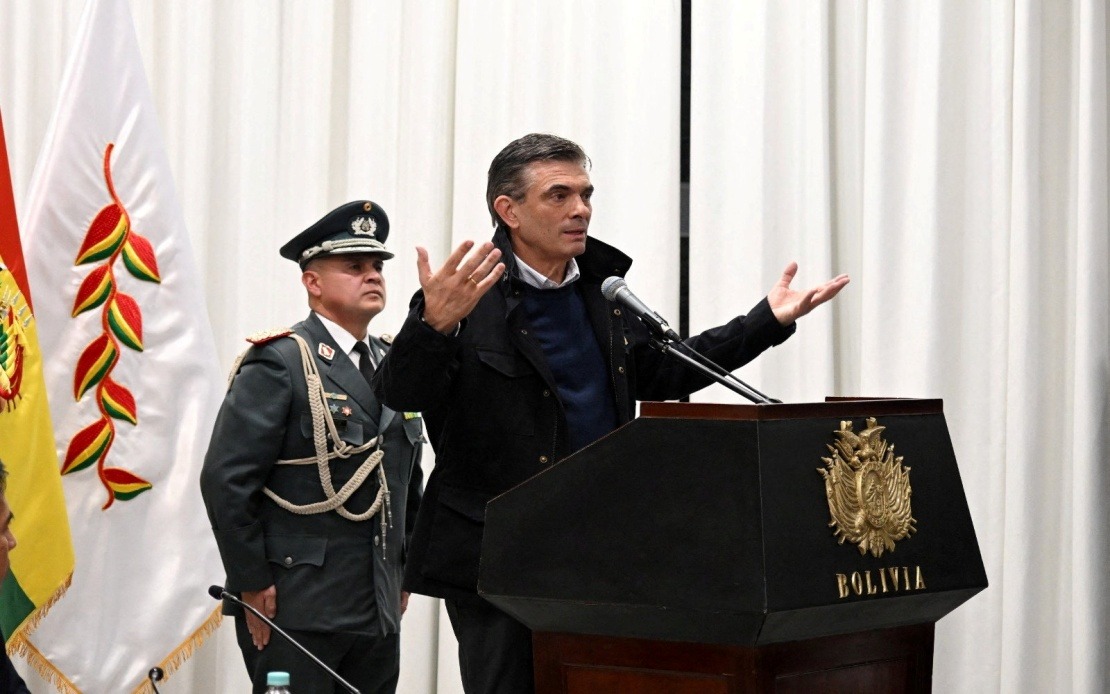
Bolivian President Rodrigo Paz has declared a state of emergency following escalating civil unrest, marking a significant turning point in a deepening political and economic crisis that has gripped the South American nation for nearly two months. The declaration, announced via televised address on Saturday, represents a dramatic escalation in response to unprecedented blockades orchestrated by worker unions and farming groups demanding the president's resignation.
The road blockades, which have persisted for approximately 50 days, have systematized pressure on the Paz administration by systematically strangling the nation's ability to distribute essential goods. The paralysis has created acute shortages across multiple critical sectors, with food supplies dwindling, fuel becoming increasingly scarce, and medical provisions failing to reach communities that depend on regular resupply. These disruptions have extended far beyond transport logistics, effectively rendering entire regions economically non-functional as businesses shut down and essential services grind to a halt.
At the heart of the unrest lies mounting public frustration over deteriorating living standards and mounting economic hardship. Demonstrators have cited spiraling costs of living as the primary grievance fueling their sustained campaign against Paz's government. The protests have gained substantial organizational backing from Bolivia's powerful union federations and agricultural sector representatives, lending the movement both coordination and staying power that informal demonstrations typically lack. This coalition of interests has proven remarkably resilient, maintaining pressure through blockades despite government efforts to negotiate.
During his public address, Paz articulated the humanitarian dimension of the crisis, emphasizing the intolerable position ordinary Bolivians have found themselves in. The president highlighted how the blockades have effectively imprisoned citizens within their communities, preventing them from working, accessing education, obtaining medical care, purchasing food, and earning livelihoods. His framing positioned the state of emergency as a restoration of fundamental freedoms rather than a crackdown, though the practical implications remain significant.
The declaration of a state of exception carries substantial constitutional consequences within Bolivia's legal framework. Most critically, it authorizes the deployment of military forces across the country to forcibly clear roadways and restore circulation of goods and people. This represents a consequential step toward confrontation, as previous administrative attempts to negotiate with blockading groups have failed to produce breakthroughs. The military authorization suggests the Paz government has concluded that dialogue alone cannot resolve the impasse.
The economic toll of the extended blockade has accumulated into a genuine national emergency. Supply chain interruptions spanning nearly eight weeks have depleted inventories of perishable goods in many areas, while fuel shortages have cascaded through transportation networks, construction, agriculture, and manufacturing sectors. Hospitals and clinics have reported difficulties maintaining adequate pharmaceutical and medical equipment stocks, raising serious public health concerns. The compound effect threatens to transform an acute crisis into longer-term structural economic damage.
For Malaysia and other Southeast Asian nations, the Bolivian situation offers instructive lessons regarding supply chain vulnerability and the political risks of uncontrolled inflation. Like several regional economies, Bolivia has grappled with currency pressures and cost-of-living increases that disproportionately affect lower-income populations. The capacity of organized groups to completely paralyze infrastructure—and the government's apparent lack of preemptive economic policy tools—demonstrates risks that policymakers across developing economies must consider seriously.
The timing of Paz's emergency declaration also reflects strategic political calculation. Allowing the blockades to continue unchecked risks further eroding public confidence in government capacity, potentially triggering broader institutional breakdown. Conversely, deploying military force to disperse blockaders carries significant risks of escalating violence and deepening societal divisions. Paz appears to have determined that the humanitarian costs of continued paralysis outweigh the political costs of military intervention.
The underlying economic conditions driving the protests remain unresolved by the state of emergency declaration itself. The emergency measure addresses the symptom—the blockades—but not the root cause: the cost-of-living crisis animating public anger. This fundamental disconnect suggests that even successful military clearing of roads may provide only temporary respite unless accompanied by concrete economic policy adjustments addressing inflation, wage stagnation, and agricultural subsidies that directly affect both urban and rural populations.
Regional observers will scrutinize how the Bolivian government implements its emergency powers and whether military deployment successfully restores supply chains without provoking wider civil conflict. The declaration signals that conventional democratic governance mechanisms have strained to their limits, a troubling indicator for institutional resilience. As other developing economies face similar pressures from economic hardship and organized opposition movements, Bolivia's crisis represents a cautionary case study in how quickly escalation can occur when governments and demonstrators reach impasse.