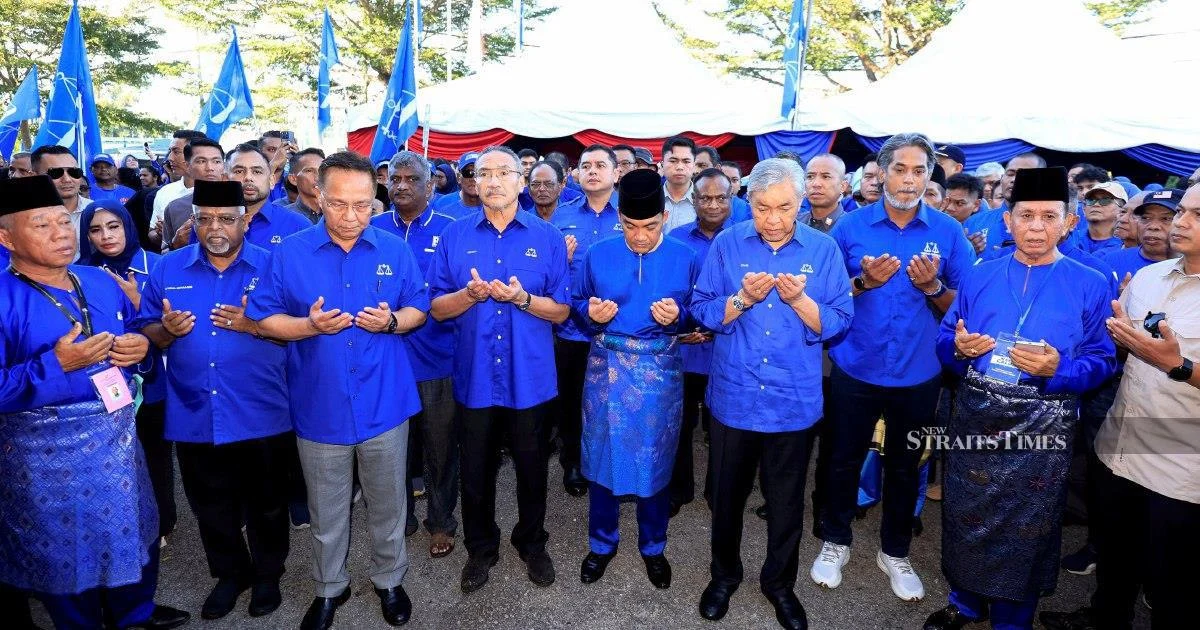
Datuk Onn Hafiz Ghazi received a show of force from Barisan Nasional's upper echelon when several major party figures arrived at the Simpang Renggam District Council this morning, underscoring the coalition's determination to consolidate support across the state during the Johor election campaign.
The gathering represented more than ceremonial politics. By assembling prominent BN leaders in a single locality, the coalition demonstrated internal cohesion at a moment when voter attention sharpens across Johor's constituencies. Such coordinated appearances serve multiple strategic purposes: they energise grassroots machinery, project confidence to undecided voters, and remind party members of institutional backing for chosen candidates.
Onn Hafiz's position as a key BN protagonist in Johor has drawn sustained organisational investment from the broader coalition. The presence of heavyweight figures signals that party leadership views his political fortunes as materially important to BN's territorial interests in the state. Johor remains strategically significant within Malaysian politics—it is the most populous peninsula state and a traditional BN stronghold, though one increasingly contested by opposition forces in recent electoral cycles.
The Simpang Renggam venue carries particular resonance. Located in Kluang District, this area encompasses mixed urban and rural communities whose voting patterns often foreshadow broader regional trends. Demonstrations of organisational strength in such constituencies help build momentum that extends beyond the immediate location, generating news coverage and social media attention that amplifies the message outward.
For Malaysian readers, such political theatre reflects deeper patterns within BN's operational approach. The coalition has historically relied on highly structured, top-down coordination where central leadership mobilises resources to support chosen candidates. This morning's deployment suggests that operational machinery remains intact and responsive, even as BN navigates a more fragmented political landscape than it faced during its unbroken federal rule before 2018.
The timing of this gathering warrants consideration within the broader Johor context. The state has experienced significant political volatility since 2018, with voter allegiances shifting in ways that challenge BN's historical dominance. By visibly consolidating elite support around Onn Hafiz, party leadership attempts to anchor voter confidence and counter narratives of internal fragmentation or declining institutional strength. The message conveyed is that BN remains organised, confident, and committed to retaining its Johor foothold.
Onn Hafiz himself brings considerable political weight to his candidacy. His profile as a state-level political figure with demonstrated administrative experience provides substantive grounds for party backing beyond mere factional loyalty. The confluence of elite support and personal credentials creates a mutually reinforcing narrative: senior figures rally behind him because he represents a credible political asset, and their support further enhances his credibility with ordinary voters evaluating their electoral choices.
For Johor voters specifically, these displays of organisational coordination function as signals about institutional capability. Voters often assess not merely policy promises but the apparent strength and unity of political organisations themselves. A fragmented, internally divided coalition sends concerning signals about administrative competence and staying power, whereas visible coordination between senior figures projects organisational health and governance readiness.
The broader Southeast Asian context adds another dimension to understanding Malaysian electoral dynamics. Across the region, dominant parties increasingly deploy sophisticated organisational strategies to consolidate support and counter electoral challenges from opposition forces. BN's approach in Johor—demonstrated through these coordinated elite appearances—reflects contemporary professional political management, though rooted in Malaysia's specific institutional arrangements and party structures.
For Malaysia's media and voting public, interpreting such events requires distinguishing between symbolic messaging and substantive political content. While the gathering at Simpang Renggam undoubtedly projects unity and support, its actual impact on electoral outcomes depends on whether such organisational displays translate into effective ground-level campaigning, credible policy platforms, and resonance with voters' lived concerns about economic opportunity, public services, and community development.
As the Johor election unfolds, such moments of elite coordination will become familiar markers on the campaign landscape. They indicate which candidates command institutional backing and signal the intensity with which major parties will contest specific constituencies. For voters seeking to understand where power concentrates within political organisations and how seriously party leadership takes particular electoral contests, these visible demonstrations provide revealing windows into internal political dynamics that shape candidate selection and resource allocation decisions far from public view.

