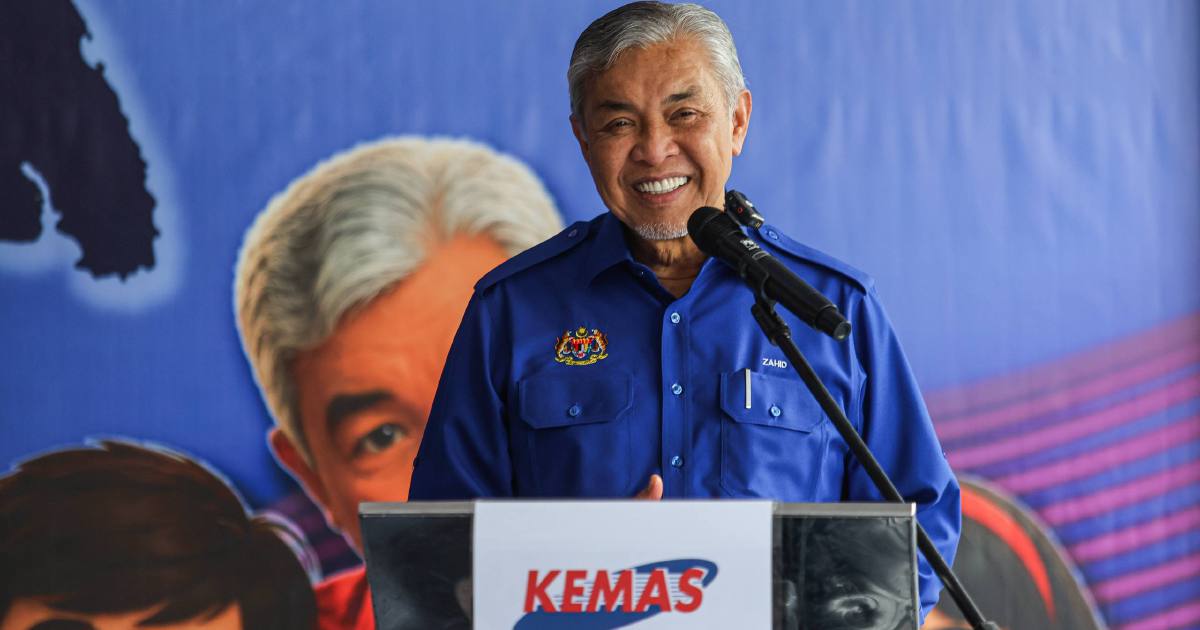
Malaysia's two major political coalitions have demonstrated their capacity to compartmentalise electoral competition and federal governance, with Barisan Nasional indicating that its partnership with Pakatan Harapan at the national level remains robust even as the two camps engage in intensifying rivalry over control of Johor state.
The assertion of continued cooperation between BN and PH comes as the Johor state election campaign enters its most heated phase, with both coalitions mobilising resources and messaging to secure voter backing. The apparent contradiction between electoral conflict at state level and governmental harmony at the federal tier reflects a pragmatic political reality that has characterised Malaysia's coalition-based governance structure since the formation of the current federal administration.
This separation of electoral and governmental roles carries particular significance for Malaysia's political stability. By maintaining functional federal partnerships despite state-level contests, the coalitions avoid the kind of escalating acrimony that could undermine policy implementation or administrative continuity at the national level. Such an arrangement also allows both BN and PH to appeal to different voter constituencies in different contexts—competing intensely where they seek power while cooperating where power is shared.
The Johor state election represents a crucial battleground for both coalitions, with significant implications for regional political balance and potentially for the composition of future federal coalitions. Johor's status as the country's second-largest state and its traditional role as a BN stronghold makes the contest particularly important for assessing the relative electoral strength of the two coalitions heading into any future national polls.
At the federal level, the BN-PH arrangement has weathered various challenges since its inception, proving more durable than many political observers initially predicted. The partnership has allowed the government to function despite ideological differences and competing interests, suggesting that the two coalitions have developed sufficient institutional mechanisms and mutual interests to sustain cooperation even through periods of electoral contention at state and local levels.
The maintenance of strong federal ties during state election campaigns also reflects recognition by both coalitions of the costs of political instability. Malaysia's experience with political uncertainty and government transitions has demonstrated the economic and social consequences of prolonged political tension, creating incentives for coalitions to manage their competition within predictable bounds rather than allowing state-level contests to destabilise national governance.
For Malaysian voters, particularly those in Johor, this arrangement presents a nuanced political landscape where local electoral preferences do not necessarily translate into changes to federal governance structures. Voters must navigate the reality that voting patterns in state elections operate within constraints set by federal-level coalition arrangements, a dynamic that has become increasingly important in Malaysian politics since the emergence of coalition-based national governance.
The BN-PH federal partnership also has implications for business confidence and policy consistency. Malaysian investors and international observers have shown greater comfort with Malaysia's political environment when major coalitions demonstrate capacity for sustained cooperation, even amid electoral competition. This stability in policy direction and administrative continuity represents an asset in attracting investment and maintaining economic momentum.
The Johor campaign itself will test the durability of the federal partnership arrangement. As both coalitions contest aggressively for state control, the temptation exists for federal-level allies to provide state-level support that crosses lines considered acceptable by the national government. Managing these pressures while preserving the federal partnership requires disciplined coalition leadership and clear understanding of boundaries.
Historically, Malaysian state elections have served as important barometers of political sentiment, with results influencing calculations about coalition viability at the federal level. The Johor contest will likely follow this pattern, with both BN and PH using state-level results to assess their relative strength and to inform their positioning ahead of eventual federal elections scheduled for 2028.
The interplay between state-level competition and federal cooperation also reflects the maturation of Malaysia's democratic institutions. Rather than collapsing into zero-sum conflict or permanent alignment, the major coalitions have developed capacity to engage in productive tension—competing for power in some arenas while collaborating on governance in others. This capability distinguishes Malaysian politics from less institutionalised systems where factional conflict tends to become all-encompassing.
Looking forward, the sustainability of the BN-PH federal partnership will depend on both coalitions' ability to demonstrate to voters that their cooperation at national level serves Malaysian interests in economic growth, administrative efficiency, and policy stability, while state-level elections remain genuine contests where voters can meaningfully express electoral preferences and influence regional leadership.

